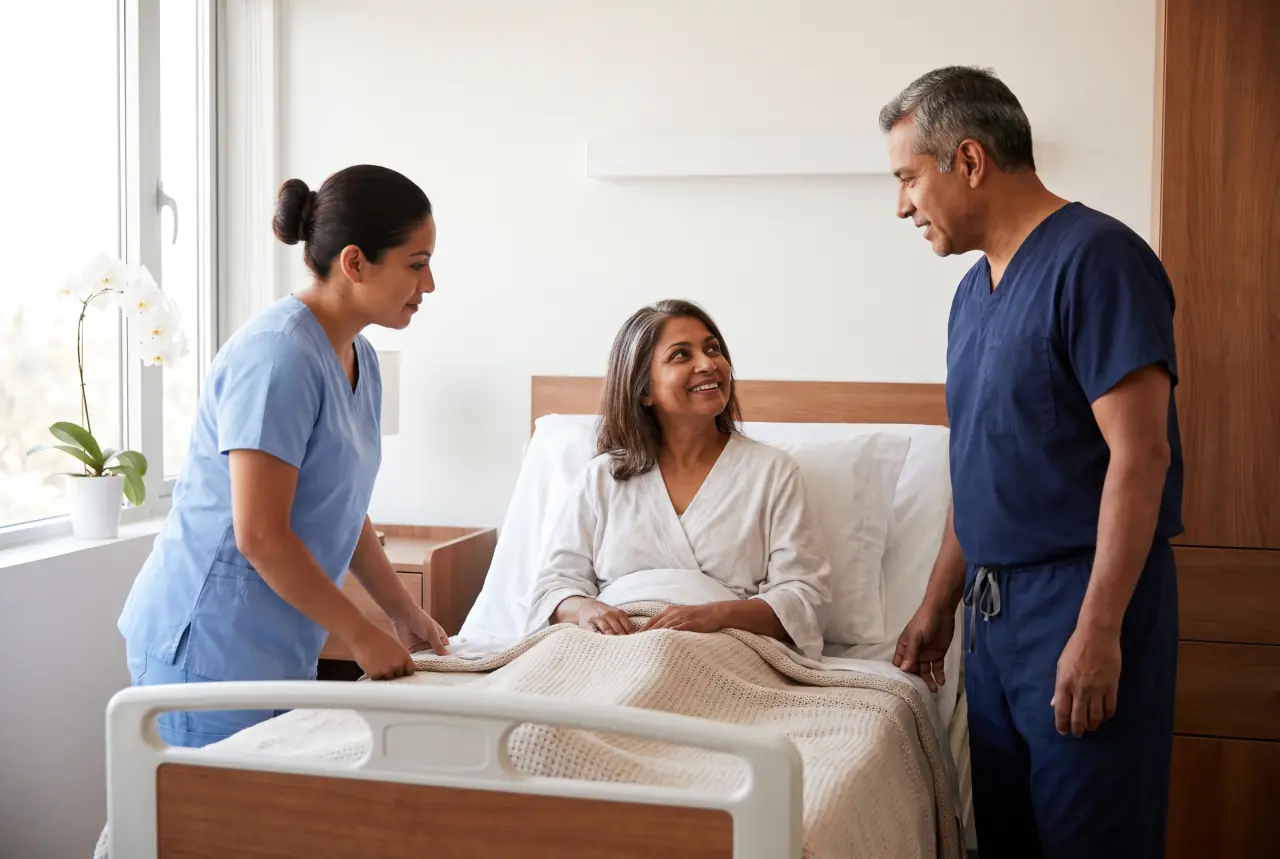
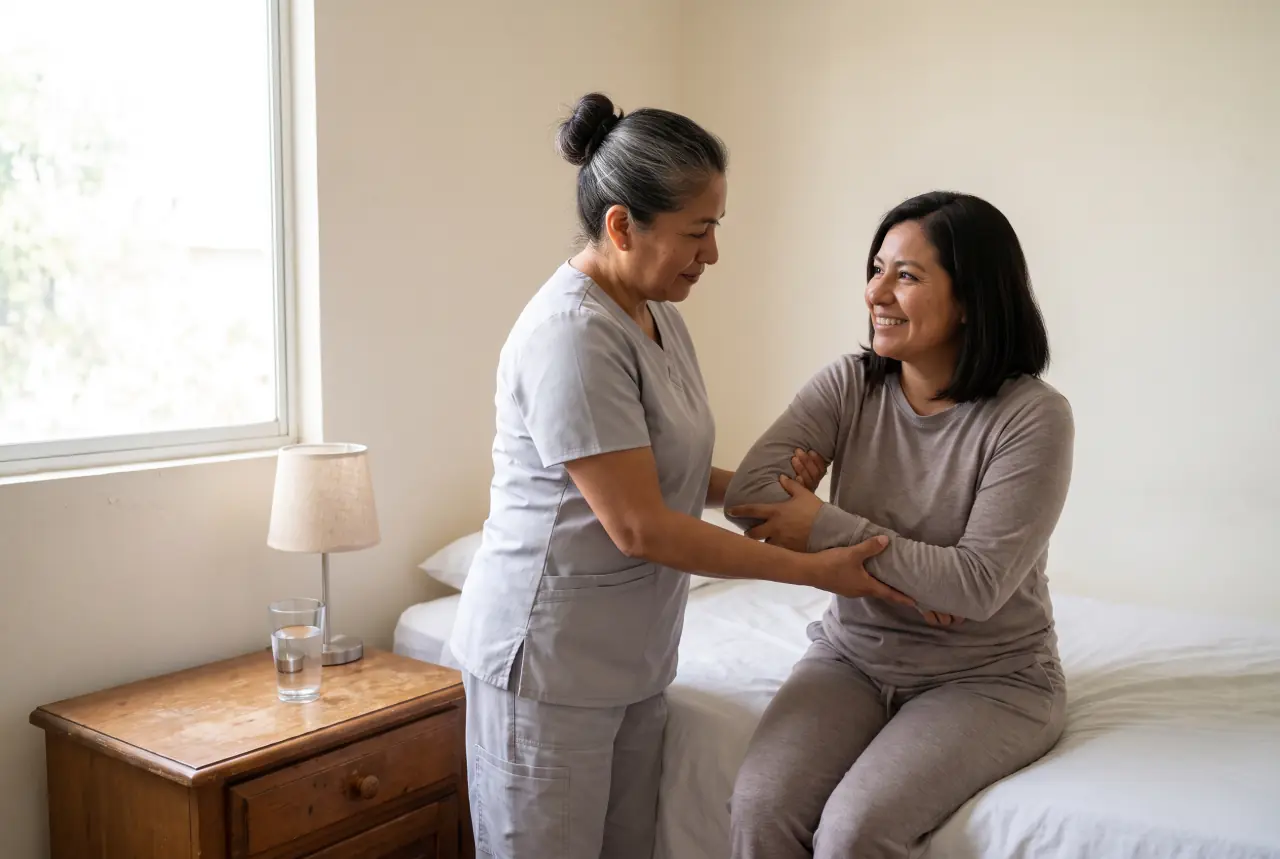
Recovery houses in Tijuana, or casas de recuperación, are places to stay after surgery that offer some care along with the room, and houses like these differ in who provides that care (American Society of Plastic Surgeons staff article). One can fit your recovery when four things line up: your surgeon agrees with the plan, trained staff will be on site, those staff have a direct line to your surgeon, and you know which hospital you would go to and how.
Each of those can be checked before you pay, mostly with a few written questions and two public lookups: the license numbers of the nurses who will care for you, and Baja California’s register of health establishments, which has a category for recovery houses.
At a glance
- What it is
- A place to stay after surgery that offers some care along with the room; what that care amounts to varies from house to house
- Who plans the first nights
- Your surgeon: whether you need hospital nights first, and how long you stay near the practice
- Rules in Baja California
- The state’s voluntary register of health establishments has a category for recovery houses
- Papers to ask for
- The house’s notice of operation, and the license number of its person responsible for health compliance
- Nursing staff
- General nurses and nursing technicians hold a license number (cédula); nursing assistants work under their supervision
- Distance to a hospital
- We found no official figure for how close a recovery house should be to a hospital or to your surgeon
Key takeaways
- Let your surgeon decide whether you need hospital nights first, and ask whether they work with a recovery house whose staff they know.
- Before you pay a house, get the name and nursing level of each person who will care for you, plus each nurse’s license number, and look them up.
- Ask the house for a photo of its notice of operation, and search for the house in Baja California’s register of health establishments.
- Agree in writing how the staff will reach your surgeon, which hospital you would go to and how you would get there.
- Share your surgeon’s written instructions and the warning signs with the house and your companion before surgery day.
In this guide
- What is a recovery house, and how is it different from a hospital or a hotel?
- The rules in Mexico and Baja California
- Who looks after you: nurses, their training and their licenses
- Hospital stay, recovery house or hotel with a companion
- Keeping your surgeon in charge of your recovery
- How far is the hospital? Planning the route to more care
- Recovery risks, and what to do about each
- Questions to ask a recovery house, and how to check the answers
- Before you go: checklist
- Warning signs while you recover and after you’re home
- Frequently asked questions
- Sources
What is a recovery house, and how is it different from a hospital or a hotel?
The names vary, from recovery house and healing house to surgical aftercare facility, and so does what’s on offer: suites, lymphatic massage, meals cooked by a chef, help picking up prescriptions (ASPS staff article). So does the staffing. A plastic surgeon quoted in a staff article from the American Society of Plastic Surgeons (ASPS), a U.S. professional society, contrasts aftercare facilities staffed by nurses who stay with patients around the clock with houses where there may be no health professional at all. At some of the nurse-staffed ones, patients can ask for extras, such as having the nurse empty drains, check wounds or help them out of bed to walk (ASPS staff article). Those descriptions come from U.S. cities, so treat them as the range to ask about, not as a picture of any house in Tijuana.
We found no official definition of a recovery house in Mexican federal law or in Baja California’s published health procedures. The closest is how the state files them: its register of health establishments places them in the class for private residences with nursing care for convalescent patients, and some entries add the label centros de recuperación, recovery centers (state register, in Spanish).
- A hospital or surgical clinic needs a health license (licencia sanitaria) to perform surgery under Mexico’s General Health Law (General Health Law, articles 198 and 373, archived copy, in Spanish), and for cosmetic surgery it should have a recovery area for after the operation (2018 health alert, in Spanish). Whether you stay overnight, and for how long, is your surgeon’s call.
- A recovery house is where you go once you leave the surgical facility; the rules cover the papers to ask it for.
- A hotel or a rental gives you a room, and the care comes from whoever stays with you; the comparison below covers what that person takes on.
This guide covers places to recover after surgery, not addiction treatment centers.
The rules in Mexico and Baja California
Why it matters: knowing which papers a recovery house may hold tells you what to ask the house for, and where to look it up, before you pay.
Two kinds of paperwork in Mexico’s General Health Law matter here. A place where surgical or obstetric procedures are performed needs a health license (articles 198 and 373). Health establishments that don’t need one file a notice of operation (aviso de funcionamiento) where the health ministry’s rules call for it, at least 30 days before they open; it states the type of services and, for a private establishment, names its person responsible for health compliance, the responsable sanitario (articles 47 and 200 Bis) (General Health Law, in Spanish).
We found no federal or Baja California rule that says which of the two a post-surgical recovery house needs. That is the limit of our search, which turned up no page on recovery houses from COFEPRIS, Mexico’s Federal Commission for Protection against Health Risks; the state procedures we were able to read mention them in a voluntary register.
That register belongs to COEPRIS BC (Comisión Estatal para la Protección contra Riesgos Sanitarios de Baja California), the state’s health-risk agency. Known as REPSSABI, it is meant for establishments that want to regulate themselves and be certified, and recovery houses are one of its categories. A house that applies presents its notice of operation, its notice naming the person responsible for health compliance, and that person’s degree and cédula (professional license number). It then answers a questionnaire, completes a self-assessment and receives a visit from the agency, and the result is a certificate, called a constancia (COEPRIS BC procedure, archived May 2026, in Spanish). For hospitals and surgical units, the procedure also lists a license for surgical procedures among the requirements; its list for recovery houses doesn’t include one.
When we checked on October 21, 2026, the register listed 8 establishments in the class for private residences with nursing care, all in Tijuana; five carry the label centros de recuperación (state register, in Spanish). Joining is voluntary, so a house that isn’t listed may still have filed its notice. A listing is a strong starting point and one part of the check, alongside the staff and your surgeon’s plan. Not every house may have filed a notice at all, which is why the steps below ask for the papers themselves.
How to check: ask the house for these before you pay, then look them up.
- A photo of its notice of operation, showing the name and address of the place where you’ll actually stay.
- The name and cédula number of its person responsible for health compliance. Look the cédula up the way you would a doctor’s (how to look up a cédula).
- The house’s entry in the REPSSABI register, if it has one. Compare the Clasificación (classification), Dirección (address) and Vigencia (valid until) columns with what you were told.
- Questions about the register go to COEPRIS BC’s office in central Tijuana, at 664 608 0075 on weekdays from 8 a.m. to 4 p.m. (COEPRIS BC procedure, in Spanish). Where to report a problem, and what the agency checks at medical offices, are in checking providers in Baja California.
Who looks after you: nurses, their training and their licenses
Why it matters: the care in a recovery house comes from its staff, and Mexico’s nursing standard tells you what each level of nursing staff has studied and is meant to do.
Nursing in Mexico has a federal standard of its own, NOM-019-SSA3-2013 (a Norma Oficial Mexicana, or official Mexican standard, from 2013). It applies in medical-care establishments where nursing services are given, and to people who provide nursing services independently (NOM-019, archived copy, in Spanish). Three of the levels of nursing staff it sets out:
| Level | Training and license | The care the standard assigns |
|---|---|---|
| General nurse (enfermera or enfermero general) | A bachelor’s degree in nursing and a cédula profesional | Medium-complexity care, mostly on their own judgment: assessing, planning, giving and evaluating it, and acting on the treatment plan |
| Nursing technician (técnico en enfermería) | Technical studies in nursing and a cédula to practice | Medium-complexity care, including tasks that come from the treatment plan |
| Nursing assistant (auxiliar de enfermería) | A certificate from a nursing assistant course lasting at least a year; counted as non-professional staff | Low-complexity care, such as comfort and hygiene, delegated and supervised by a technician or a nurse |
Source: NOM-019-SSA3-2013, sections 4.13 to 4.15 and 6.1 to 6.4. Nursing studies completed outside Mexico need a revalidation document (section 5.4).
Trained medical staff on site matter most, in the view of one U.S. plastic surgeon quoted in the ASPS staff article, who wouldn’t recommend a place where patients are left to fend for themselves or are looked after by someone without medical training (ASPS staff article). Our recovery section for a Brazilian butt lift sums up the same article’s advice on who should be on staff.
How to check: ask the house, in writing:
- Who will be on site during the day and overnight, at which level (general nurse, technician or assistant), and who supervises the assistants.
- The full name and cédula number of each nurse or technician. Look them up as you would a doctor’s, and if a search finds nothing, ask to see the cédula itself before you rely on the answer.
- What the staff will do for you, such as dressings, drains, medicines and help getting out of bed, and whether they’ll work from your surgeon’s written instructions. If you’ll have drains, looking after a drain shows what that care involves.
Hospital stay, recovery house or hotel with a companion
Why it matters: your surgeon decides whether you need nights in a hospital bed first; after that, the choice comes down to who will be with you and what they’re trained to do.
Before the operation, your surgeon should agree with you how long you’ll stay near the practice, according to a 2024 practice reference from ASPS for U.S. plastic surgeons whose patients travel, which is not a standard of care. Your surgeon should also tell you about hospital-specific or other reputable postoperative care resources or lodging, and caution you against unregulated “recovery homes” that have been linked to dangerous conditions or unlicensed staff (ASPS practice reference).
| Where you recover | Who looks after you | What to check |
|---|---|---|
| A hospital or clinic bed | The facility’s own staff, in a building licensed for surgery | Whether your surgeon plans to admit you and for how many nights, and that the license covers that building (clinic license) |
| A recovery house | Its own staff, at whatever level of training the house employs | The house’s papers, and each caregiver’s level and cédula, as set out in the two sections above |
| A hotel or a rental, with a companion | The person staying with you, working from your surgeon’s instructions | Who drives you and stays with you at least the first night after outpatient surgery (ASPS, on a tummy tuck), and who will help with dressings or drains |
Some operations, a tummy tuck among them, may be done on an outpatient basis (ASPS), though other sources describe hospital nights after a tummy tuck (the stay after a tummy tuck). Still, the pitch COFEPRIS found most often in 2018 advertising for irregular cosmetic-surgery clinics was a low price and no hospital stay (COFEPRIS alert, in Spanish). If your plan has you leave the surgical facility for a house or a hotel on the day of surgery, ask your surgeon why that suits your operation, and check the facility’s license.
A hotel or a rental puts more on your companion. The infection steps in recovery risks apply to them, and if your surgeon wants them to change a dressing, they should clean their hands first and put on clean medical gloves (MedlinePlus). Planning your recovery covers the rest of the companion’s role, from garments to time off.
How to check: ask your surgeon, before you book anywhere:
- Will you admit me after surgery, and for how many nights? How long to stay in Tijuana has hospital stays for some operations.
- How long should I stay near your practice, and can we put that in writing?
- Do you work with a recovery house whose staff you know, and what would make you advise against a house?
- If I stay in a hotel, what will my companion need to do, and can a nurse show them before I leave the facility?
Keeping your surgeon in charge of your recovery
Why it matters: having your surgeon close by after surgery, in case complications arise, is very important in one U.S. plastic surgeon’s view (ASPS staff article), and the house’s staff need your surgeon’s instructions to work from.
Under the ASPS practice reference, your surgeon should give you, and whoever looks after you, spoken and written instructions after surgery, with specific guidance on routine and emergency follow-up. Before the operation, the surgeon should find out whether you could come back for expected care, for treatment of common complications and for another operation if one were needed, and build your care plan around the answer (ASPS practice reference). If a problem comes up, the best case, as the ASPS staff article puts it, is trained medical staff on site and the surgeon who has followed your case from the start available to you (ASPS staff article).
Two more things to settle before you leave the facility: whether your check-ups will take place where you had surgery (CDC Yellow Book), and that you understand how to care for your wound and know whom to contact with questions or problems (CDC).
How to check: before surgery day:
- Ask your surgeon for written instructions covering wound and drain care, medicines, what to watch for and when to call. Give a copy to the house’s staff and to whoever travels with you.
- Agree who calls your surgeon if something changes, on which number, and how quickly your surgeon answers at night.
- Ask where and when your check-ups are, and how you’ll get there; safety in Tijuana has the travel advisory’s rules for rides.
- Ask what you’d be charged for more nights near the clinic, or another operation, before going home; what a quote should include lists the lines to get in writing.
- Agree with your doctor at home, too, how a problem after the trip would be handled (your plan if something goes wrong).
How far is the hospital? Planning the route to more care
Why it matters: if you need more care than a house can give, the time it takes to reach your surgeon’s facility or a hospital becomes part of your recovery.
We found no official figure for how close a recovery house should be to a hospital or to your surgeon. In a house without medical staff, getting to a doctor or a hospital in an emergency would be up to the patient (ASPS staff article). What a cosmetic-surgery facility itself must have, including an agreement with hospitals that can handle more complex care, is set out in how to check a clinic’s health license; ask your surgeon how those arrangements would work once you’re at the house.
How to check: before you book the house:
- Ask your surgeon which hospital they would use if you needed more care, and how you would get there from the house.
- Ask the house the same question, and check that the two answers match.
- Look up the drive from the house to your surgeon’s facility and to that hospital, at night as well as during the day.
- Ask whether the house has a car and driver for check-ups, or an arrangement with an ambulance service, and get the answer in writing.
- Carry the addresses of the house, your surgeon’s facility and the hospital, written in Spanish, and give a copy to your companion; the warning signs say when to call for help.
Recovery risks, and what to do about each
Why it matters: infections, blood clots and falls can each happen while you recover, and the people around you in the first days are the ones who can lower the risk or spot a problem early.
Infection-related problems are the most common complications among people who travel for medical care, and standards of care, including infection control, vary significantly outside the United States (CDC Yellow Book); what can go wrong covers the wider list of medical-tourism risks.
| Risk | What you can do |
|---|---|
| Infection | Anyone who looks after you should clean their hands before touching your dressings. If you don’t see a staff member do it, ask them to, and keep visitors’ hands off your wound and dressings (CDC). Nothing, not even antibiotic cream, goes on the incision unless your surgeon says so (MedlinePlus). |
| Blood clots | A blood clot in the lungs may occur after surgery, or during long bed rest or long periods in one position. Moving your legs often while you lie or sit for long periods can help prevent clots in the deep veins, and people at high risk may be prescribed a blood thinner (MedlinePlus). Your surgeon should assess your clot risk before the operation (ASPS practice reference); ask how much to walk, and follow the plan exactly. For the trip home, see lowering your clot risk on the journey. |
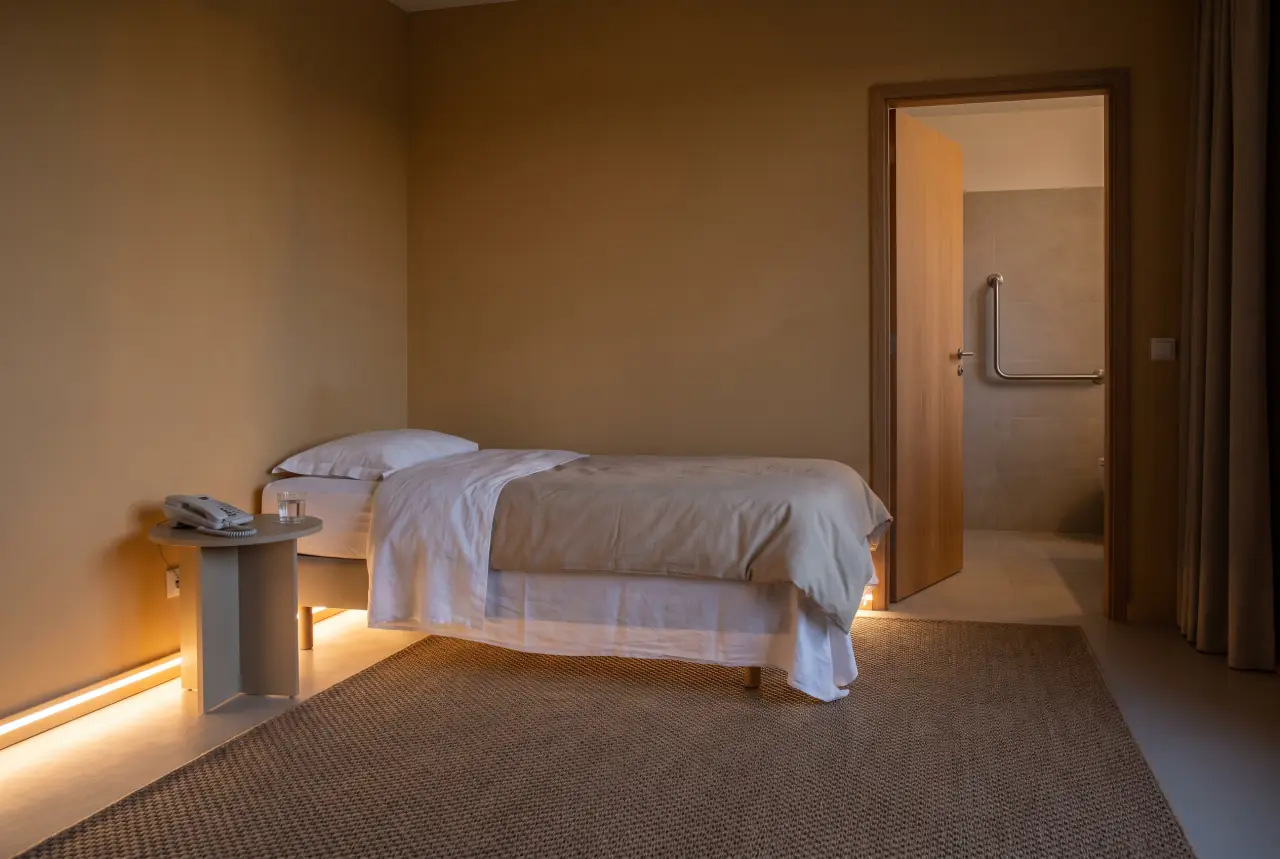
| Falls | Older adults and people with medical problems are at risk of falling. A bed low enough that your feet touch the floor when you sit on its edge, good light on the way from the bedroom to the bathroom, grab bars and a slip-proof mat in the shower, no loose rugs or cords, and a phone within reach all help prevent falls at home. Get up slowly, holding something stable, and ask whether any of your medicines can make you dizzy (MedlinePlus). Check the room for these before you settle in. |
| Missed warning signs | Ask who checks on you overnight and how often. Your surgeon’s instructions should cover routine and emergency follow-up care (ASPS practice reference); give them, with the warning signs below, to the staff and your companion. |
| Medicines | Take opioid pain medicines only as prescribed; they often cause drowsiness and impaired judgment, so don’t drink alcohol with them (MedlinePlus). Keep your own list of every medicine, its dose and its times, and check what you’re handed against it. In COFEPRIS’s 2018 checklist for cosmetic-surgery clinics, medicines must carry a Mexican health registration and Spanish labels, be in date, and not be handed out loose from their packs (COFEPRIS alert, in Spanish). Carrying them home has rules of its own. |
How to check: on your first day at the house, walk the route from the bed to the bathroom with whoever is helping you, and ask who will look in on you that night.
Questions to ask a recovery house, and how to check the answers
Ask in writing, and keep the replies.
| Ask | How to check the answer |
|---|---|
| Have you filed a notice of operation, and who is your person responsible for health compliance? | Get a photo of the notice, check the name and address, and look up that person’s cédula |
| Are you in Baja California’s register, REPSSABI? | Search the register yourself; a house that isn’t listed may still have filed its notice |
| Who is on site by day and overnight, and at which nursing level? | Get each name and cédula number and look them up; ask who supervises the nursing assistants |
| What will your staff do for me: dressings, drains, medicines, help walking? | Compare the answer with your surgeon’s written instructions, and ask your surgeon whether it covers what your operation needs |
| How do your staff reach my surgeon, and how quickly? | Ask your surgeon to confirm they know the house and will take its staff’s calls |
| Which hospital would I go to, and how would I get there? | Put the same question to your surgeon and check that the answers match |
| How are medicines given and recorded? | Check each dose against its label and your surgeon’s prescription |
| What does the price include, and what costs extra? | Get it in writing: nursing, meals, rides to check-ups and any extra nights |
Before you go: checklist
- Your surgeon’s plan for the first nights in writing: any hospital nights, where you’ll stay after that and for how long
- A photo of the house’s notice of operation, matching the address where you’ll stay
- The house looked up in Baja California’s register, REPSSABI
- Names and nursing levels of the staff who will care for you, and the nurses’ cédula numbers, looked up
- Your surgeon’s direct number shared with the house and your companion, and the surgeon’s agreement to take the staff’s calls
- The hospital your surgeon would use, and the route from the house, agreed
- Written instructions from your surgeon, with a copy for the house
- Your own list of medicines, doses and times
- The room checked for falls: a low bed, a lit path to the bathroom, grab bars
- If you’ll recover in a hotel after outpatient surgery, someone to drive you and stay with you at least the first night
- A doctor at home lined up for when you’re back (line up a doctor at home)
- The warning signs below read by you and by whoever is with you
Warning signs while you recover and after you’re home
In an emergency, call 911, which works in the U.S. and Mexico, then tell your surgeon. Give this table to the house’s staff and to whoever travels with you; your surgeon’s own list comes first.
| What you notice | What to do |
|---|---|
| Shortness of breath that comes on suddenly, chest pain that tends to get worse when you breathe in deeply, fast breathing or a racing heart, a sudden cough that may bring up blood, or feeling dizzy, lightheaded or faint | These can be symptoms of a pulmonary embolus, a blocked artery in the lungs, most often from a blood clot: go to the emergency room or call 911 (MedlinePlus) |
| Swelling in a leg or an arm, pain or tenderness you can’t explain, skin that’s warm to the touch, or redness or a change in skin color | These can be signs of a deep vein thrombosis, a clot in a deep vein: contact your doctor as soon as possible (CDC) |
| Redness or pain around the incision that gets worse, swelling or bleeding, a wound that grows larger or deeper or looks dark or dried out, or drainage that increases, turns thick, tan, green or yellow, or smells bad | Contact your surgeon (MedlinePlus) |
| A temperature above 100°F (37.7°C) that lasts more than 4 hours | Contact your surgeon (MedlinePlus) |
| A fall, or a near fall | Tell your surgeon or the doctor looking after you (MedlinePlus) |
| You think something is wrong but can’t reach your surgeon | Get medical care without waiting for a reply, and tell whoever sees you which operation you had, where and when (CDC Yellow Book) |
Each operation has signs of its own: see the warning signs after a tummy tuck and after a Brazilian butt lift, and, once you’re back, warning signs after you get home.
Frequently asked questions
Are recovery houses in Tijuana safe?
It depends on the house, and the parts that matter can be checked before you pay. Staffing ranges from nurses on duty to no health professional at all, in a staff article from the American Society of Plastic Surgeons describing recovery houses in U.S. cities (ASPS staff article), so ask who will look after you and look up their license numbers. Ask, too, how the staff reach your surgeon and which hospital you would go to. In Baja California, the state’s health-risk agency keeps a voluntary register with a category for recovery houses; the rules show how to search it.
Do I need a recovery house after plastic surgery in Tijuana?
Not necessarily. Your surgeon decides whether you need hospital nights first and how long you should stay nearby; after that, a recovery house, or a hotel with someone to help you, can fit the plan. When surgery such as a tummy tuck is done on an outpatient basis, arrange for someone to drive you and to stay with you for at least the first night (ASPS). Ask your surgeon whether they work with a house whose staff they know; the comparison sets out what to check for each option.
What should a recovery house provide?
We found no official list of what a recovery house must provide, so measure one against your surgeon’s written instructions. In the view of one U.S. plastic surgeon quoted in a staff article from the American Society of Plastic Surgeons, trained medical staff on site come first (ASPS staff article). Add a direct line from the staff to your surgeon, a plan for getting you to a hospital, hands cleaned before anyone touches your dressings (CDC), and a room set up against falls, with a low bed, a lit path to the bathroom and grab bars (MedlinePlus). The questions to ask show how to check each one.
Are recovery houses in Mexico licensed?
We found no federal or Baja California rule written specifically for them. Under Mexico’s General Health Law, a place where surgery is performed needs a health license, while health establishments that don’t need one file a notice of operation where the health ministry’s rules call for it; for a private establishment, the notice names the person responsible for health compliance (General Health Law, in Spanish). In Baja California, the voluntary register of COEPRIS BC, the state’s health-risk agency, accepts recovery houses and asks them for that notice (COEPRIS BC, in Spanish). Ask the house for a photo of its notice, and check that it shows the address where you’ll stay.
How do I check a nurse’s license in Mexico?
Ask for the nurse’s full name and cédula number, then look it up the way you would a doctor’s (how to look up a cédula); if nothing comes up, ask to see the cédula itself. Under Mexico’s nursing standard, a general nurse holds a bachelor’s degree in nursing and a cédula profesional, and a nursing technician holds a cédula to practice. A nursing assistant has a course certificate instead and gives low-complexity care that a nurse or technician delegates and supervises (NOM-019, in Spanish).
How long do people stay in a recovery house after surgery in Tijuana?
We found no official figure. Your surgeon sets how long you stay near the practice, and guidance for U.S. plastic surgeons asks them to agree that with you before the operation (ASPS practice reference). It depends on your operation, any hospital nights, your check-ups and when you can travel; how long to stay in Tijuana sets out what to plan around.
Sources
- Aftershocks: Beware of unlicensed ‘healing houses’ (staff article, April 21, 2023) American Society of Plastic Surgeons
- Practice Reference: Appropriate Care of Patients Traveling for Surgery (September 2024) American Society of Plastic Surgeons
- How should I prepare for a tummy tuck? American Society of Plastic Surgeons
- Ley General de Salud, last reformed January 15, 2026 (in Spanish; archived copy, October 2026) Cámara de Diputados, Mexico
- Registro Estatal de Establecimientos Prestadores de Servicios de Salud y Bienestar (REPSSABI), BC-COEPRIS-070 (in Spanish; archived copy, May 2026) COEPRIS Baja California, Registro Estatal de Trámites y Servicios
- Padrón Estatal de Establecimientos: Servicios de Salud y Bienestar (REPSSABI) (in Spanish) COEPRIS Baja California
- NOM-019-SSA3-2013, Para la práctica de enfermería en el Sistema Nacional de Salud (in Spanish; archived copy of the Diario Oficial text) Secretaría de Salud, Mexico, via the Diario Oficial de la Federación (SIDOF)
- Alerta Sanitaria: Clínicas de Cirugía Estética Irregulares, September 11, 2018 (in Spanish) COFEPRIS
- Medical Tourism (CDC Yellow Book 2026) U.S. Centers for Disease Control and Prevention (CDC)
- Surgical Site Infection Basics U.S. Centers for Disease Control and Prevention (CDC)
- Understanding Your Risk for Blood Clots with Travel U.S. Centers for Disease Control and Prevention (CDC)
- Pulmonary embolus MedlinePlus, U.S. National Library of Medicine
- Surgical wound care - closed MedlinePlus, U.S. National Library of Medicine
- Preventing falls MedlinePlus, U.S. National Library of Medicine
- Pain medications - narcotics MedlinePlus, U.S. National Library of Medicine
About this guide
The Uriym editorial team researched this guide from the 15 sources above, drafted it with AI assistance, and checked it claim by claim against those sources before publishing, last on . Our editorial standards explain how we choose sources, handle prices and make corrections.
Uriym is a healthcare navigation platform, not a medical provider. Its founder, Adriana Mendez, grew up in a family that traveled to Mexico for care and has done it herself for the past ten years. How Uriym works
This is general information, not medical, legal or financial advice: your treating provider decides what care is right for you. Rules, prices and advisories change, so check the official page before you act. Found something wrong or out of date? Email support@uriym.com.