
How soon can you fly after surgery? You can fly once the surgeon who operated on you clears you, and that date depends on the procedure you had, how your recovery is going and your own risk of blood clots. Your surgeon’s instructions come first, even when they mean waiting longer than any published figure.
For most operations, the general waiting times that public health and aviation bodies publish run from about a day to 2 weeks. Use them to plan your recovery days and to start the conversation with your surgeon, not as a date to book. Around that date, the rest is planning you can do yourself: where to recover, how to keep moving on the journey, what to tell airport security about dressings and drains, and which records to carry home.
At a glance
- Who sets your fly date
- The surgeon who operated on you, based on the procedure, your recovery and your own risk of blood clots
- Published waiting times
- About a day to 2 weeks for most operations; see the table by operation
- On the journey
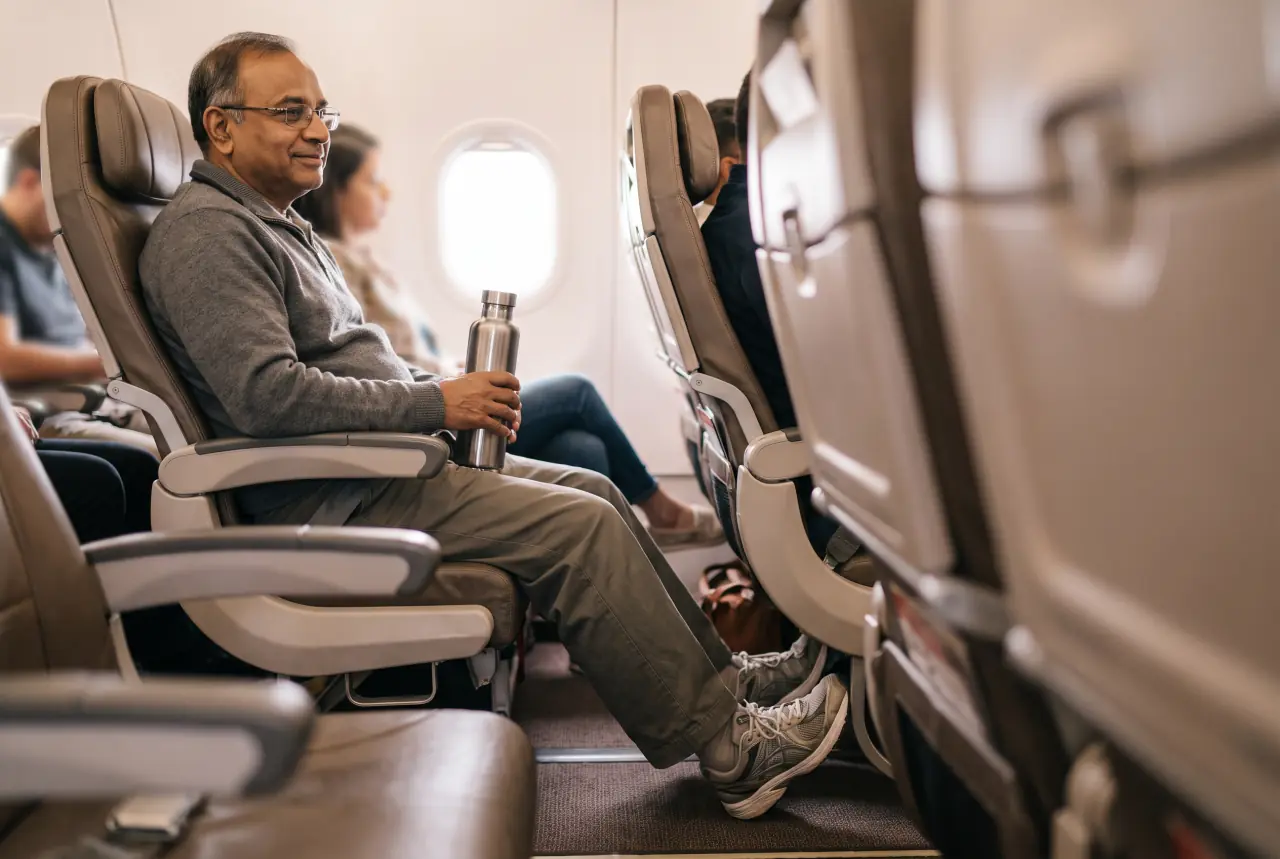
- An aisle seat, a walk every 2 to 3 hours and calf exercises while you sit
- Stockings and medicine
- Compression stockings only if your doctor recommends them; don’t start aspirin or a blood thinner on your own
- Driving instead
- No cabin pressure on a drive near sea level, but still hours of sitting; plan stops to walk
- At the airport
- Tell the officer about dressings, drains and garments before screening; ask for screening help at least 72 hours ahead
Key takeaways
- Get your fly date from your surgeon before you buy a ticket, and ask whether a longer flight or a connection changes it.
- Plan your recovery days near the surgeon, and your follow-up at home, before you book, so you don’t have to rush a flight.
- Tell your surgeon every blood clot risk factor that applies to you, and ask whether you need compression stockings or medicine for the trip.
- Book an aisle seat and walk every 2 to 3 hours; if you go by road, plan stops and let someone else take the wheel.
- Tell airport security about dressings, drains and garments before screening, and read the warning signs before you travel.
In this guide
- How soon can you fly after surgery? Published guidance by operation
- Notes for cosmetic, weight-loss, eye and dental surgery
- Your blood clot risk: what to tell your surgeon
- Planning the trip home from Tijuana or Guadalajara
- Is driving home better than flying after surgery?
- How to lower your risk of blood clots on the plane or in the car
- Airport security with dressings, drains and compression garments
- Questions to ask your surgeon before you book the flight home
- Before you go: checklist
- Warning signs of a blood clot after surgery
- Frequently asked questions
- Sources
How soon can you fly after surgery? Published guidance by operation
The figures below come from the UK Civil Aviation Authority (CAA), which publishes British aviation-medicine guidance; the U.S. Centers for Disease Control and Prevention (CDC), including its Yellow Book, a travel health guide for clinicians; and England’s National Health Service (NHS). How long to wait depends on how complex and extensive the operation was: simple cataract or corneal laser surgery, for example, has one of the shortest waits because, the CAA says, it doesn’t cause major complications (UK CAA).
| Surgery or procedure | Published guidance | Source |
|---|---|---|
| Keyhole (laparoscopic) surgery | “one to two days” | UK CAA, passenger guidance |
| Laparoscopic procedures | Avoid flying for “approximately 24 hours” | UK CAA, guidance for health professionals |
| Simple abdominal surgery | “between four and five days” | UK CAA, passenger guidance |
| Abdominal surgery | Travel “should be avoided for 10 days” | UK CAA, guidance for health professionals |
| Major chest or abdominal surgery | “approximately ten days” | UK CAA, passenger guidance |
| Chest or abdominal surgery, for people who traveled for care | “should not fly for 10 days” | CDC Yellow Book, medical tourism chapter (2026 edition) |
| Major surgery, “particularly those involving the chest” | “10-14 days” | CDC Travelers’ Health (last reviewed 2023) |
| Breast surgery (implants, a lift or a reduction) and liposuction | “5 to 7 days” | NHS, cosmetic surgery abroad (last reviewed December 2022) |
| Facial cosmetic procedures or tummy tucks | “7 to 10 days” | NHS, cosmetic surgery abroad |
| Laser treatments or cosmetic procedures to the face, eyelids or nose | “7–10 days” | American Society of Plastic Surgeons, as cited in the CDC Yellow Book |
| Simple cataract or corneal laser surgery | “24 hours” | UK CAA, passenger guidance |
| More complex eye surgery, such as for a detached retina | “approximately one week” | UK CAA, passenger guidance |
| Retina repair using a gas bubble in the eye | “approximately 2 weeks” with sulphur hexafluoride, “6 weeks” with perfluoropropane | UK CAA, guidance for health professionals |
Each figure is quoted in its source’s own words. Neither CAA page defines simple or major surgery, and the guidance for health professionals gives 10 days after abdominal surgery without the passenger page’s split between simple and major.
Gas and air pressure. Airliner cabins are pressurized to between 5,000 and 8,000 feet, which makes gas in the body expand (UK CAA). At 8,000 feet, gas in the intestines expands by about 30%, which can put people recovering from abdominal surgery at risk of tearing suture lines (stitches) or bleeding; the 10-day wait after abdominal surgery is meant to avoid that, and the 24-hour wait after a laparoscopic procedure allows for leftover carbon dioxide gas that may remain in the abdomen (UK CAA). Both CDC figures are also meant to avoid risks from changes in air pressure (CDC Yellow Book; CDC Travelers’ Health).
When to allow longer. After surgery the body uses more oxygen, and oxygen levels may be lower in people who are older, low on fluids, anemic or living with heart or lung disease; for them, delaying the flight for several days or requesting oxygen would be wise (UK CAA). Ask your surgeon whether that applies to you.
Where two figures differ for your operation, ask your surgeon which one they go by before you book.
Notes for cosmetic, weight-loss, eye and dental surgery
Why it matters: some operations have a published figure of their own and some have none, so knowing which applies to yours tells you what to ask your surgeon.
Cosmetic surgery. For cosmetic procedures, the table gives figures from the NHS and the American Society of Plastic Surgeons. Air travel and major surgery increase the risk of a blood clot, which can be life threatening (NHS), so the steps to lower your risk on the journey apply after cosmetic surgery too. The Yellow Book’s 10-day figure is for chest or abdominal surgery and doesn’t say whether that includes cosmetic operations on the abdomen, such as a tummy tuck. None of our sources gives a separate figure for several procedures done in one operation, such as a “mommy makeover.” A holiday straight after cosmetic surgery is unrealistic, because it can increase the risk of things going wrong: plan to rest, and skip alcohol, sunbathing, sightseeing and going in the water (NHS). For costs, credentials and recovery planning, see our guide to plastic surgery in Tijuana, and for a fat transfer to the buttocks, our BBL guide.
Weight-loss surgery. A gastric sleeve or bypass is abdominal surgery, and the Yellow Book’s 10-day figure for abdominal surgery doesn’t distinguish keyhole from open operations. You may also see the CAA’s shorter keyhole figure quoted; neither CAA page says which category weight-loss surgery belongs in, so ask your surgeon. Obesity is one of the blood clot risk factors, and in a study the Yellow Book cites, travelers with a body mass index (BMI) of 30 or more who sat by the window had a 6-fold increase in risk (CDC Yellow Book). That figure comes from one study of travelers, not a prediction for you; the practical response is an aisle seat, and a question to your surgeon about stockings or medicine for the flight. For eligibility, costs and lifelong follow-up, read our guides to the gastric sleeve in Mexico and the gastric bypass in Mexico. A gastric balloon isn’t surgery, and its own travel limits are in the gastric balloon guide.
Eye surgery. In some retina repairs, the eye doctor injects a gas bubble that pushes the retina back into place, and you may not fly or go to high altitudes until the bubble dissolves, which most often happens within a few weeks (MedlinePlus). The wait depends on which gas was used (see the table), so if gas was used, don’t go by the one-week retina figure on the CAA’s passenger page. Because high altitude is part of that limit, ask your eye surgeon about mountain roads on a drive home too.
Dental surgery. We did not find an official or professional-society source that sets a flying interval after tooth extractions, bone grafts or implant surgery, so we don’t give one. Ask your dentist or oral surgeon before you book. For planning an implant trip, see our guide to dental implants in Mexico.
How to check: before you book, ask your surgeon:
- Which published figure they go by for your operation, if any.
- Whether combining procedures, a longer flight or a connection changes your date.
- Which check-ups they want before you leave, such as a drain or dressing check.
Your blood clot risk: what to tell your surgeon
Why it matters: your own risk factors help decide whether you need stockings or medicine for the trip, so your surgeon needs to hear every one that applies.
A deep vein thrombosis (DVT) is a blood clot in a deep vein, most often in the legs. If part of it breaks off and travels to the lungs, where it blocks an artery, it becomes a pulmonary embolism (PE), which may be fatal (CDC; MedlinePlus). The signs to know, and what to do about each, are in the warning signs section at the end.
The risk of a clot from travel is generally very small, and most patients who develop one have one or more other risk factors, recent surgery among them (CDC). Surgery and air travel each raise the risk on their own, and travel after surgery raises it further, because you may sit for long periods while your blood clots more easily (CDC Yellow Book). Clots can develop in veins damaged by surgery, and being still slows the blood flow in your veins, which can make it easier for clots to form; especially combined with other risk factors, a DVT can develop on a flight of more than 4 hours or during bed rest after surgery (NHLBI). The chance of a clot is highest in the first 3 months after surgery, then lowers with time (NHLBI).
Each of these is a risk factor for a clot, and the more you have, the greater the chance (CDC):
- Older age (the risk rises after 40), and overweight or obesity
- Recent surgery or injury (within 3 months), or limited mobility such as a leg cast
- Birth control that contains estrogen, or hormone replacement therapy
- Pregnancy, and the 3 months after giving birth
- A previous blood clot, an inherited clotting disorder or a family history of clots
- Active cancer or recent cancer treatment
- Heart or lung conditions, diabetes, varicose veins, or a catheter in a large vein
How to check: tell your surgeon every item on the list that applies to you, so the plan for the trip home accounts for it. After weight-loss surgery you may tick obesity and recent surgery; after cosmetic surgery, recent surgery and perhaps estrogen-containing birth control. Ask about a plan to prevent clots, as advised for anyone scheduled for major surgery (NHLBI), and whether it includes stockings or medicine for the journey.
Planning the trip home from Tijuana or Guadalajara
Why it matters: recovery days near your surgeon let you wait for the go-ahead, instead of fitting your recovery around a flight you’ve already booked.
What happens after the operation belongs in the plan from the start: some facilities charge substantial fees for follow-up care on top of the base price (CDC Yellow Book). Flying in to Guadalajara rather than crossing by land? Our guide to medical tourism in Guadalajara covers both flights.
How to check: arrange these before you book the flight:
- Where you’ll stay right after the procedure, for as long as your surgeon wants you nearby, and a way to get any follow-up care you need in the United States (CDC Travelers’ Health).
- A visit with your doctor or a travel medicine clinician at least 4 to 6 weeks before the trip, to talk through the risks your health, the procedure and travel before and after it may bring (CDC Travelers’ Health).
- Whether follow-up visits happen at the same facility, and what they cost (CDC Yellow Book).
- What happens if you need more surgery, how easily you could travel back, and how you’d get home if something went wrong, at what cost (NHS).
- International travel health insurance that covers medical evacuation back to the United States (CDC Travelers’ Health); our guide to medical tourism costs explains what such policies may leave out.
- Copies of all your medical records before you leave, translated into English if needed (CDC Travelers’ Health), to share with every health professional you see for follow-up (CDC Yellow Book).
- Your medicines in their original packaging, with enough for the whole trip plus a little extra, and copies of your prescriptions (CDC Travelers’ Health).
- If your case is complex, a call to the airline, so its medical adviser has as much information as possible before deciding whether you’re fit to fly (UK CAA).
- A visit with a doctor at home soon after you return, where you describe every procedure you had (CDC Yellow Book).
If you’re still choosing a clinic, start with our guide to checking a doctor and clinic in Mexico.
Is driving home better than flying after surgery?
Why it matters: a drive avoids cabin pressure but not the hours of sitting, so it changes part of your plan, not all of it.
Not automatically. Anyone traveling more than 4 hours, by air, car, bus or train, can be at risk of a clot, and the longer you’re still, the greater the risk (CDC). Long bus, car and train trips show a similar increase in clot risk to flights, which suggests the main problem is limited movement rather than the cabin (CDC Yellow Book).
How to check: if you’re weighing a drive, plan for these:
- Altitude: a drive that stays near sea level avoids the gas expansion described in the published guidance; ask your surgeon about routes that climb into the mountains.
- Stops: build breaks into the schedule to stretch and walk around (CDC Travelers’ Health).
- The driver: let someone else drive. Narcotic (opioid) pain medicine often causes drowsiness and impaired judgment, so don’t drive while you’re taking it (MedlinePlus), and ask your surgeon when you can drive again.
- The border: coming home from Tijuana by road includes the line to cross back into the United States, and time in that line is time sitting. Our guide to crossing the border to Tijuana covers lanes, documents and wait times.
How to lower your risk of blood clots on the plane or in the car
Why it matters: sitting still slows the blood flow in your legs, and moving them often on a long trip can help prevent a clot (NHLBI; MedlinePlus).
These steps come from official advice for travelers in general, so after an operation, check each one with your surgeon. Frequent walking and calf exercises are reasonable advice for long trips (CDC Yellow Book), and simple measures like these may reduce the risk of clotting (UK CAA).
How to check: on the day you travel:
- Get up and walk. Choose an aisle seat when possible, so you can walk around every 2 to 3 hours (CDC Travelers’ Health, last reviewed in 2022). In the window-seat study mentioned above, travelers by the window had twice the risk of those on the aisle (CDC Yellow Book).
- Work your calves while you sit. Raise and lower your heels with your toes on the floor, then your toes with your heels on the floor, and tighten and release your leg muscles (CDC Travelers’ Health). Ask your surgeon before trying the knee-to-chest stretch that some airlines suggest (CDC).
- Wear compression stockings only if your doctor recommends them. If you have additional risk factors, talk to your doctor about compression stockings or medicine before departure (CDC Travelers’ Health). For higher-risk travelers, guidelines summarized in the Yellow Book go further: the American Society of Hematology names recent surgery as an example of substantially increased risk and, for trips of more than 4 hours, suggests graduated compression stockings or preventive blood-thinner injections, and the American College of Chest Physicians specifies below-the-knee stockings (CDC Yellow Book). The body garment you may wear after liposuction or a tummy tuck is a different item, so ask whether you need both.
- Don’t start aspirin or a blood thinner on your own. Taking aspirin to prevent clots when traveling is not recommended (CDC Travelers’ Health). Its routine use hasn’t been shown to reduce the risk of clotting in the leg veins, and the balance of benefit and harm doesn’t favor it (UK CAA). For high-risk travelers, preventive medicine is an individual decision, and where the benefits outweigh the risks, blood thinners are recommended over aspirin; bleeding can be a complication of blood thinners (CDC Yellow Book). After surgery, that decision is your surgeon’s. If you’ve been prescribed a blood thinner, follow your doctor’s instructions (CDC), and if you take aspirin for other reasons, check with your doctor (CDC Travelers’ Health).
- Drink water and go easy on alcohol. Drinking enough non-alcoholic drinks is important on a long flight (UK CAA). There’s no direct evidence that drinking more or avoiding alcohol prevents travel clots, but staying hydrated is reasonable and unlikely to cause harm, and alcohol can make you move less (CDC Yellow Book).
- Skip the sleeping pill. Sleeping in one position in your seat for a long time might increase your risk of a DVT, so it’s better not to take sleeping pills during the flight (UK CAA). Opioid pain medicine often causes drowsiness too, as noted under driving home, so ask your surgeon how to take it on travel day.
Airport security with dressings, drains and compression garments
Why it matters: every passenger and bag is screened, including any dressing, drain or garment you’re wearing, and if you need help, you can talk to the officer about the best way to complete screening (TSA).
Screening by the Transportation Security Administration (TSA) applies when you fly from a U.S. airport, such as San Diego’s. You can tell the officer about a medical condition out loud, with a TSA Notification Card or with medical documentation (TSA).
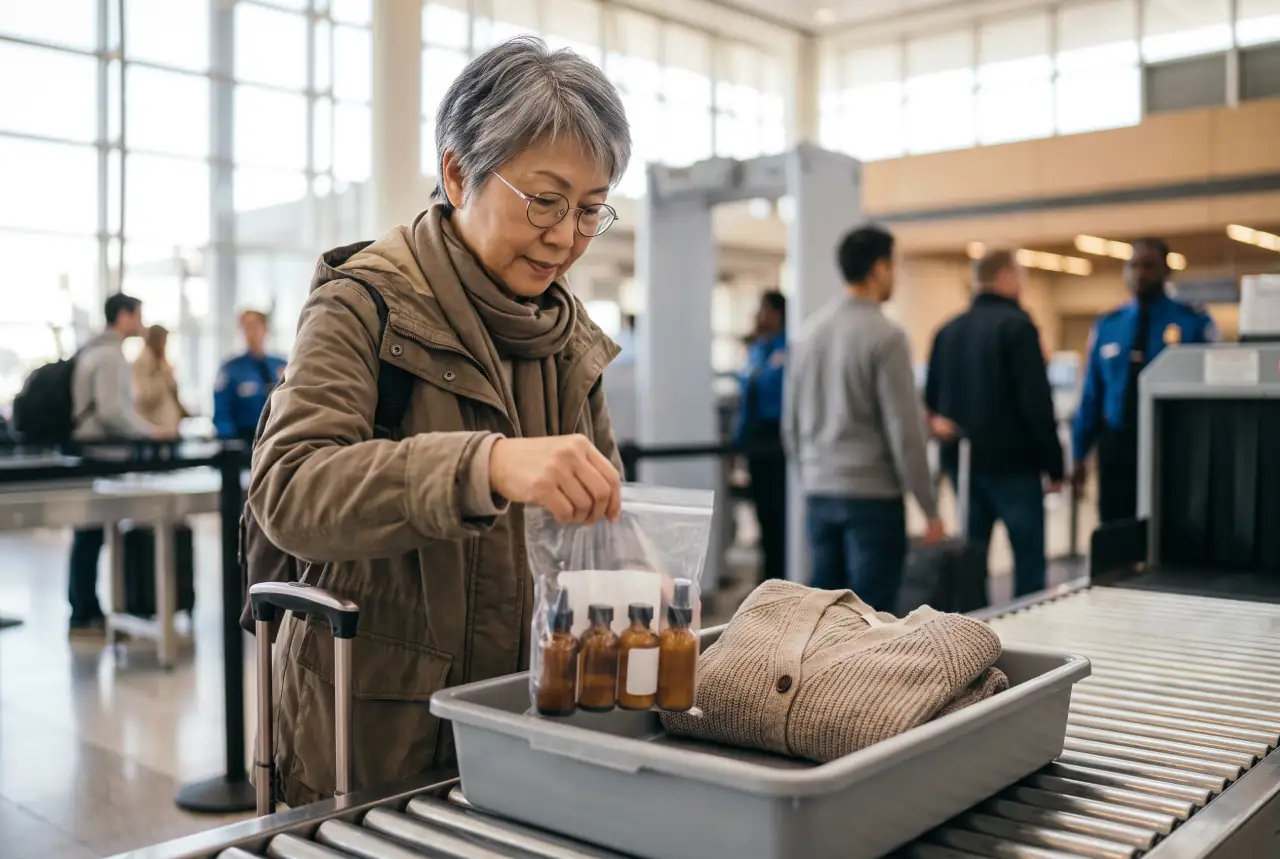
How to check: tell the officer before screening begins, and know what to expect:
- Bandages, dressings and compression sleeves: in standard lanes they get extra screening, which can include inspection, a hand-held metal detector and a test of your hands and the item for traces of explosives. In TSA PreCheck lanes, where you don’t need to remove your shoes, belt or light jacket, extra screening is required if the item sets off an alarm (TSA).
- Drains: TSA’s guidance doesn’t mention surgical drains, so it gives no specific procedure for them; point them out before screening. The closest items it lists, ostomy pouches, medical ports and catheters, can be screened without removing or exposing them (TSA).
- Compression garments and binders: these aren’t named either. The closest items listed are compression sleeves (above) and support braces and appliances. For braces and appliances, you tell the officer where they are, you can ask for private screening with a witness of your choice, and TSA won’t ask you to expose a sensitive body area (breast, groin or buttocks). In standard lanes, a support brace that sets off an alarm must be removed for X-ray screening (TSA).
- The body scanner: to use it, you must be able to stand and walk unassisted and hold your arms above your head for 5 to 7 seconds without support. If you can’t after breast or abdominal surgery, or would rather not, you get a pat-down instead, from an officer of the same sex (TSA).
- Liquid medicines: larger amounts of medically necessary liquids are allowed in reasonable quantities for your flight, but you must declare them (TSA). What you may bring back across the border is covered in our guide to bringing prescription drugs from Mexico.
- Help through screening: a TSA Passenger Support Specialist, an officer with specialized training in assisting travelers with medical conditions, can help you through screening. To request one, contact TSA Cares at least 72 hours before your flight, online or at (855) 787-2227, so TSA can prepare for your needs; the service doesn’t exempt you from screening or speed it up.
- Wheelchairs: airport wheelchairs come from your airline, not TSA, so ask the airline ahead of time (TSA Cares).
Questions to ask your surgeon before you book the flight home
- What date can I fly, and would a longer flight or a connection change it?
- Which published figure do you go by for my operation?
- Do I need compression stockings or blood-thinning medicine for the trip?
- Will my drains be out before I fly? If not, how do I manage them on the plane?
- Should I wear my compression garment during the flight?
- Would a long car ride suit my recovery better than a flight?
- How should I take my pain medicine on travel day?
- Which symptoms should I call you about, and how do I reach you once I’m home?
Before you go: checklist
- Your surgeon’s go-ahead to fly on a specific date, for a flight of your length
- Clot risk factors shared with your surgeon; stockings, a blood thinner or neither agreed, and how to use them
- Every check-up your surgeon wanted before you leave, including any drain or dressing check
- Copies of your records in English: the operation, your discharge instructions and your medicines
- Medicines in their original packaging in your carry-on, with copies of your prescriptions
- An aisle seat, and a wheelchair booked with the airline if walking the terminal will be hard
- TSA Cares contacted at least 72 hours ahead, if you want help at screening
- Someone traveling with you, and someone to drive you home from the airport
- Warning signs read, and your surgeon’s contact details saved in your phone
- A visit with a doctor at home planned for soon after you return
Warning signs of a blood clot after surgery
Read this section before you travel and keep it handy after you get home, because most clots linked to air travel appear within the first 1 to 2 weeks after the flight (CDC Yellow Book). Finding and treating a clot early can prevent complications and death, and doctors usually treat clots with medicines or devices that dissolve, break up, remove or capture them (CDC Travelers’ Health). About half of patients with a DVT have no symptoms at all, and a pulmonary embolism can happen without any DVT symptoms first (CDC).
| Signs | What they can mean | What to do |
|---|---|---|
| Swelling of a leg or arm, pain or tenderness you can’t explain, skin that’s warm to the touch, redness or a change in skin color | A DVT, usually in a leg or an arm | Get medical care promptly: contact your doctor as soon as possible (CDC); CDC travel advice is to seek care immediately (CDC Travelers’ Health) |
| Difficulty breathing, a faster than normal or irregular heartbeat, chest pain or discomfort that usually gets worse with a deep breath or coughing, anxiety, a cough or coughing up blood, lightheadedness or fainting | A pulmonary embolism | Call 911 or go to the emergency room (MedlinePlus); seek medical help immediately (CDC) |
911 also works in Mexico, as a free emergency line available 24 hours a day, 365 days a year (Mexican government, in Spanish).
If you suspect a clot or any other complication, on the flight, during the trip or after you get home, don’t delay seeking care: getting care right away can lead to earlier diagnosis and treatment and a better outcome (CDC Yellow Book). Tell whoever treats you that you had surgery and a long trip, and name every procedure you had; the Yellow Book asks clinicians to encourage people who traveled for care to share their full travel and medical history (CDC Yellow Book).
Frequently asked questions
Can I fly 3 days after surgery?
Your surgeon decides, and after major surgery the published guidance points to a longer wait. General figures are 1 to 2 days after keyhole surgery and 4 to 5 days after simple abdominal surgery (UK CAA), and 5 to 7 days after breast surgery or liposuction (NHS). After major chest or abdominal surgery, they range from about 10 days (UK CAA; CDC Yellow Book) to 10 to 14 days (CDC Travelers’ Health). None of these is permission to fly: your surgeon’s answer for your operation comes first.
How long after a tummy tuck can you fly?
General guidance is not to fly for 7 to 10 days after a tummy tuck (NHS), and your surgeon sets your own date. The 10-day figure for chest or abdominal surgery in the CDC’s Yellow Book doesn’t say whether it covers cosmetic operations such as a tummy tuck (CDC Yellow Book), and none of our sources gives a figure for a tummy tuck combined with other procedures. Ask your surgeon for your date before you book the flight.
When can you fly after gastric sleeve surgery?
Your weight-loss surgeon sets the date. As general guidance, people who traveled for care shouldn’t fly for 10 days after chest or abdominal surgery (CDC Yellow Book), and a gastric sleeve or bypass is abdominal surgery. Obesity is one of the blood clot risk factors (CDC), so ask whether you need compression stockings or blood-thinning medicine for the flight, and plan to walk the aisle.
Do I need a doctor’s note to fly after surgery?
Not always. Under British aviation guidance, a stable condition needs no medical certificate, and for an unstable one a note from your treating doctor helps with the decision on whether you’re fit to fly (UK Civil Aviation Authority). Airlines sometimes ask your doctor to fill in a medical information form (MEDIF) before confirming you’re fit to fly, so check with yours. At U.S. airports, medical documentation is one way to tell security officers about your condition (TSA).
Should I wear compression socks on the flight home after surgery?
Only if your doctor recommends them. If you have additional risk factors, and recent surgery is one, talk with your doctor about compression stockings or medicine before you travel (CDC; CDC Travelers’ Health). Guidelines summarized in the CDC Yellow Book describe properly fitted below-the-knee stockings for higher-risk travelers and advise against them for travelers without risk factors (CDC Yellow Book). Your surgeon can say which kind, if any, and for how long.
Is it better to drive home instead of flying after surgery?
Not necessarily. Trips of more than 4 hours by car, bus or train carry a blood clot risk too (CDC), and the increase is similar to flying’s, which suggests the main problem is sitting still rather than the cabin (CDC Yellow Book). A road trip that stays near sea level does avoid cabin pressure, and it lets you stop to walk whenever you need to. If you go by road, let someone else drive, plan breaks, and ask your surgeon first.
Can you fly with surgical drains?
That’s your surgeon’s call; we found no official rule on flying with drains. Ask whether they will come out before your flight and, if not, how to secure and empty them on the way. At a U.S. airport, point the drains out to the security officer before screening: TSA’s guidance doesn’t mention surgical drains, and the closest items it lists, ostomy pouches, medical ports and catheters, can be screened without removing or exposing them (TSA).
What are the warning signs of a blood clot after flying?
Swelling, unexplained pain or tenderness, warmth or redness in a leg or arm can signal a deep vein thrombosis, a clot in a deep vein: contact your doctor as soon as possible (CDC). Trouble breathing, chest pain that worsens with a deep breath or a cough, a racing or irregular heartbeat, coughing up blood or fainting can signal a pulmonary embolism, a clot that has traveled to the lungs: call 911, which also works in Mexico, or go to the emergency room (CDC; MedlinePlus; Mexican government, in Spanish). The warning signs section lists every sign and how long to watch for them.
Sources
- Understanding Your Risk for Blood Clots with Travel U.S. Centers for Disease Control and Prevention (CDC)
- Blood Clots During Travel CDC Travelers’ Health
- Deep Vein Thrombosis and Pulmonary Embolism (CDC Yellow Book 2026) U.S. Centers for Disease Control and Prevention (CDC)
- Medical Tourism (CDC Yellow Book 2026) U.S. Centers for Disease Control and Prevention (CDC)
- Medical Tourism: Travel to Another Country for Medical Care CDC Travelers’ Health
- Venous Thromboembolism: Causes and Risk Factors National Heart, Lung, and Blood Institute (NIH)
- Pulmonary embolus MedlinePlus, U.S. National Library of Medicine
- Air travel and your health UK Civil Aviation Authority
- Surgical conditions: guidance for health professionals UK Civil Aviation Authority
- Cosmetic surgery abroad NHS
- Retinal detachment repair MedlinePlus, U.S. National Library of Medicine
- Pain medications - narcotics MedlinePlus, U.S. National Library of Medicine
- Disabilities and Medical Conditions Transportation Security Administration (TSA)
- Passenger Support Transportation Security Administration (TSA)
- Servicio de atención de llamadas de emergencias 9-1-1 (in Spanish) Gobierno de México
About this guide
The Uriym editorial team researched this guide from the 15 sources above, drafted it with AI assistance, and checked it claim by claim against those sources before publishing, last on . Our editorial standards explain how we choose sources, handle prices and make corrections.
Uriym is a healthcare navigation platform, not a medical provider. Its founder, Adriana Mendez, grew up in a family that traveled to Mexico for care and has done it herself for the past ten years. How Uriym works
This is general information, not medical, legal or financial advice: your treating provider decides what care is right for you. Rules, prices and advisories change, so check the official page before you act. Found something wrong or out of date? Email support@uriym.com.