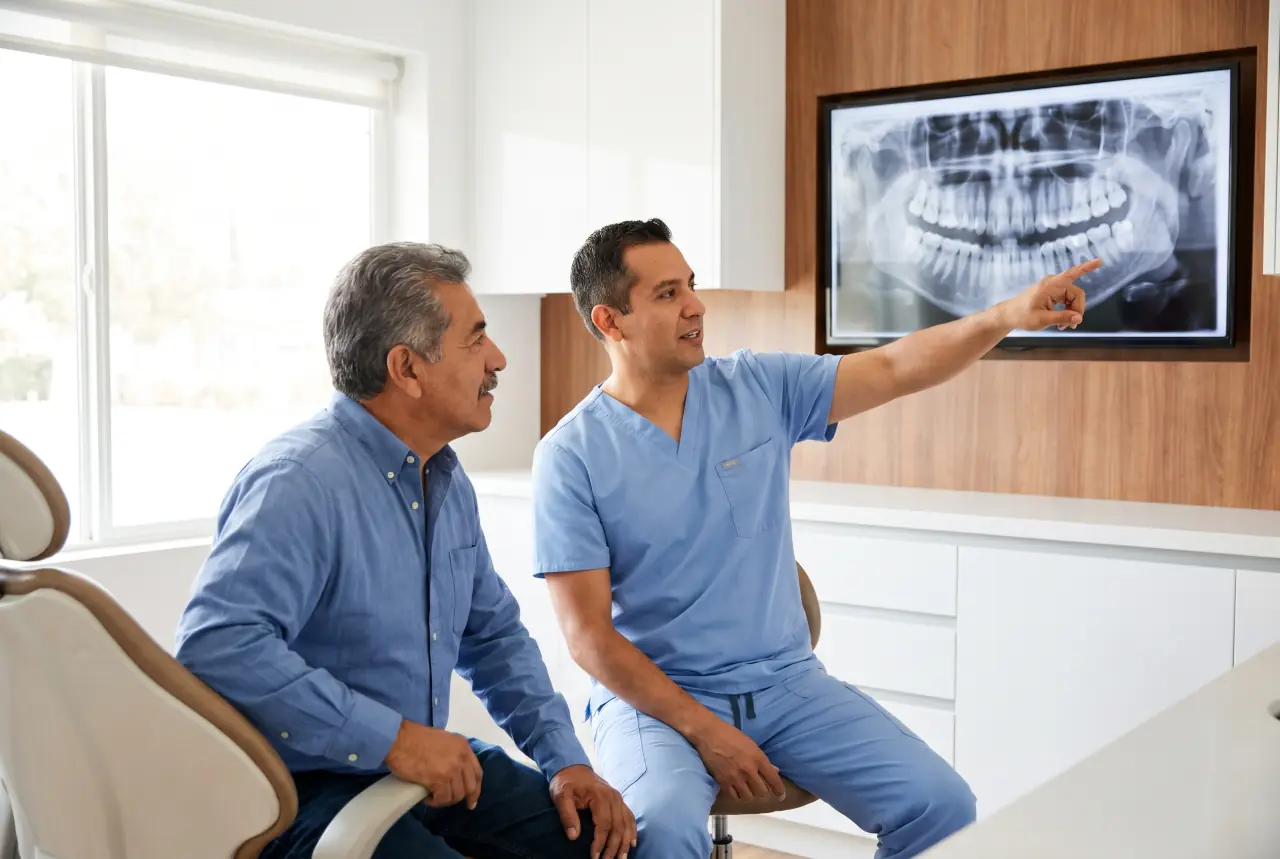

Is it safe to get surgery in Mexico? It depends on things you can look into before you commit: the surgeon’s training, the facility where you’re operated on, your own health, and your plan if something goes wrong. All surgery carries some risk of complications, and for care abroad that risk depends on the destination, the facility and whether you’re in good health for the procedure (U.S. Centers for Disease Control and Prevention, CDC).
Much of the checking is free and can be done before you pay a deposit: the surgeon’s licenses and certificate are in public online registries, and the facility’s health license should be on display. Your own doctor and a few written questions cover the rest. The sections below take each in turn, then the travel advisory for Tijuana and Guadalajara.
At a glance
- Check the surgeon
- Two professional licenses (cédulas), in medicine and the specialty, plus a specialty certificate renewed every 5 years
- Looking up a surgeon
- Free and online: the licenses and certificate are in public registries anyone can search
- Check the facility
- A current health license for surgical procedures, on display, for the building where you’ll be operated on
- Flying home
- Your surgeon decides; general guidance is to delay air travel 10 to 14 days after major surgery
- Paying for care
- Medicare and Medicaid don’t pay for care in Mexico, and most hospitals there don’t accept U.S. health insurance
Key takeaways
- Before you pay a deposit, look up the surgeon’s two professional licenses, in medicine and in the specialty, and check that their specialty certificate is current.
- Ask for a photo of the facility’s health license for surgical procedures, and check that it names the building where you’ll be operated on.
- Ask in writing which hospital would take you if you needed more complex care, and what the quoted price includes.
- See your own doctor at least 4 to 6 weeks before the trip, and agree with both doctors how a complication would be handled.
- Read the current travel advisory for the state where you’ll stay when you book, and again before you leave.
In this guide
- Is it safe to get surgery in Mexico? What decides the risk
- How to check a doctor's license in Mexico
- How to check a clinic's health license
- What can go wrong, and how to plan for it
- Your health and your plan if something goes wrong
- What the State Department's travel advisory says about Tijuana and Guadalajara
- Questions to ask before you pay a deposit
- Before you go: checklist
- Warning signs after surgery, and what to do if something goes wrong
- Frequently asked questions
- Sources
Is it safe to get surgery in Mexico? What decides the risk
Mexico and Canada are among the most common destinations for U.S. residents who travel for medical care, and cosmetic surgery is among the most common procedures (CDC). Requirements for licensing, credentialing and accreditation may be lower in some countries than in the United States, and websites that market directly to medical tourists might not give full details of a facility’s or doctor’s accreditations, certifications or qualifications (CDC; CDC Yellow Book). Mexico’s official records let you check a doctor’s credentials yourself.
| What decides the risk | What to check | Where this guide covers it |
|---|---|---|
| The surgeon | A license in medicine, a specialty license and a current specialty certificate | Checking a doctor’s license |
| The facility | A current health license for surgical procedures, and a hospital that can take you for more complex care | Checking a clinic’s license |
| Your health, and your plan if something goes wrong | Whether you’re in good health for this procedure; who treats a problem, who pays, how you get home and who sees you afterward | Your health and your plan |
| Where you stay | The current travel advisory for that state | The travel advisory |
Factors from the CDC and the State Department.
How to check a doctor's license in Mexico
Why it matters: up-to-date, public and verifiable information about a doctor’s credentials helps reduce risks and prevent fraud, and anyone can search the official records for free (SEP, May 2026, in Spanish).
In Mexico, a professional license is called a cédula profesional, and the Ministry of Public Education (Secretaría de Educación Pública, SEP) issues it. A specialist surgeon should hold two: one in medicine, and one for the specialty, which comes after the medical degree and takes further study and supervised practical training (CONACEM, in Spanish). For cosmetic surgery, the specialty cédula should be in plastic, aesthetic and reconstructive surgery, with a current certificate from the Mexican Council of Plastic, Aesthetic and Reconstructive Surgery (Consejo Mexicano de Cirugía Plástica, Estética y Reconstructiva) (SEP).
In 2023, COFEPRIS, Mexico’s Federal Commission for Protection against Health Risks, explained that a medical specialty is postgraduate training, generally done in health-sector hospitals or clinics through the national residency system, so a master’s degree in aesthetic surgery does not authorize a doctor to perform specialty surgical procedures (COFEPRIS, in Spanish).
Specialty certificates come from medical specialty councils overseen by CONACEM (Comité Normativo Nacional de Consejos de Especialidades Médicas), the national committee that supervises how specialists are certified. A specialist is certified after passing theoretical and practical exams, then renews the certificate every 5 years to show they’ve kept up with advances in the field. Mexico’s General Health Law requires a specialty cédula and a current council certificate for specialty surgical procedures (CONACEM, in Spanish).
A certificate shows the doctor met the requirements to demonstrate the minimum knowledge and skills for the specialty; CONACEM doesn’t supervise how certified doctors practice (CONACEM, in Spanish). A verified license and a current certificate are a strong starting point. They’re one part of a safe plan, alongside a licensed facility, your own doctor’s advice and a clear plan for follow-up care.
How to check: ask the clinic for names and numbers, then look them up yourself.
- Get the details in writing: the surgeon’s full name and both cédula numbers, and the same for whoever will give your anesthesia.
- Look up both cédulas. Start at the SEP’s cédula page and open the lookup listed under Registro Nacional de Profesionistas (Consulta de Cédulas Profesionales). Check that the name matches, and that one record is for medicine and another for the specialty your procedure calls for.
- Check the specialty certificate. Search the surgeon’s name in CONACEM’s directory of certified specialists, which shows the certification status, the council and how long the certificate is valid. An expired one is a question to raise with the clinic.
- Look past a “master’s in aesthetic surgery.” Ask for the specialty cédula instead.
- Match it to the wall. The plastic surgeon’s professional degree and specialty diploma must be on public display (COFEPRIS, in Spanish); when you arrive, compare the names with what you found online.
If a name doesn’t match, a specialty cédula is missing, a certificate has lapsed or a lookup won’t load, hold off on paying until the clinic has explained and you’ve been able to check.
For plastic surgery credentials in more detail, see plastic surgery in Tijuana. The same registry lists dentists; dental implants in Mexico and veneers in Mexico add the dental checks. The lookups apply before a hair transplant in Mexico or a rhinoplasty too, and Botox and fillers in Tijuana covers checking the product along with the injector, and Morpheus8 in Mexico the device.
How to check a clinic's health license
Why it matters: the facility is one of the things the risk depends on, and a surgeon’s papers say nothing about the building.
For plastic, aesthetic or reconstructive surgery, the facility needs a current health license (licencia sanitaria) for surgical procedures, issued by COFEPRIS and displayed where the public can see it (COFEPRIS, in Spanish). Under a 2024 directive, facilities that perform aesthetic surgery need, among other things (COFEPRIS, in Spanish):
- a health license for surgical procedures (licencia sanitaria para actos quirúrgicos), with a registered person responsible for health compliance
- health licenses for its hospital pharmacy and its blood services
- an agreement with hospitals that can handle more complex care
- a clinical laboratory and ambulance service, either its own or under contract
- premises that meet Mexico’s official standards for hospital infrastructure and equipment, and for the practice of anesthesiology

Not every facility that offers surgery may meet these rules, which is why the checks below start with the license (COFEPRIS, in Spanish).
In Baja California, medical offices must keep their health license and notice of operation (aviso de funcionamiento) where patients can see them. COEPRIS BC, the state’s health-risk agency, also runs a register of health and wellness providers (REPSSABI) that establishments can choose to join and the public can consult to see which ones meet health rules; 181 medical offices had registered by January 2026 (COEPRIS BC, in Spanish). Because joining is voluntary, a clinic that isn’t listed may still hold its license.
Some facilities also advertise international accreditation, which doesn’t guarantee a positive outcome (CDC). Accrediting groups such as Joint Commission International keep listings of the facilities they accredit outside the United States, so you can check the claim at its source (CDC Yellow Book).
How to check: ask for the license before you pay a deposit, and compare it with the place where you’ll be operated on.
- Ask the clinic for a photo of its licencia sanitaria for surgical procedures.
- Check that the name and address match the place where you’ll be operated on, not only the office where you have your consultation.
- Ask which hospital you’d be moved to if you needed more complex care, and how you’d get there.
- If the clinic advertises international accreditation, look for it in the accrediting group’s own listing.
- When you arrive, look for the license and the surgeon’s diplomas on display.
Choosing a fertility clinic? Our guide to IVF in Mexico covers how those clinics are licensed and the checks you can do yourself.
What can go wrong, and how to plan for it
Why it matters: knowing which complications U.S. health agencies have documented among people who travel for care tells you what to ask a facility and what to plan for.
These are the risks of traveling for medical care that the CDC lists, with what you can do about each:
| Risk | What you can do |
|---|---|
| Infections, including wound and bloodstream infections, and diseases such as hepatitis B, hepatitis C and HIV (human immunodeficiency virus) | Check the facility’s license and ask how it prevents infections |
| Highly drug-resistant bacteria and fungi, germs that no longer respond to drugs such as antibiotics, which have caused outbreaks among medical tourists; facilities abroad may not have adequate infection control | The same checks; the outbreaks below show what investigators found |
| Counterfeit medicines and lower-quality medical devices, which may be used in some countries | Ask which implants or devices will be used. Counterfeit medication is common in Mexico (State Department), so read up on bringing medicine back from Mexico before you buy any |
| Misunderstandings about your care where you don’t speak the language fluently | Decide ahead of time how you’ll communicate with your surgeon and the people caring for you |
| Blood clots, including deep vein thrombosis, which flying after surgery can make more likely | Let your surgeon decide when you fly; see your plan |
| Follow-up care for complications, which might be expensive, prolonged and not covered by your insurance | Line up care at home and check your coverage; see your plan |
Risks, and the advice on communicating: CDC.
Infections are the most common complications among medical tourists, and complications common in the United States can happen abroad too, including blood clots, fat thromboembolism, contour problems after cosmetic surgery, surgical wounds that reopen, and death (CDC Yellow Book). The warning signs section covers what to do if you suspect one.
Outbreaks the CDC has documented in U.S. patients treated in Mexico
Tijuana, 2018 to 2019: drug-resistant infections after weight-loss surgery. After U.S. patients developed infections with an extensively drug-resistant strain of the bacterium Pseudomonas aeruginosa, the CDC and Baja California’s Secretariat of Health investigated (Emerging Infectious Diseases, 2022). Four of the first 6 patients reported had used the same U.S.-based travel agency, which coordinated travel and arranged care for medical tourists. The investigation found 38 confirmed or probable cases in 18 states; 34 of those patients had a sleeve gastrectomy, a type of weight-loss surgery. Of the 35 who named their surgeon, 31 named the same one, and 27 of those had surgery at one facility. When COFEPRIS assessed that facility in December 2018, it found lapses including poor hand hygiene, incomplete clinical records and no indicators to confirm that equipment was sterile after reprocessing. Sixteen of the 38 patients were hospitalized in the United States, and the facility closed for good in early March 2019. Since July 2020, 6 more cases in U.S. residents have been reported to the CDC after elective invasive procedures in Tijuana, with no common procedure or facility reported.
Matamoros, 2023: fungal meningitis after epidural anesthesia. Fungal meningitis is a rare, life-threatening fungal infection that causes swelling around the brain and spinal cord; people can be infected during medical procedures if all infection control practices are not followed. In 2023, the CDC, Mexico’s Ministry of Health and U.S. state and local health departments responded to an outbreak among people who had procedures under epidural anesthesia at two clinics in Matamoros, Tamaulipas, which were closed on May 13, 2023. As of August 31, 2023, there were 10 confirmed and 14 probable cases in the United States, and 12 deaths. The CDC’s travel health notice for the outbreak expired on October 27, 2023.
Both outbreaks were linked to particular surgeons or clinics, and a license lookup can’t show how a facility works day to day, so your own questions count too.
How to check: use what investigators found as a guide to what to ask.
- Ask how the facility prevents infections and confirms instruments are sterile; it’s on the list of questions.
- Medical tourists often use private companies or concierge services to find doctors and clinics (CDC Yellow Book). If a travel agency, a facilitator or a navigation service helps plan your trip, do the lookups in this guide yourself as well.
- For weight-loss surgery, our guides to the gastric sleeve and gastric bypass cover the follow-up each one needs.
Your health and your plan if something goes wrong
Why it matters: a plan agreed before you leave means you already know who would treat a problem, who would pay and how you’d get home.
Your own doctor is the place to start: a visit before the trip is a chance to learn about specific risks you may face because of your health, the procedure, and the travel before and after it (CDC).
Paying for care also works differently in Mexico. U.S. Medicare and Medicaid don’t pay for care there, most hospitals and doctors don’t accept U.S. health insurance, and most private hospitals require payment before they let you leave (State Department). Some private U.S. insurers do pay for care abroad, usually by reimbursing you, so you pay first and claim later (U.S. Embassy).
How to check: settle these before you book.
- See your own doctor or a travel medicine clinician at least 4 to 6 weeks before the trip, and ask whether you’re in good health for this procedure.
- Agree on a complication plan with your U.S. doctor and the surgeon in Mexico (CDC Yellow Book).
- Line up care at home: make sure you can get follow-up care in the United States, and decide where you’ll stay right after the procedure (CDC).
- Check your coverage: find out what your insurance covers abroad, get international travel health insurance that covers medical evacuation back to the United States, and plan for the possibility of paying for extra care yourself (CDC).
- Plan the trip home with your surgeon. Delaying air travel 10 to 14 days after major surgery, particularly surgery on the chest, minimizes the risks that come with changes in air pressure (CDC). Your surgeon decides when you can fly; our guide on how soon you can fly after surgery explains the blood-clot risk.
- Bring your records home: copies of all your medical records from the facility, translated into English if needed (CDC).
What the State Department's travel advisory says about Tijuana and Guadalajara
Why it matters: the advisory sets a level for each Mexican state, along with precautions that shape how you get to and from your appointments.
The State Department’s Mexico travel advisory was issued on May 29, 2026. These are its levels for Mexico as a whole and for the two states that matter for Tijuana and Guadalajara.
| Area | Level in the May 29, 2026 advisory | The advisory’s words |
|---|---|---|
| Mexico overall | Level 2: Exercise increased caution | "Exercise increased caution in Mexico due to terrorism, crime, and kidnapping." |
| Baja California, which includes Tijuana | Level 3: Reconsider travel | "Reconsider travel due to terrorism, crime, and kidnapping." |
| Jalisco, which includes Guadalajara | Level 3: Reconsider travel | "Reconsider travel due to terrorism, crime, and kidnapping." |
For Baja California, the advisory notes high homicide numbers in the non-tourist areas of Tijuana. Most homicides appear to be targeted, it says, but assassinations and territorial disputes between criminal organizations can injure or kill bystanders. It sets no additional travel restrictions for U.S. government employees in Tijuana, Ensenada or Rosarito; the only restrictions in the state are in the Mexicali Valley. In Jalisco, battles between criminal groups have happened in tourist areas of Guadalajara, and shootings between these groups have injured or killed bystanders; the advisory places no restrictions on travel in the Guadalajara metropolitan area. In both states, U.S. citizens and lawful permanent residents have been kidnapped. Planning care in Jalisco? See medical tourism in Guadalajara.
The same page covers medical tourism. Many U.S. citizens suffer serious complications or die during or after cosmetic or other elective surgery in Mexico, it says; the country has many elective or cosmetic surgery facilities, quality of care varies widely, and health facilities with advanced medical equipment and staff are available in Mexico City and major cities. Before you plan any surgery in Mexico, it advises confirming that emergency medical facilities are available and that the professionals are accredited and qualified, which is what the doctor and clinic checks above are for.
How to check: read the current advisory when you book and again before you leave, because advisories change.
- Look at the level and notes for the state where you’ll stay, not only Mexico overall.
- Travel by the rules set for U.S. government employees, which the advisory strongly advises U.S. citizens to follow across Mexico. They include no travel between cities after dark, rides only from regulated taxi stands or app-based services rather than taxis waved down on the street, and avoiding traveling alone, especially in remote areas.
- Enroll in the Smart Traveler Enrollment Program (STEP), so the embassy or consulate can send you alerts and reach you or your emergency contact.
- For the crossing itself, see crossing the border to Tijuana.
Questions to ask before you pay a deposit
Ask these in writing and keep the answers. Get a written estimate before any procedure (U.S. Embassy), and check which services the price includes: some facilities abroad charge substantial fees for follow-up care on top of the base cost (CDC Yellow Book).
- Who will perform my surgery, and when will I meet them?
- What are the surgeon’s cédula numbers, and which council certified them?
- Who will give my anesthesia, and what are their cédula numbers?
- Where exactly will the surgery happen, and may I see that facility’s health license?
- How does the facility prevent infections and confirm instruments are sterile?
- Which hospital would I go to if I needed more complex care, and how would I get there?
- What does the price include: surgeon, anesthesia, facility, overnight stays, medicines, garments and follow-up visits?
- What happens, and who pays, if I have a complication or need another operation?
- How will we communicate if we don’t share a language?
- Which activities should I avoid around the procedure, how long should I stay nearby, and when can I travel home?
- Whom do I contact once I’m home, and will I leave with my records?
For a line-by-line look at what a quote should list, see medical tourism costs.
Before you go: checklist
- Surgeon’s cédulas, in medicine and in your procedure’s specialty, found in the SEP registry under the name the clinic gave you
- Current specialty council certificate confirmed in CONACEM’s search
- Anesthesia provider named, and their cédula checked
- Health license for surgical procedures seen, for the building where you’ll be operated on
- Hospital for more complex care named, and how you’d get there
- Written quote that says what’s included and what isn’t
- Your doctor at home told the plan, and agreed to see you afterward
- Insurance coverage abroad checked, and travel health insurance with medical evacuation in place
- Current advisory for your state read, and STEP enrollment done
- How long to stay nearby and when to fly agreed with your surgeon
- Your records and test results packed, and your allergies ready to tell the medical staff
- Itinerary and the clinic’s contact details left with someone at home
- Copies of all your new records requested before you leave Mexico
Warning signs after surgery, and what to do if something goes wrong
Read this before you travel. If you suspect a complication, during the trip or after you get home, don’t delay getting care, and tell whoever treats you where and when you had surgery (CDC Yellow Book). Our guides to plastic surgery and the gastric sleeve list the signs for those procedures.
| Sign | What to do |
|---|---|
| Fever with at least two of these at the incision, within 45 days of surgery: pus, draining fluid, or warmth, redness and swelling | Contact your surgeon and your doctor at home; the Tijuana investigators counted this as a suspected case |
| Fever, headache, stiff neck, nausea, vomiting, sensitivity to light or confusion after a procedure under epidural anesthesia | Contact your healthcare provider. These are symptoms of fungal meningitis; they can take weeks to months to appear, may be very mild at first and can quickly become severe |
| Signs of a blood clot | See the warning signs in flying after surgery |
| A medical emergency | Call 911 |
Sources: Emerging Infectious Diseases for the infection signs; CDC, archived for meningitis.
In a medical emergency, call 911; it works in Mexico and in the United States. Not all emergency operators in Mexico speak English, so ask a Spanish speaker to help place the call if you can (State Department). Afterward, let the clinic that treated you know what happened. If you’re seriously ill or injured, the U.S. Embassy or the nearest U.S. consulate (there are consulates general in Tijuana and Guadalajara) can help locate medical services and inform your family; paying the hospital is up to you (U.S. Embassy; State Department).
Billing and your rights in a Mexican hospital
Hospital quality in Mexico varies. Most U.S. citizens have acceptable experiences, but some have reported hospitals that failed to itemize charges, held on to their passport or delayed medical evacuation. Under Mexico’s General Health Law, the nearest medical facility must see patients with emergency conditions, and patients must receive complete information about their diagnosis and care and authorize any treatment. Hospitals may not hold a patient, or a patient’s passport, to secure payment, though whoever authorized the treatment is still responsible for arranging to pay. Ask for an itemized bill every day, raise any billing concern with the hospital administration right away, and work with your insurance company yourself rather than assuming the hospital will (U.S. Embassy).
CONAMED: complaints about medical care
CONAMED (Comisión Nacional de Arbitraje Médico), Mexico’s national medical arbitration commission, takes complaints about public or private care from patients and from their relatives or legal representatives, and the service is free. It starts with conciliation, in which its staff propose solutions to help both sides reach an agreement, without deciding who is at fault. If that fails, arbitration is the alternative, and at that stage CONAMED does decide whether anyone was responsible. For excessive charges, requests for criminal penalties or requests to withdraw a doctor’s cédula, its staff will point you to the right office instead. You can send a complaint by email to primera_atencion@conamed.gob.mx or through its online form; for care outside Mexico City, it points you to its directory of state medical arbitration commissions. Have ready a copy of a current official ID, a clear account of what happened, documents that show you were treated (such as records and receipts), what you’re asking the provider for, and the provider’s name and address (CONAMED, in Spanish).
PROFECO: prices and terms that weren’t honored
PROFECO (Procuraduría Federal del Consumidor), Mexico’s federal consumer protection agency, takes complaints when a provider harms you by not respecting the terms and conditions you agreed. If you’re outside Mexico and a Mexican business didn’t keep its side of a deal, you can send the complaint and scanned documents by email to extranjeros@profeco.gob.mx. It doesn’t handle professional services that aren’t commercial in nature (PROFECO, in Spanish). Legal options in a malpractice case are very limited in Mexico, and PROFECO may be able to help resolve disputes over medical services (State Department).
COFEPRIS: reporting an unsafe clinic
You can report a health facility you believe poses a health risk to COFEPRIS, online through its denuncia sanitaria system or by phone at 800 033 5050 (COFEPRIS, in Spanish). Whichever route you take, keep copies of everything: the written quote, the consent forms, your discharge papers, the receipts, and photos of the licenses and diplomas you were shown.
Frequently asked questions
Is Tijuana safe for surgery?
The city and the surgery are separate questions, and you can look into both. In the May 29, 2026 travel advisory, Baja California, the state that includes Tijuana, is at Level 3: “Reconsider travel due to terrorism, crime, and kidnapping.” It notes high homicide numbers in Tijuana’s non-tourist areas and sets no extra restrictions for U.S. government employees in Tijuana; what the advisory says covers the precautions. For the surgery itself, check the surgeon’s licenses and the clinic’s health license before you book.
How do I look up a doctor’s cédula profesional in Mexico?
Use the free public registry of Mexico’s Ministry of Public Education. From its cédula page, open Consulta de Cédulas Profesionales and look up the doctor; a surgeon should have two records, a cédula in medicine and a specialty cédula. Then search the doctor’s name in CONACEM’s directory to see whether the specialty council certificate is current. Ask the clinic for the exact name and numbers first, so you find the right person.
How can I check if a clinic in Mexico is licensed?
Ask for a photo of its licencia sanitaria, the health license, and check that the name and address match the building where you’ll be operated on. For cosmetic surgery, it should be a current license for surgical procedures, displayed where the public can see it (COFEPRIS, in Spanish). In Baja California, medical offices must also display their notice of operation (COEPRIS BC, in Spanish). The clinic license section lists what else a surgical facility needs.
Is it safe to get dental work in Mexico?
As with surgery, it depends on who treats you and where, and both can be checked before you pay. Dental care is the most common form of medical tourism among U.S. residents, and dentists in destination countries might not be subject to the same licensure oversight as in the United States (CDC Yellow Book). Look up the dentist’s cédula in the same federal registry, ask which health permits the clinic holds, and get a written plan and quote. Our guides to dental implants in Mexico and veneers in Mexico cover the dental details.
Does Medicare cover surgery in Mexico?
No. U.S. Medicare and Medicaid don’t pay for medical care in Mexico, and Mexican providers usually require payment before care or before you leave the hospital (State Department). Check what any other insurance covers abroad, and get travel health insurance that covers medical evacuation (CDC). Our guide to medical tourism costs goes through what to budget for, including complications.
Can I sue a doctor in Mexico if my surgery goes wrong?
Legal options in a malpractice case are very limited in Mexico (State Department), but there are official routes for complaints. Medical tourists might not have the same legal recourse as they would in the United States (CDC Yellow Book). CONAMED, the national medical arbitration commission, offers free conciliation and arbitration for complaints about care, and PROFECO, the federal consumer protection agency, may be able to help with disputes over medical services. For a lawsuit, speak with a lawyer; this answer covers the official channels only and isn’t legal advice.
How long should I stay in Mexico after surgery?
Your surgeon decides, based on your procedure and your health. As a general guide, delaying air travel 10 to 14 days after major surgery, particularly on the chest, minimizes the risks from changes in air pressure (CDC), and medical tourists should not fly for 10 days after chest or abdominal surgery (CDC Yellow Book). Book your return only after your surgeon has advised you. Our guide on flying after surgery covers blood clots and the trip home.
Has the CDC warned about surgery in Mexico?
Yes, through travel health notices about specific outbreaks. In January 2019, a notice advised U.S. residents against surgery at one Tijuana facility linked to drug-resistant infections after weight-loss surgery (CDC report on the outbreak). In 2023, a notice was issued for an outbreak of fungal meningitis linked to epidural anesthesia at two clinics in Matamoros; it expired on October 27, 2023. The general medical tourism guidance applies to any trip for care, and what can go wrong pairs each risk with what to do.
Sources
- Medical Tourism: Travel to Another Country for Medical Care U.S. Centers for Disease Control and Prevention (CDC)
- Medical Tourism (CDC Yellow Book 2026) U.S. Centers for Disease Control and Prevention (CDC)
- Extensively Drug-Resistant Carbapenemase-Producing Pseudomonas aeruginosa and Medical Tourism from the United States to Mexico, 2018–2019 Emerging Infectious Diseases, CDC
- Fungal Meningitis Outbreak Associated with Procedures Performed under Epidural Anesthesia in Matamoros, Mexico (archived) U.S. Centers for Disease Control and Prevention (CDC)
- Mexico Travel Advisory U.S. Department of State
- Medical Information U.S. Embassy & Consulates in Mexico
- Boletín 179. Verificar cédulas y certificaciones médicas antes de procedimientos estéticos protege la salud (in Spanish) Secretaría de Educación Pública (SEP)
- Cédula Profesional (in Spanish) Secretaría de Educación Pública (SEP), Dirección General de Profesiones
- Buscador de médicos (in Spanish) Comité Normativo Nacional de Consejos de Especialidades Médicas (CONACEM)
- Preguntas frecuentes (in Spanish) Comité Normativo Nacional de Consejos de Especialidades Médicas (CONACEM)
- "Maestrías en cirugía estética" representan un falso ejercicio de esta profesión y un riesgo a la salud (in Spanish) COFEPRIS
- Cofepris actualiza Alta directiva para establecimientos donde se practican procedimientos quirúrgicos estéticos (in Spanish) COFEPRIS
- Más de 200 consultorios médicos verificados durante el 2025 (in Spanish) COEPRIS Baja California
- Atención de quejas médicas (in Spanish) Comisión Nacional de Arbitraje Médico (CONAMED)
- Proceso y requisitos de Quejas y Denuncias (in Spanish) Procuraduría Federal del Consumidor (PROFECO)
About this guide
The Uriym editorial team researched this guide from the 15 sources above, drafted it with AI assistance, and checked it claim by claim against those sources before publishing, last on . Our editorial standards explain how we choose sources, handle prices and make corrections.
Uriym is a healthcare navigation platform, not a medical provider. Its founder, Adriana Mendez, grew up in a family that traveled to Mexico for care and has done it herself for the past ten years. How Uriym works
This is general information, not medical, legal or financial advice: your treating provider decides what care is right for you. Rules, prices and advisories change, so check the official page before you act. Found something wrong or out of date? Email support@uriym.com.