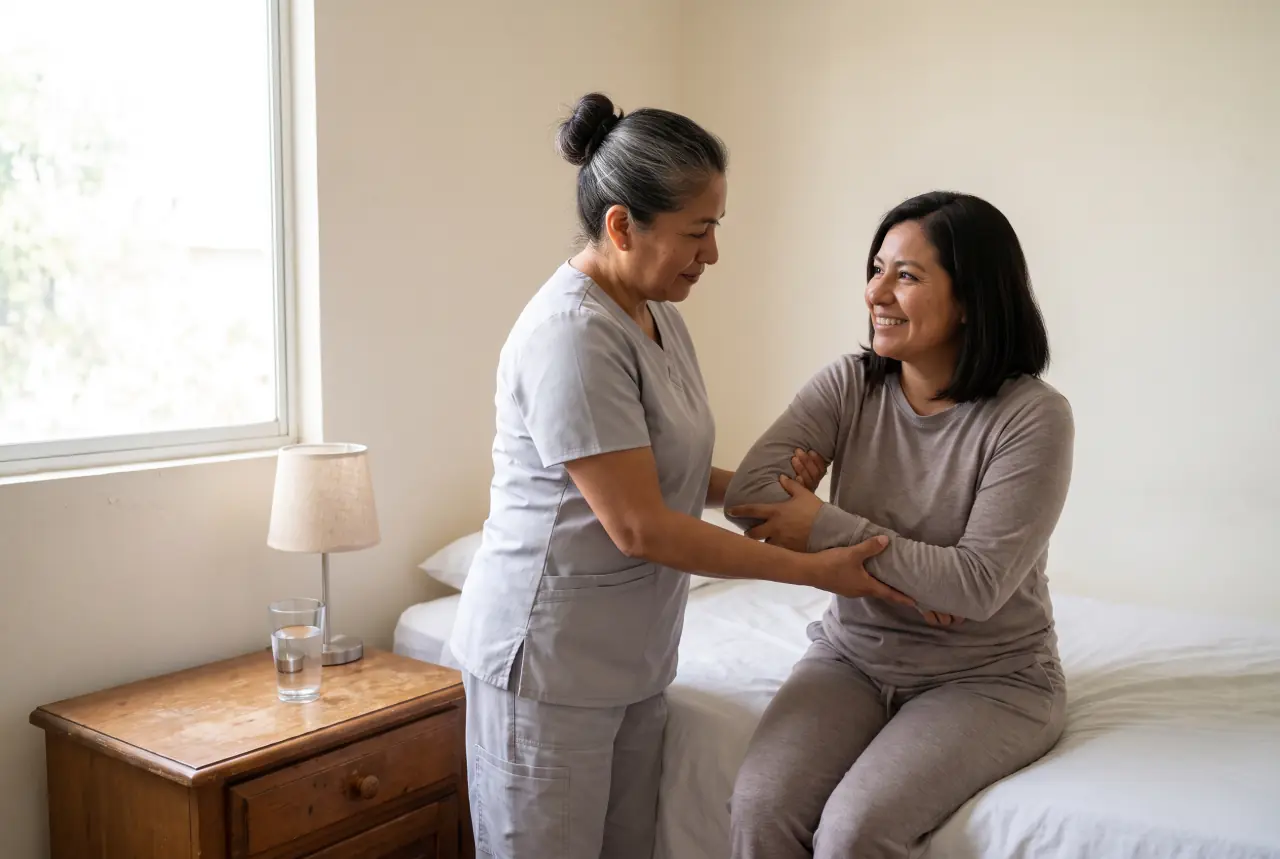

Follow-up care after surgery abroad is best arranged before you leave (CDC), and it rests on four things: a doctor at home who has agreed to see you, a plan with your surgeon for check-ins and for any care that has to happen in person, your records in English, and a written answer from your health plan about what it will pay. With those settled, you’ll know who is looking after your recovery once you’re home, and whom to call if something changes.
Most of it takes a few conversations, with your own doctor, your surgeon and your health plan. Your surgeon’s instructions set the course of your recovery; the sections below cover the arrangements around them, from the papers to bring home to getting care if a problem appears after the trip.
At a glance
- Your doctor at home
- U.S. doctors’ ethics guidance asks a doctor you tell in advance to say whether they’ll provide follow-up care, and to refer you to other options for care
- Records to bring home
- Operative report, discharge instructions, medicine list with generic names, test results and implant details, in English
- Stitches and drains at home
- If you can’t return for them, guidance for U.S. plastic surgeons suggests the surgeon identify a qualified doctor near your home, preferably a surgeon
- Wound care at home
- Follows your surgeon’s instructions, including how often to change the dressing and when you can shower
- Check-ins from a distance
- Some follow-up may be possible by telehealth, if your surgeon judges it safe and the rules allow
- Paying for complications
- Your health insurance might not cover care for them at home; see paying for follow-up care
Key takeaways
- Before you book, ask your own doctor whether they’ll see you after surgery abroad, and if not, whom they’d refer you to.
- Agree with your surgeon, in writing, who near your home will remove stitches or drains if they’re due after you’re back, and how check-ins will work.
- Leave the clinic with your operative report, discharge instructions, medicine list and implant details in English, plus your surgeon’s direct contact.
- Ask your health plan in writing what it pays to treat a complication at home, and set money aside for any check-ups it won’t cover.
- Mention your surgery abroad to every clinician who treats you in the year after your trip, and bring your records.
In this guide
- Who looks after you once you’re home
- Before you go: line up a doctor at home
- What to bring home: your records, in English
- The first weeks at home: wounds, drains and check-ins
- If something goes wrong after you’re home
- Paying for follow-up care and complications
- Revisions and complaints: agree the terms before you go
- Questions to ask your surgeon and your doctor at home
- Before you go: checklist
- Warning signs after you get home
- Frequently asked questions
- Sources
Who looks after you once you’re home
Once you’re back, your care is shared between the surgeon who operated and the doctors near you, so discuss the plan for handling complications with both before the trip (CDC Yellow Book). People who travel for care often need follow-up when they return, even if only to check on a recovery that’s going smoothly, and they often come back without records of the procedures and medicines they had (American Medical Association, AMA).
| Who | Their part once you’re home | Settle before you go |
|---|---|---|
| The surgeon who operated | Your written instructions, check-ins at a distance, and whether you’d travel back for more care or surgery | How long they’ll follow your recovery, how to reach them directly and what a trip back would involve |
| Your primary care doctor | A check-up after the trip, even when recovery goes smoothly, and referrals | Whether they’ll see you, and whom they’d refer you to if not |
| A doctor near home, preferably a surgeon | Hands-on care your surgeon can’t give from far away, such as removing stitches or drains and changing dressings | A name, agreed before surgery, if you’ll be home before that care is due |
| Fast care near you | Symptoms that can’t wait for your surgeon’s reply | The warning signs at the end of this guide, read before you travel |
Sources: AMA for the check-up at home; the surgeon’s part, the hands-on care and the doctor near home come from a 2024 practice reference for U.S. plastic surgeons whose patients travel for surgery, which says it is not a standard of care.
Clinics abroad may not provide follow-up treatment, or not to the standard at home, and may have no health professional in your own country to turn to, according to guidance for UK patients from England’s National Health Service (NHS) (NHS). Weight-loss surgery and dental implants come with long-term follow-up of their own: see lining up your care team at home and follow-up with a dentist at home.
Before you go: line up a doctor at home
Why it matters: not every doctor takes on care after surgery done elsewhere, so asking before you book tells you who will see you once you’re home.
Start with your primary care doctor, well before the trip. A conversation with your regular U.S. clinician is the minimum the Yellow Book, the travel health guide for clinicians from the U.S. Centers for Disease Control and Prevention (CDC), recommends for anyone considering care abroad (CDC Yellow Book).
Telling your doctor early also gives them the chance to say where they stand. Under the ethics guidance of the American Medical Association (AMA), a doctor you tell in advance that you plan to get care abroad should say whether they’re willing to provide follow-up care for the procedure, and refer you to other options for care. If a patient had treatment abroad without the doctor knowing beforehand and then asks for follow-up that isn’t an emergency, doctors should respond with compassion, and those unable or unwilling to provide that care have a responsibility to refer the patient to appropriate services (AMA).
Your surgeon has a part in this too, before the operation. A 2024 practice reference from the American Society of Plastic Surgeons (ASPS), a U.S. professional society, lists what a surgeon whose patient travels for surgery should consider; it’s guidance written for U.S. surgeons, and it says it is not a standard of care (ASPS practice reference). Among its steps before surgery: finding out whether you can come back for routine care such as removing stitches or drains and changing dressings, and if you can’t, identifying a qualified doctor near your home, preferably a surgeon, who will help with it. Others cover what you should do if a complication needs urgent attention, given the care available near you; which follow-up can safely happen by telehealth where the rules allow; sharing your records with doctors at home; and giving you and your primary care doctor what’s needed for your check-up and tests before surgery. Use it as a list of questions: ask your surgeon in Mexico how they’ll handle each part.
Get the direct contact details of a named doctor who can deal with complications, rather than a helpline, as guidance for UK patients advises (Royal College of Surgeons of England).
How to check: ask your doctor at home these questions before you pay a deposit.
- Will you see me after surgery abroad, for a routine check and if a problem comes up?
- If not, whom do you refer patients to, and can I have a name before I book?
- What do you need from me now: the surgeon’s name and contact details, the procedure and its dates, and the medicines I’ll be prescribed?
- Should anything be checked or tested before I go?
- What will a visit cost if my health plan won’t pay for it?
What to bring home: your records, in English
Why it matters: doctors at home can only work from what’s written down: what was done, which medicines and implants you have, and how to reach your surgeon.
Before you leave the clinic, ask for copies of your records in English, and give them to every health professional who sees you for follow-up (CDC Yellow Book). A complete set, which the American College of Surgeons recommends getting before you return, keeps the details of your care available to doctors in the United States and helps with continuity and follow-up (CDC Yellow Book). Before surgery, sign a records-release form so your surgeon can share your records with doctors near home (ASPS practice reference).
| Record | Why it helps at home |
|---|---|
| The surgeon’s report of the operation | Local doctors may not know which surgical technique was used, which can make treatment difficult or nearly impossible (ASPS briefing paper) |
| Written discharge instructions | They should give specific guidance for routine follow-up and for anything urgent (ASPS practice reference) |
| Every medicine you were given or prescribed, by generic name and dose | Trade names vary widely, and standard doses may vary by country (CDC Yellow Book) |
| Test results and imaging | Part of the complete set that keeps your care details available to doctors at home (CDC Yellow Book) |
| Implant details: maker, model and size | Some implants need checks for as long as you have them; see breast implants and dental implants |
| Your surgeon’s direct contact details | Patients often come home with no way to reach the doctors who treated them (AMA) |
After plastic surgery, coming home adds what to ask about implants. Medicine you carry across the border has rules of its own, set out in medicine prescribed after a procedure.
How to check: before you leave the clinic:
- Ask for each record in the table, in English, and read them while you can still ask questions.
- Check that every medicine on the list has its generic name and dose.
- Keep paper copies in your carry-on and photos of them on your phone.
- Bring the full set to your first visit with your doctor at home.
The first weeks at home: wounds, drains and check-ins
Why it matters: your surgeon’s written instructions guide these weeks, and some of the care, like taking out stitches, has to happen in person.
Wound care follows your surgeon’s instructions, including how often to change the dressing and when you can shower. Don’t put antibiotic cream or anything else on the incision unless your surgeon says to, and don’t pull at your stitches or try to take them out yourself (MedlinePlus). If you’ll be home before they’re due out, the doctor near home you arranged takes over, as lining up a doctor at home explains. Drains and compression garments have routines of their own: tummy tuck recovery shows how to look after a drain, and recovery after a Brazilian butt lift covers sitting and garments.

Some follow-up may be possible at a distance. Under the ASPS practice reference, whether a visit can be done safely by telehealth, within the telehealth rules that apply where you and your surgeon are, is for your surgeon to judge before surgery, and they should confirm you understand and can use it (ASPS practice reference).
If your surgeon checks your incision from photos, ask how they want them taken. Tips written for travelers who photograph a skin problem for a distant clinician may help with an incision too: use good light; take one photo that shows where on your body it is, one closer view with a landmark such as the belly button, and a close-up; include a ruler or a coin for scale; photograph the other side for comparison when there is one; and send only sharp pictures (CDC Yellow Book).
| Situation | Who to contact |
|---|---|
| A question about your instructions or how your incision looks | Your surgeon, the way you agreed |
| Stitches, drains or dressings due after you’re home | The doctor near home you arranged |
| A change that worries you, with no reply yet | A doctor near home; see if something goes wrong |
| Any of the warning signs | What that table says |
How to check: before you leave Mexico, get these in writing.
- Which check-ups must happen there, and the earliest day you can travel; planning the trip home lists what else to arrange.
- Your instructions for the wound, any drains, the garment and activity.
- When stitches or drains come out, and who does it if you’re home by then.
- How check-ins will work after you leave, how quickly your surgeon usually replies, and for how long.
Then book a visit with your doctor at home for after you return, and bring your records.
If something goes wrong after you’re home
Why it matters: care you had abroad can change which germs a doctor looks for and which tests they order, so everyone who treats you needs to hear about it.
If you think a complication has started, don’t delay getting care: if your surgeon hasn’t replied, see a doctor near home rather than wait, since care without delay can lead to earlier diagnosis and treatment (CDC Yellow Book). Tell them, and anyone else who treats you in the 12 months after the trip, that you had care abroad, because some travelers have come home with new kinds of drug-resistant infections (CDC Yellow Book). Give the whole picture: where you traveled, your medical history and every surgery or treatment you had on the trip (CDC Yellow Book).
Among people who travel for care, infections are the most common complications, and some highly resistant bacteria and fungi appear to be more common in some of the countries where U.S. residents go for treatment (CDC Yellow Book). U.S. health care facilities are asked to check, when they admit a patient, whether the patient has had medical care in another country, and patients who stayed overnight in a health facility outside the United States within the past 6 months should be screened for carbapenem-resistant Enterobacterales (CRE) (CDC Yellow Book).
CRE are gut bacteria that have become resistant to carbapenems, antibiotics often used against infections that resist many other drugs, and CRE infections are difficult to treat (CDC). Carrying these germs isn’t the same as being ill: in some cases people carry them without being infected, and those who only carry them often don’t need treatment (CDC). Health professionals are also asked, where possible, to tell state and local public health officials about infections linked to care abroad: returning patients often go to hospitals near home, and those reports can help officials recognize outbreaks (CDC Yellow Book). Outbreaks investigated among U.S. patients treated in Mexico are described in what can go wrong.
How to check: make it easy to tell every clinician.
- Keep a one-page summary in your wallet and on your phone: the procedure, the date, the clinic’s name and city, your surgeon’s name and direct contact, and your medicines.
- At every medical visit in the year after the trip, mention it before anyone asks, including any night you spent in a clinic or hospital abroad.
- If you’re prescribed antibiotics, take them exactly as instructed and finish the course, even if you feel better (CDC).
- Once you’ve been seen, tell your surgeon what was found and send them any results.
Paying for follow-up care and complications
Why it matters: treating a complication once you’re home might be expensive and prolonged, and your health insurance might not cover it (CDC).
Budgeting for care at home, from office visits to dressings and tests, is covered in what follow-up care at home can cost, and what U.S. plans pay for care in Mexico itself is in does Medicare or U.S. health insurance cover care in Mexico. Three points apply to care after you’re back.
Medicare and complications. Medicare has a general rule for procedures it doesn’t cover, such as cosmetic surgery. After you’ve been discharged from the hospital stay in which you had such a procedure, inpatient or outpatient care for a complication arising from it may be covered when it’s reasonable and necessary in all other respects. Follow-up visits to the surgeon to check your progress, which would be part of the surgery’s overall fee, aren’t covered (Medicare Benefit Policy Manual, chapter 16). It isn’t clear from the rule whether it applies when the surgery was done abroad, so ask Medicare, or your Medicare plan, how it applies to you before you go.
If your employer or plan arranged the care. Some U.S. health insurers and large employers have arrangements with facilities abroad and may pay for care there (CDC Yellow Book). If yours did, ask how it covers follow-up at home: the AMA’s guiding principles for organizations that send patients abroad call for follow-up care to be coordinated before travel, and for coverage to include necessary follow-up care after the return (CDC Yellow Book).
Your surgeon’s charges. Ask what follow-up visits, treatment of a complication and a revision would cost, and where that care would happen; some overseas facilities charge substantial fees for follow-up on top of the base price (CDC Yellow Book). Ask, too, for a document that explains the limits, challenges and possible extra costs of having surgery far from home, for you to sign before the operation: the ASPS practice reference suggests surgeons provide one to patients who travel for surgery (ASPS practice reference).
How to check: ask your health plan these questions in writing.
- Will you pay for care at home for a complication of surgery I had abroad, and does it matter whether the surgery was cosmetic?
- Do you cover routine follow-up visits after surgery done somewhere else?
- What records, translations or receipts will a claim need?
If the answers leave gaps, ask your doctor what a visit costs, and set aside a reserve for check-ups and tests.
Revisions and complaints: agree the terms before you go
Why it matters: if you need more surgery or a dispute comes up, what you agreed in writing before the operation, and with whom, shapes what happens next.
Before surgery, be clear on what your aftercare package includes and leaves out, what happens if something goes wrong straight after surgery or later doesn’t go to plan, and how long the surgeon and hospital will keep supporting you; that’s the advice in guidance for UK patients (Royal College of Surgeons of England). For cosmetic surgery, ask how complications are handled, one of the questions ASPS suggests putting to a surgeon, and keep in mind that a revision can be more complicated than the first operation (ASPS briefing paper). What a plastic surgery quote should include covers what revisions and complications can add to the cost.
If complications develop, you might not have the same legal recourse as after care in the United States (CDC Yellow Book), but Mexico has official routes for complaints. CONAMED (Comisión Nacional de Arbitraje Médico), the national medical arbitration commission, handles complaints about public or private medical care free of charge, starting with conciliation, with arbitration as the alternative if conciliation doesn’t resolve it (CONAMED, in Spanish). PROFECO (Procuraduría Federal del Consumidor), the federal consumer protection agency, takes complaints from people abroad when a Mexican business didn’t honor what was agreed, though not about professional services that aren’t commercial in nature (PROFECO, in Spanish). How to file with each, including the state commissions CONAMED points to for care outside Mexico City, is in what to do if something goes wrong. For a complaint to CONAMED, you’d need documents showing the care took place and a clear statement of what you’re asking the provider for (CONAMED, in Spanish), so keep your quote, consent forms, records and receipts.
How to check: before you pay a deposit, get these answers in writing.
- What counts as a revision, for how long after surgery your surgeon will offer one, and what you’d pay for the surgeon, the facility and the anesthesia.
- Whether a revision or a complication would mean another trip, and who pays for it.
- Where follow-up visits happen, and whether at the same facility as the operation (CDC Yellow Book).
- The name and direct contact of the doctor responsible for you after you leave.
Questions to ask your surgeon and your doctor at home
- Your surgeon: how long will you follow my recovery once I’m home, and how do I reach you directly?
- Which check-ups must happen in Mexico, and which can we do by video, phone or photos?
- If I’m home before my stitches or drains come out, which doctor near me will take them out, and will you talk to them first?
- Will I leave with your report of the operation, my discharge instructions, a medicine list with generic names and any implant details, in English?
- Can I sign a records release so you can send my records to my doctors at home?
- What would follow-up visits, treating a complication and a revision cost, and would any of them need another trip?
- Your doctor at home: will you see me after the surgery, and if not, whom do you refer patients to?
- Which records do you want from the clinic, and should anything be checked before I travel?
- What would a visit cost if my health plan doesn’t pay?
Before you go: checklist
- Your doctor at home told about the plan, and agreed to see you afterward or named who will
- A doctor near home named for stitches, drains or dressings due after you’re back
- Check-ins after you leave, and how long your surgeon will follow your recovery, agreed in writing
- Records release signed before surgery
- Charges for follow-up, complications and a revision in writing, including any trip back
- Your health plan’s written answer on complications and follow-up at home
- Records in English collected before you leave the clinic: operative report, discharge instructions, medicine list, test results and implant details
- Your surgeon’s direct contact saved, and a one-page summary of your surgery with you
- A visit with your doctor at home booked for after you return
- The warning signs below read before you travel
Warning signs after you get home
In an emergency, call 911, which works in the U.S. and Mexico, then tell your surgeon. Your surgeon’s own list of signs comes first; the ones below come from general guidance on surgical wounds and blood clots.
| What you notice | What to do |
|---|---|
| Shortness of breath that starts suddenly, chest pain that often gets worse with deep breathing, fast breathing, a fast heartbeat, a sudden cough that may bring up blood, or dizziness, lightheadedness or fainting | These may be symptoms of a pulmonary embolus, a blocked artery in the lungs, most often from a blood clot: go to the emergency room or call 911 (MedlinePlus) |
| Swelling, pain or tenderness, redness or warmth in a leg or an arm | These can be signs of deep vein thrombosis, a blood clot in a deep vein: contact your doctor as soon as possible (CDC). Warning signs of a blood clot has more on clots after a trip |
| More redness, pain, swelling or bleeding around the incision; a wound that gets larger or deeper, or looks dried out or dark; or drainage that increases or turns thick, tan, green or yellow, or smells bad | Contact your surgeon and your doctor at home (MedlinePlus) |
| A temperature above 100°F (37.7°C) for more than 4 hours | Contact your surgeon and your doctor at home (MedlinePlus) |
| You think a complication has started but can’t reach your surgeon | Don’t wait for a reply: see a doctor near home, and say where and when you had surgery (CDC Yellow Book) |
The first row follows MedlinePlus’s page on pulmonary embolus, and the second the CDC’s page on blood clots and travel; the wound and temperature rows come from MedlinePlus’s instructions for a closed surgical wound.
Each procedure has signs of its own: see the warning signs after a tummy tuck, breast augmentation, a Brazilian butt lift and a gastric sleeve, and the infection and meningitis signs in our safety guide’s warning signs.
Frequently asked questions
Will my doctor treat complications from surgery abroad?
It depends on the doctor, which is why the time to ask is before you book. Under the American Medical Association’s ethics guidance, a doctor you tell in advance should say whether they’re willing to provide follow-up care, and refer you to other options for care. If you were treated abroad without your doctor knowing beforehand and need follow-up that isn’t an emergency, doctors should respond with compassion, and one who can’t or won’t provide that care should refer you to appropriate services (AMA). After cosmetic surgery abroad, a qualified plastic surgeon to treat a complication may be hard to find (ASPS), so line one up first; see lining up a doctor at home. In an emergency, call 911, which works in the U.S. and Mexico.
Does health insurance cover complications from surgery abroad?
It might not, so ask before you go. Treatment for a complication after care abroad can be expensive and prolonged, and your health insurance might not cover it; check your policy for what, if anything, it pays, and plan for the possibility of covering added care yourself (CDC). If your employer or plan arranged the care abroad, ask how it covers follow-up at home. Medicare’s rule for complications of procedures it doesn’t cover is in paying for follow-up care, and travel policies in does travel insurance cover complications.
Will Medicare pay to treat a complication from cosmetic surgery abroad?
We found no Medicare rule that answers this directly, so ask Medicare or your Medicare plan before you go. Under Medicare’s general rule for procedures it doesn’t cover, such as cosmetic surgery, inpatient or outpatient care for a complication arising from the procedure may be covered once you’ve been discharged from the hospital stay in which you had it, when that care is reasonable and necessary in all other respects; follow-up visits to check your progress, which would be part of the surgeon’s overall fee, aren’t (Medicare Benefit Policy Manual). It isn’t clear from that rule whether it applies when the surgery was done abroad, and Medicare usually doesn’t pay for the care in Mexico itself (Medicare and care in Mexico).
What should I do if I get an infection after surgery in Mexico?
Contact your surgeon if the incision gets redder, more painful, swollen or bloody, if drainage increases or turns thick, tan, green or yellow, or smells bad, or if your temperature stays above 100°F (37.7°C) for more than 4 hours (MedlinePlus). If you can’t reach your surgeon, see a doctor near home without waiting, and say where and when you had surgery: patients who stayed overnight in a health facility abroad within the past 6 months should be screened for carbapenem-resistant Enterobacterales, a group of drug-resistant gut bacteria (CDC Yellow Book). Take any antibiotics exactly as prescribed (CDC). In an emergency, call 911, which works in the U.S. and Mexico.
What medical records should I bring home after surgery abroad?
Your surgeon’s report of the operation, your discharge instructions, a list of every medicine you were given or prescribed with generic names and doses, test results and imaging, implant details if you have implants, and your surgeon’s direct contact details, all in English. Give copies to every health professional who sees you for follow-up (CDC Yellow Book); generic names matter because trade names vary widely (CDC Yellow Book). What to bring home explains why each record helps.
Can my surgeon in Mexico do follow-up visits by video?
Possibly, for some visits, so agree which ones before surgery. Whether any follow-up can safely be done by telehealth, within the telehealth rules that apply, is for the surgeon to decide before the operation, under guidance for U.S. plastic surgeons (ASPS practice reference). Routine hands-on care, such as removing stitches or drains and changing dressings, is planned separately: if you can’t return for it, the same guidance suggests your surgeon identify a qualified doctor near your home to help. For a check by photo, ask how your surgeon wants the pictures taken; tips for travelers photographing a skin problem for a distant clinician include good light, a ruler or coin for scale and only sharp pictures (CDC Yellow Book).
Who removes stitches or drains if I fly home before they’re due?
Settle that before surgery. When a patient can’t come back for routine care such as removing stitches or drains, the operating surgeon should consider identifying a qualified doctor near the patient’s home, preferably a surgeon, who will help with it, under a 2024 practice reference for U.S. plastic surgeons (ASPS practice reference). Ask your doctor at home whether they can do it or know who can, and don’t pull at stitches or try to remove them yourself (MedlinePlus). Lining up a doctor at home has the questions to ask.
Sources
- Medical Tourism (CDC Yellow Book 2026) U.S. Centers for Disease Control and Prevention (CDC)
- What To Do When Sick Abroad (CDC Yellow Book 2026) U.S. Centers for Disease Control and Prevention (CDC)
- Medical Tourism: Travel to Another Country for Medical Care CDC Travelers’ Health
- About Carbapenem-resistant Enterobacterales (CRE) U.S. Centers for Disease Control and Prevention (CDC)
- Code of Medical Ethics Opinion 1.2.13: Medical Tourism American Medical Association
- Practice Reference: Appropriate Care of Patients Traveling for Surgery (September 2024) American Society of Plastic Surgeons
- Briefing Paper: Cosmetic Surgery Tourism American Society of Plastic Surgeons
- Cosmetic surgery abroad NHS
- Thinking of having cosmetic surgery abroad? Royal College of Surgeons of England
- Pulmonary embolus MedlinePlus, U.S. National Library of Medicine
- Understanding Your Risk for Blood Clots with Travel U.S. Centers for Disease Control and Prevention (CDC)
- Surgical wound care - closed MedlinePlus, U.S. National Library of Medicine
- Medicare Benefit Policy Manual, Chapter 16: General Exclusions From Coverage (section 180) Centers for Medicare & Medicaid Services
- Atención de quejas médicas (in Spanish) Comisión Nacional de Arbitraje Médico (CONAMED)
- Proceso y requisitos de Quejas y Denuncias (in Spanish) Procuraduría Federal del Consumidor (PROFECO)
About this guide
The Uriym editorial team researched this guide from the 15 sources above, drafted it with AI assistance, and checked it claim by claim against those sources before publishing, last on . Our editorial standards explain how we choose sources, handle prices and make corrections.
Uriym is a healthcare navigation platform, not a medical provider. Its founder, Adriana Mendez, grew up in a family that traveled to Mexico for care and has done it herself for the past ten years. How Uriym works
This is general information, not medical, legal or financial advice: your treating provider decides what care is right for you. Rules, prices and advisories change, so check the official page before you act. Found something wrong or out of date? Email support@uriym.com.