
Medical tourism costs are the treatment price plus everything around it: tests, anesthesia, extra nights, medicines, garments, follow-up visits, flights, recovery lodging, a companion, time off work and a reserve for a longer stay or extra care. What a clinic’s price covers differs from one provider to the next, so the figure to compare is a written, itemized quote with the extras added.
In the price table below, each Tijuana range is lower than the U.S. range for the same treatment. Whether a trip fits your budget depends on three things you can check before you book: what the quote includes, what the trip adds, and what your insurance, Medicare or health savings account will and won’t pay.
This guide is general information, not financial, tax or legal advice.
At a glance
- Price
- In Tijuana, below U.S. ranges for the treatments shown; see the price table
- What a quote should list
- Each line in U.S. dollars: surgeon or dentist, anesthesia, facility nights, materials, tests, medicines, garments, follow-up and the complication policy
- Costs around the quote
- Flights, recovery nights near the provider, a companion, ground transport, border crossings and time off work
- Paying in Mexico
- Providers usually require payment before care or before releasing you from the hospital
- Medicare abroad
- Usually doesn’t cover health care outside the U.S.; in most cases you pay all costs
- Health savings account
- Tax-free only for qualified medical expenses; cosmetic surgery generally isn’t one
Key takeaways
- Ask for a written, itemized quote in U.S. dollars, and get a price in writing for anything it leaves out before you pay a deposit.
- Add the trip to the quote yourself, from flights and recovery nights to time off work, and keep a reserve for a longer stay or extra care.
- Ask your health plan in writing what it will pay for care in Mexico and for follow-up back home, and plan to pay the provider yourself.
- Look for travel health insurance that covers medical evacuation back to the U.S., and check how it treats planned treatment and its complications.
- Before you pay from a health savings account, check that the expense qualifies, and keep itemized receipts from the trip.
In this guide
- What goes into the price of treatment abroad?
- Medical tourism costs by treatment
- What should a medical tourism quote include?
- Travel and recovery costs to add
- What follow-up care at home can cost
- Does Medicare or U.S. health insurance cover care in Mexico?
- Does travel insurance cover complications from treatment abroad?
- Can you use an HSA or FSA for medical care abroad?
- How to pay for care in Mexico: cards, cash and currency
- Questions to ask the clinic about your quote
- Before you go: checklist
- Frequently asked questions
- Sources
What goes into the price of treatment abroad?
A treatment price is built from several parts. For breast augmentation, they may include anesthesia fees, hospital or surgical facility costs, medical tests, post-surgery garments, prescriptions for medication and the surgeon’s fee, according to the American Society of Plastic Surgeons, a U.S. professional society. Its published average cost is only part of the total price, because it leaves out anesthesia, operating room facilities and other related expenses. The surgeon’s fee itself is based on the surgeon’s experience, the type of procedure and the office’s location.
A quote from a clinic in Mexico can be split the same way, so two prices that look alike may cover different things.
Medical tourism costs by treatment
Why it matters: a range gives you a reference point for each treatment before you have a quote of your own.
| Treatment | Tijuana (USD) | United States (USD) |
|---|---|---|
| Dental implant, per tooth | $800 – $1,600 | $3,000 – $6,000 |
| Porcelain veneers, per tooth | $400 – $800 | $1,000 – $2,500 |
| Gastric sleeve | $4,500 – $8,000 | $10,000 – $25,000 |
| Tummy tuck | $4,000 – $8,000 | $8,000 – $15,000 |
| IVF (in vitro fertilization) cycle | $5,000 – $9,500 | $20,000 – $30,000 |
| Botox, per session, full upper face | $250 – $500 | $800 – $1,500 |
Uriym’s indicative ranges from its price catalog, reviewed September 7, 2026. They are not quotes and cover the listed treatment only, without taxes, travel or third-party charges.
The gap between the two columns isn’t a measure of your saving: your own figure starts with the provider’s confirmed quote and adds the lines in the worksheet below.
How to check: ask each provider what its price covers, so you compare like with like:
- Dental implant: the post, abutment and crown? Extractions, bone grafts and scans? How many trips?
- Porcelain veneers: how many teeth? Temporaries, and a check after placement?
- Gastric sleeve: tests before surgery, hospital nights, medicines and nutrition follow-up?
- Tummy tuck: anesthesia, facility time, garments, drains and check-ups after surgery?
- BBL: the liposuction areas, anesthesia, garments, and who does each step? See BBL in Mexico.
- IVF cycle: fertility medicines, monitoring, embryo freezing and storage?
- Egg freezing: medicines, monitoring, retrieval, and the storage fee each year after?
- Botox: how many units, and is a touch-up visit included?
- Morpheus8: how many sessions and areas, and is aftercare included? See Morpheus8 in Mexico.
- CO2 laser resurfacing: fractional or fully ablative, which areas, and are numbing and aftercare products included? See CO2 laser resurfacing in Mexico.
- PRP facial: microneedled or injected, how many sessions, and is numbing included? See PRP facial in Mexico.
- Any treatment: recovery nights near the provider, and the cost of treating a complication; the quote table has the questions.
Our guides to veneers in Mexico, plastic surgery in Tijuana, a tummy tuck in Mexico and egg freezing in Mexico list the lines a quote for each should itemize.
What should a medical tourism quote include?
Why it matters: the line items, not the headline price, show what you’re paying for.
How to check: ask for the quote in writing, itemized, in U.S. dollars, with the provider’s and facility’s names and the date the price expires. Get all billing, pricing and medical procedure details before you agree to any care (State Department). Then check the quote against this table, and get a written price for anything it leaves out:
| Line item | The question to ask |
|---|---|
| Surgeon’s or dentist’s fee | Does it cover the full procedure as planned, and what happens to the price if the plan changes after the in-person exam? |
| Anesthesia | Is the anesthesiologist’s fee included, and which type of anesthesia is priced? |
| Facility or hospital | How many hours in the operating room and nights in the hospital or clinic are included, and what does an extra night cost? |
| Implants and materials | Which brand, model or material is priced, and will I get those details in writing? |
| Lab tests and imaging | Are blood tests, X-rays and scans before surgery included, or do I arrange them at home first? |
| Medicines | Are the medicines given during the stay and the ones I take home included? |
| Garments and supplies | Are compression garments, dressings and drains included, and how many? |
| Follow-up visits | How many check-ups in Mexico are included, over how many days, and who answers my questions once I’m home? |
| Revisions and complications | What do you charge to treat a complication or redo work, and where is that policy in writing? |
| Records | Will I get copies of my records, in English, before I leave? |
| Deposit and refunds | How much is the deposit, how is it paid, and what are the cancellation and refund terms? |
For cosmetic surgery abroad, also find out what happens if there are complications, where follow-up appointments will be, what happens if you need more surgery and how much it will cost; aftercare is an important part of treatment (NHS). Before you return home, get copies of all your medical records from the facility; you may need them translated into English (CDC). Medicine the clinic sends home with you also has to cross the border, so read our guide to bringing prescription medicine back from Mexico before you pay for it.
Ask the provider to add a line that lists what the price does not include.
Travel and recovery costs to add
Why it matters: a treatment quote covers the care, and the trip around it is yours to price; every extra day near the provider adds lodging and meals.
- Getting there and back: flights or fuel, parking and tolls. If you land in San Diego, add the time and cost of crossing the border to Tijuana in both directions.
- Recovery nights: plan where you will stay right after the procedure (CDC). How long you stay near the provider is your surgeon’s call; our guide to how soon you can fly after surgery sets out the published waits.
- A companion: their travel, lodging, meals and days off work.
- Ground transport: rides between the airport, the border, where you stay, the clinic, the lab and the pharmacy.
- Time off work: count the recovery days too.
- Before you leave: a visit to your own healthcare provider or a travel medicine clinician at least 4 to 6 weeks before the trip, to learn about specific risks you may face from your health, the procedure and the travel around it (CDC). That visit and any tests it leads to may cost money at home.
- A second trip: some treatment happens in stages, as our guide to dental implants in Mexico explains, so ask whether your plan needs more than one visit.
Build your own total
How to check: fill in each line before you book, for everyone going:
| Line | Where the number comes from |
|---|---|
| Treatment | The provider’s written, itemized quote |
| Not in the quote | A price for each excluded item from the quote table |
| Travel | Flights or mileage, parking, border crossings and airport rides |
| Recovery | Nights near the provider, plus meals, for you and a companion |
| Time off | Workdays missed while traveling and recovering |
| Insurance | The premium for any travel medical or evacuation policy you buy |
| Follow-up at home | Visits, tests, dressings or medicines, minus what your plan pays |
| Reserve | Cash or available credit for a longer stay or a complication |
What follow-up care at home can cost
Why it matters: care after you return is part of the cost of the trip, and your health insurance might not cover it.
If complications develop after you return, you may need health care in the United States, and treatment might be prolonged (CDC). Follow-up care for complications can be expensive, so review your health insurance policy to see what, if anything, it covers, and plan for the possibility of paying for additional care out of pocket. Costs at home can include office visits, dressing changes, tests and refills. Weight-loss surgery adds long-term follow-up, which our gastric sleeve guide covers.
How to check: before you travel, make sure you can get any needed follow-up care in the United States. Ask your own doctor or dentist what they charge to see you for treatment done elsewhere, book a visit for after you return, and set aside the reserve in the last line of the worksheet.
If you notice warning signs once you’re home, contact the clinic that treated you and your own doctor. In an emergency, call 911 first; it works in the U.S. and in Mexico (State Department). Our procedure guides, such as plastic surgery in Tijuana, list the warning signs and what to do. If care goes wrong, our guide to whether surgery in Mexico is safe covers where to turn.
Does Medicare or U.S. health insurance cover care in Mexico?
Why it matters: what your coverage will and won’t pay decides how much of the bill you plan to pay yourself.
The U.S. government doesn’t pay medical bills, and Medicare and Medicaid don’t pay for medical care in Mexico (State Department). Most hospitals and doctors in Mexico don’t accept U.S. health insurance, so plan to pay the provider yourself.
What Medicare and Medigap may pay abroad
Medicare usually doesn’t cover health care while you’re traveling outside the U.S., and in most cases you pay all costs (Medicare.gov). In rare cases, if you’re eligible, Medicare may pay for inpatient hospital, doctor and ambulance services in a foreign country:
- You’re in the U.S. when a medical emergency occurs, and the foreign hospital is closer than the nearest U.S. hospital that can treat your condition.
- You’re traveling through Canada without unreasonable delay by the most direct route between Alaska and another state when a medical emergency occurs, and the Canadian hospital is closer than the nearest U.S. hospital that can treat the emergency.
- You live in the U.S. and the foreign hospital is closer to your home than the nearest U.S. hospital that can treat your condition, whether or not it’s an emergency.
Each exception turns on where an emergency happens or how close the foreign hospital is to your U.S. home. It covers only a stay after formal admission as an inpatient, plus doctor and ambulance services immediately before and during it, and you still pay your usual deductibles, coinsurance and copayments. Medicare drug plans don’t cover prescription drugs you buy outside the U.S.
Except in limited circumstances, Medicare doesn’t cover medical evacuation, the transport to a hospital that can give the care you need; the travel insurance section covers policies that do.
Medicare Supplement Insurance (Medigap) policies help pay your share of Medicare costs, such as copayments, coinsurance and deductibles, and some also cover foreign travel emergency care. Most plans cover emergency care outside the U.S. up to a $50,000 lifetime limit. Plans may cover it if it begins during the first 60 days of your trip and Medicare doesn’t otherwise cover it, and may pay 80% of the billed charges for certain medically necessary emergency care after a $250 deductible for the year. A planned procedure is not emergency care, and Medigap plans generally don’t cover dental care.
Medicare Advantage plans, an alternative to original Medicare and Medigap for people with Medicare, don’t usually cover medical treatment outside the United States, though some may include emergency care, and a Medigap plan can’t be used with one (CDC Yellow Book).
Private and employer health plans
U.S. health insurance may not cover care outside the United States (State Department). Some private U.S. insurers do pay for care abroad, usually by reimbursement: you pay first and ask for the money back later (U.S. Embassy in Mexico, April 2021). Even when a plan covers the care, many hospitals in Mexico want payment up front, and not every U.S. insurer has staff on nights or weekends to authorize payment (State Department). For cosmetic breast augmentation, most health insurance plans won’t cover the costs, related complications or another surgery to revise the appearance of the breasts (American Society of Plastic Surgeons).
How to check: ask your health plan, or your Medicare Advantage or Medigap plan, before you go, and keep the answers in writing:
- Does it pay for any care in Mexico, and only emergencies or planned care too?
- Does it pay for care in the U.S. for a complication of treatment you had abroad?
- If it reimburses you, what receipts, records and translations does it need?
- Who can authorize a payment on a night or weekend?
Does travel insurance cover complications from treatment abroad?
Why it matters: a standard travel policy may not cover planned treatment, so its wording decides whether care for a complication, or a medical evacuation, is paid for.
Three kinds of cover are sold, separately or together: travel disruption insurance protects what you’ve spent on the trip, for example against lost baggage and cancellation; travel health insurance is a short-term supplemental policy for health care costs while you’re abroad; and medical evacuation insurance pays for the transport, including to another country if necessary (CDC Yellow Book).
In the UK, most travel insurance policies will be invalidated by planned treatment abroad, and travelers will likely need specialist cover, arranged well in advance of the trip (UK government’s Travel Aware campaign). Travel insurance doesn’t normally cover things going wrong in surgery (NHS). That guidance is written for UK policies, and the same check applies to yours: travel insurance doesn’t necessarily include health insurance, so read its conditions and restrictions carefully (Medicare.gov).
Before medical travel, get international travel health insurance that covers medical evacuation back to the United States; supplemental travel health insurance may also be available to cover follow-up or emergency care from procedures received abroad (CDC). The State Department strongly recommends supplemental insurance to cover medical evacuation, and for planned (elective) surgery in Mexico it recommends evacuation coverage for unforeseen complications.
How to check: read the policy before you buy, starting with how it treats planned treatment, then these points from the Yellow Book, the Centers for Disease Control and Prevention’s travel health guide for health professionals:
- Exclusions: conditions that needed hospitalization or direct medical intervention in the 90 days before departure are often excluded.
- Evacuation: the insurer decides whether to evacuate, not the traveler. A medical evacuation costs from $25,000 for transport within North America to over $250,000 for more distant and remote places, and evacuation cover on its own is relatively inexpensive (CDC Yellow Book).
- Direct payment: look for an insurer that arranges with hospitals to guarantee direct payment and has a 24-hour physician-backed support center.
- Trip insurance and card benefits: depending on the policy, travel disruption insurance might not cover medical expenses abroad or evacuation, and credit card benefits aren’t a substitute for travel health or evacuation insurance.
- Paperwork: keep copies of all summary records, charges and receipts for medical care, for the insurer. In one study of travelers’ health insurance claims, insurers fully paid two-thirds of claims, and the main reasons for refusal were preexisting illness and poor documentation of expenses.
Can you use an HSA or FSA for medical care abroad?
Why it matters: both accounts can pay for qualified care with tax-free money, and their rules decide which parts of a trip qualify.
A health savings account (HSA) is a tax-exempt account you set up with a trustee, such as a bank or an insurance company, to pay or reimburse certain medical expenses. A health flexible spending arrangement (FSA) is an employer plan, usually funded from your salary, that reimburses medical expenses. Their rules are explained in the 2025 editions of two Internal Revenue Service (IRS) publications: Publication 969 covers the accounts and ties both to what counts as medical care for the medical expense deduction, which Publication 502 explains.
HSA money comes out tax-free only for qualified medical expenses you incur after you set up the account. Money withdrawn for anything else is taxed as income and may face an additional 20% tax, though not after you become disabled or reach age 65. A health FSA reimburses only qualified expenses your plan specifies. It needs a written statement from an independent third party showing the expense and its amount, plus a statement that no other health plan paid it, and it can’t reimburse future or projected expenses in advance (Publication 969).
Under Publication 502, medical expenses include payments for legal medical services by physicians, surgeons, dentists and other medical practitioners. For the common reasons people travel:
- Cosmetic surgery: generally not included. That covers any procedure directed at improving appearance that doesn’t meaningfully promote the proper function of the body or prevent or treat illness or disease, such as face lifts, hair transplants, hair removal (electrolysis) and liposuction. It can count when needed to improve a deformity from a congenital abnormality, an injury from an accident or trauma, or a disfiguring disease.
- Dental care: amounts paid to prevent and alleviate dental disease count, with examples such as X-rays, fillings, braces, extractions and dentures. Teeth whitening doesn’t.
- Weight loss: amounts paid to lose weight count only if the weight loss is a treatment for a specific disease diagnosed by a physician, such as obesity, hypertension or heart disease.
- Fertility: procedures such as in vitro fertilization, including temporary storage of eggs or sperm, to overcome an inability to have children.
- Travel and lodging: transportation primarily for and essential to medical care counts, including plane fares, but not travel for purely personal reasons to another city for an operation. A companion’s fare counts only in limited cases, such as a parent who must go with a child who needs care. Lodging away from home can count, up to $50 a night per person, including someone traveling with you, if it is primarily for and essential to medical care from a doctor in a licensed hospital or equivalent facility, isn’t lavish, and the trip has no significant element of personal pleasure, recreation or vacation. Meals that aren’t part of inpatient care don’t count (Publication 502).
Publication 502 has no separate rule for treatment received in another country. Its rule about other countries concerns medicines: in general, you can’t include the cost of a prescribed drug brought in (or ordered and shipped) from another country. You can only include a drug that was imported legally, such as one the Food and Drug Administration announces individuals can legally import. You can include a prescribed drug you buy and use in another country if it is legal there and in the United States.
How to check: keep itemized receipts and records from the trip, and check with your HSA or FSA administrator or a tax professional before you count on a tax-free withdrawal or a deduction.
You must keep records showing your HSA money paid only qualified medical expenses; you don’t send them with your tax return (Publication 969).
How to pay for care in Mexico: cards, cash and currency
Why it matters: card fees, exchange rates and refund terms change what the same quote costs you.
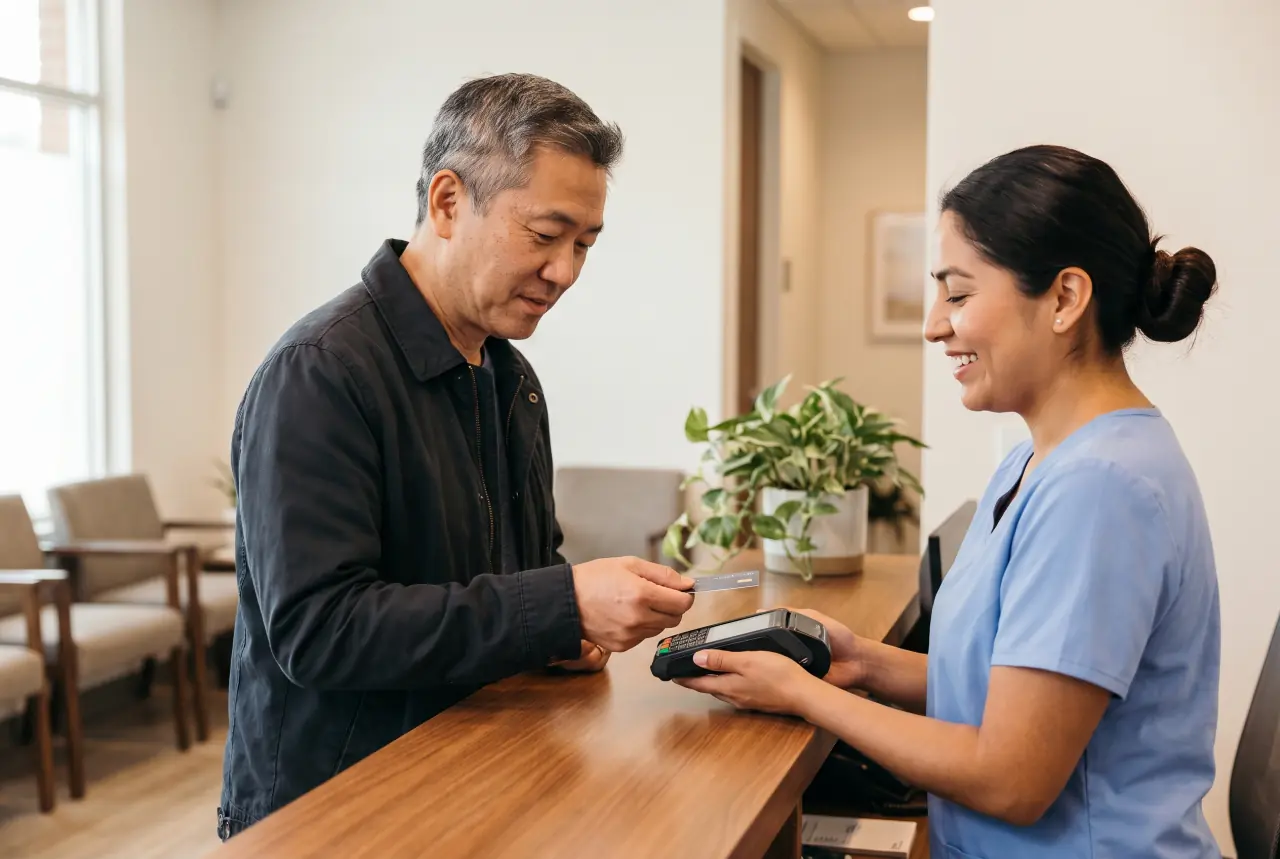
Mexican health providers usually require payment before providing medical care or before releasing you from the hospital, and most care providers accept cash or major credit cards (State Department). When a patient is admitted, hospitals in Mexico usually place holds on credit cards (U.S. Embassy in Mexico, April 2021). Some private providers may discharge a patient to a public hospital if the patient reaches credit card or medical insurance limits, so check your available credit before you travel (State Department).
How to check: go through these before you pay:
- Card fees: the purchase fees a credit card application must list in its pricing table include any issuer fee for purchases in a foreign currency, or that take place outside the United States or with a foreign merchant (Regulation Z commentary). So a fee can apply even when you pay a Mexican clinic in dollars. Look for the “Foreign transaction” line, or ask your issuer.
- Currency: ask for the quote in U.S. dollars. A peso price changes in dollars with the exchange rate, so ask which rate applies on the day you pay and whether a card costs more than cash.
- ATMs and cash: limit the cash you carry in public, and use ATMs (cash machines) in safe, well-lit areas, ideally inside banks, since skimmed cards can lead to fraudulent charges or withdrawals (State Department). In Mexico, an ATM that doesn’t belong to your card’s bank must show its fee on screen so you can decide whether to continue, according to CONDUSEF, Mexico’s financial consumer protection commission. Cover the keypad as you type your PIN (personal identification number), and keep your receipts to check against your statement (CONDUSEF notice, 2019, in Spanish).
- Cash at the U.S. border: if you carry currency and other monetary instruments totaling more than $10,000 when you enter or leave the United States, you must report it to U.S. Customs and Border Protection on a reporting form, FinCEN Form 105; for families or groups, the $10,000 threshold applies to what they carry together (U.S. Customs and Border Protection). Filing electronically is the recommended and quickest way; not reporting risks seizure and, in some cases, civil or criminal penalties.
- Deposits: get a copy of the cancellation and refund policies before you pay, and don’t pay anyone who says you can only pay by wire transfer, gift card or cryptocurrency: if there’s a problem, there’s likely no way to track that money or get it back. That advice is the Federal Trade Commission’s, written for travel deals rather than medical care, but it fits a clinic deposit too (Federal Trade Commission).
For hospital billing, get a written estimate before any procedure, ask for an itemized bill daily, raise billing concerns with the hospital administration immediately, and work with your insurer right away rather than assuming the hospital will (U.S. Embassy in Mexico, April 2021).
Questions to ask the clinic about your quote
- Can I have a written, itemized quote in U.S. dollars that answers every line of the quote table, with the date it expires?
- What does the price leave out, and can you price each of those items in writing?
- How many nights near the clinic should I plan for, and will I need a second trip?
- What happens, and what would I pay, if I have a complication here or after I’m home?
- Whom do I contact once I’m home, and how many follow-up visits are included?
- How much is the deposit, how do I pay it, and what are the cancellation and refund terms?
- Will my card be charged in pesos or dollars, and will you place a hold on it?
Before you go: checklist
- Written, itemized quote in U.S. dollars, with the provider, facility and expiry date
- Written prices for what the quote leaves out, and the complication, revision, deposit and refund terms
- Travel, recovery nights, a companion’s costs and missed workdays priced
- Health plan, or Medicare Advantage or Medigap plan, asked in writing what it pays abroad and back home
- Travel medical policy read for planned-treatment exclusions and evacuation cover
- HSA or FSA rules checked, and itemized receipts kept
- Available credit and your card’s foreign transaction fee checked; cash over $10,000 reported at the U.S. border
- Follow-up visit at home booked, and a reserve set aside for a longer stay or a complication
Frequently asked questions
How much does medical tourism cost in total?
It depends on the treatment and on what you add around it: your total is the treatment quote plus tests, medicines, garments, extra nights, travel, recovery lodging, a companion, time off and follow-up at home. For the treatment itself, Uriym’s indicative range for a gastric sleeve in Tijuana is $4,500 to $8,000, compared with $10,000 to $25,000 in the U.S. These ranges are indicative, not quotes. The price table shows other treatments, and the worksheet adds up the rest.
Does Medicare Advantage or Medigap cover care in Mexico?
Usually not for planned treatment. Medicare Advantage plans don’t usually cover treatment outside the United States, though some may include emergency care, and some Medigap policies cover emergency care abroad, which a planned procedure isn’t (CDC Yellow Book). The limits, and Medicare’s rare exceptions, are in what Medicare and Medigap may pay abroad. Ask your plan in writing before you book.
Does travel insurance cover complications from surgery abroad?
It may not, unless the policy is written to cover planned treatment. In the UK, most travel insurance policies are invalidated by planned treatment abroad (UK government), so read how yours treats it, along with its exclusions for preexisting conditions and whether it includes medical evacuation. Supplemental travel health insurance may be available for follow-up or emergency care from procedures abroad (CDC); the travel insurance section lists what to check.
Can I use my HSA for dental work in Mexico?
Possibly, if the work is a qualified medical expense. Dental care that prevents or alleviates dental disease can count, while teeth whitening doesn’t, and Publication 502 has no separate rule for dental care received in another country; see the HSA and FSA rules. A withdrawal for anything that isn’t a qualified expense is taxable, so check with your HSA administrator or a tax professional before you pay.
Is medical tourism tax deductible?
Part of it can be, under the same rules as care at home. You can deduct only the part of your medical and dental expenses that is more than 7.5% of your adjusted gross income, and only by itemizing on Schedule A (Form 1040) (IRS Publication 502). The limits on cosmetic surgery, travel, lodging and medicines from other countries still apply, and you can’t also deduct expenses equal to a tax-free distribution from your HSA (IRS Publication 969). Ask a tax professional whether itemizing makes sense for you.
Will I pay a foreign transaction fee if I pay a Mexican clinic in dollars?
You might. A card issuer’s foreign transaction fee can apply to purchases that take place outside the United States or with a foreign merchant, not only to purchases in a foreign currency (Regulation Z commentary). Ask your issuer what your card charges before the trip, especially if you plan one large payment; how to pay for care in Mexico has the other checks.
Can a hospital in Mexico hold my passport until I pay?
Not legally. Mexico’s General Health Law bars hospitals from holding a patient, or a patient’s passport, to guarantee payment (U.S. Embassy in Mexico, April 2021). The person who authorized the treatment is still responsible for arranging payment with the hospital or the insurer. If a billing dispute can’t be settled with the hospital administration, contact the U.S. Embassy, a consulate or a consular agency for advice.
Sources
- Medical Tourism: Travel to Another Country for Medical Care U.S. Centers for Disease Control and Prevention
- Travel Insurance, Travel Health Insurance, and Medical Evacuation Insurance (CDC Yellow Book) U.S. Centers for Disease Control and Prevention
- Travel outside the U.S. Medicare.gov, Centers for Medicare & Medicaid Services
- Learn what Medigap Covers Medicare.gov, Centers for Medicare & Medicaid Services
- Mexico Travel Advisory and travel information U.S. Department of State
- Medical Information U.S. Embassy & Consulates in Mexico
- Publication 502 (2025), Medical and Dental Expenses Internal Revenue Service
- Publication 969 (2025), Health Savings Accounts and Other Tax-Favored Health Plans Internal Revenue Service
- Surgery abroad, cut out the risk UK government, Travel Aware campaign
- Cosmetic surgery abroad NHS (UK National Health Service)
- Breast Augmentation Cost American Society of Plastic Surgeons
- § 1026.60 Credit and charge card applications and solicitations (Regulation Z) Consumer Financial Protection Bureau
- Compara las comisiones antes de usar un cajero automático diferente al tuyo (in Spanish) CONDUSEF, Mexico’s financial consumer protection commission
- Money and Other Monetary Instruments U.S. Customs and Border Protection
- Avoid Scams When You Travel Federal Trade Commission
About this guide
The Uriym editorial team researched this guide from the 15 sources above, drafted it with AI assistance, and checked it claim by claim against those sources before publishing, last on . Our editorial standards explain how we choose sources, handle prices and make corrections.
Uriym is a healthcare navigation platform, not a medical provider. Its founder, Adriana Mendez, grew up in a family that traveled to Mexico for care and has done it herself for the past ten years. How Uriym works
This is general information, not medical, legal or financial advice: your treating provider decides what care is right for you. Rules, prices and advisories change, so check the official page before you act. Found something wrong or out of date? Email support@uriym.com.