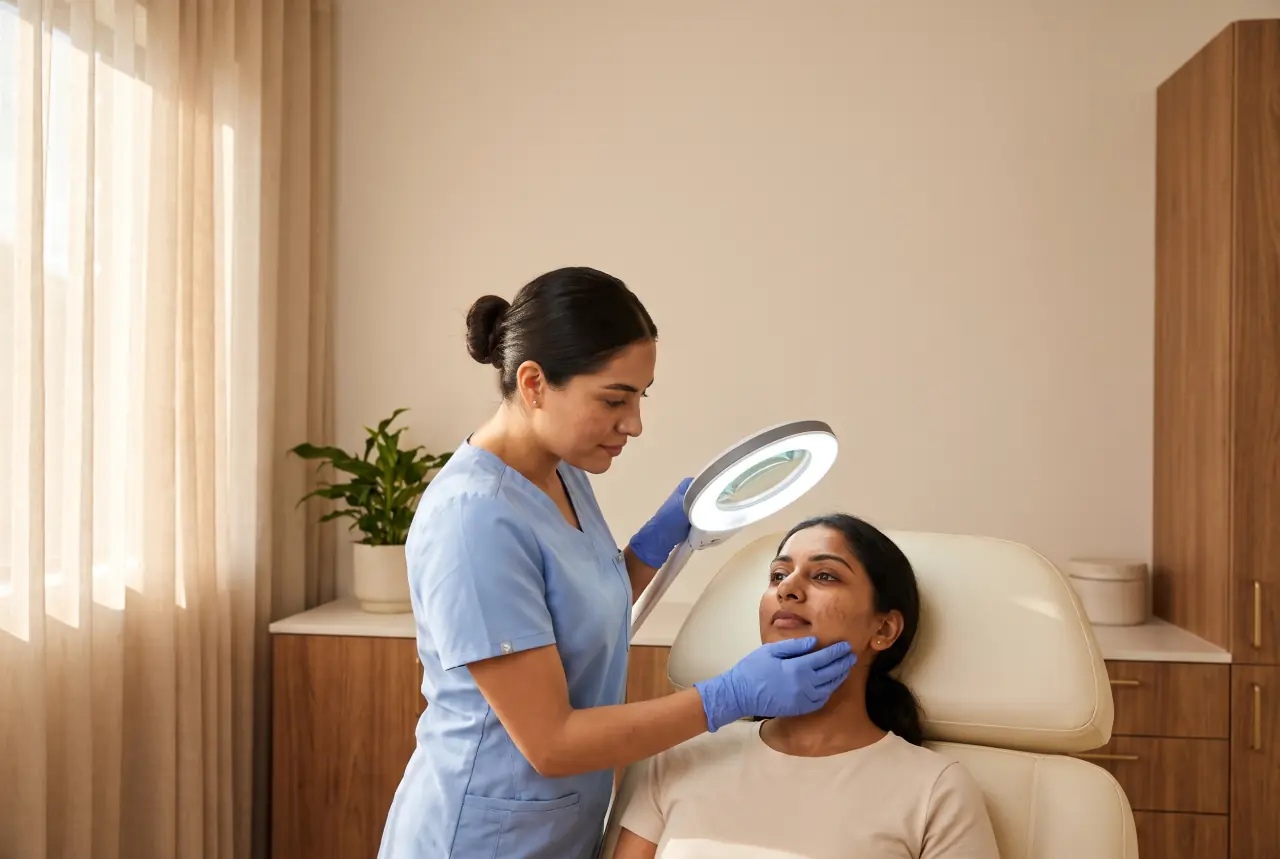
Morpheus8 in Mexico, in Tijuana or elsewhere, can be a well-planned choice when four things check out before your first session: the device is genuine and registered with Mexico’s health regulator, a licensed professional trained on it does the treatment, your skin type and health history have been reviewed, and your plan covers every session in the series and the time out of the sun after each one. Most of this can be checked with a few questions and an online lookup before you pay a deposit.
Morpheus8 is the brand name of one radiofrequency microneedling device, made by InMode (510(k) summary; Shauly et al., 2023), and the U.S. Food and Drug Administration (FDA) has cleared more than one device of this type (FDA consumer update). This guide names Morpheus8 where a fact is about that device, and it doesn’t recommend any device. Your provider decides whether the treatment suits you.
At a glance
- Price
- Per session, below U.S. ranges in Tijuana; see the price table
- What it is
- Fine needles that deliver radiofrequency heat into and under the skin
- Sessions
- More than one may be needed, and results may be temporary
- When results show
- Gradually; in one review, the skin’s remodeling was still improving 6 months after treatment
- Sun afterward
- At least 2 weeks out of the sun after each session; ask your provider
- Check first
- The device’s Mexican health registration number, and who will operate it
Key takeaways
- Ask which device the clinic uses, look up its Mexican health registration, and ask to see a new, sealed tip opened for your session.
- Ask who will hold the device, what training they have on it, and whether a doctor will treat you or supervise.
- Tell the provider your skin type, any acne medicine from the past 2 years, cold sores and blood thinners, and ask how they will set the device for your skin.
- Get the number of sessions, the weeks between them and what each visit includes in writing, and book trips you can move.
- Plan each trip so you can stay out of the sun after every session, including while you wait to cross the border.
In this guide
- What radiofrequency microneedling is, and what Morpheus8 can do
- What the FDA has cleared, and its 2025 safety notice
- Is the device genuine and registered in Mexico?
- Who does the treatment, and how to check them
- Your skin type, the sun and your medicines
- Sessions, downtime and when results show
- Risks of radiofrequency microneedling, and what you can do about each
- How much does Morpheus8 cost in Mexico?
- Questions to ask before your first session
- Before you go: checklist
- Warning signs after radiofrequency microneedling
- Frequently asked questions
- Sources
What radiofrequency microneedling is, and what Morpheus8 can do
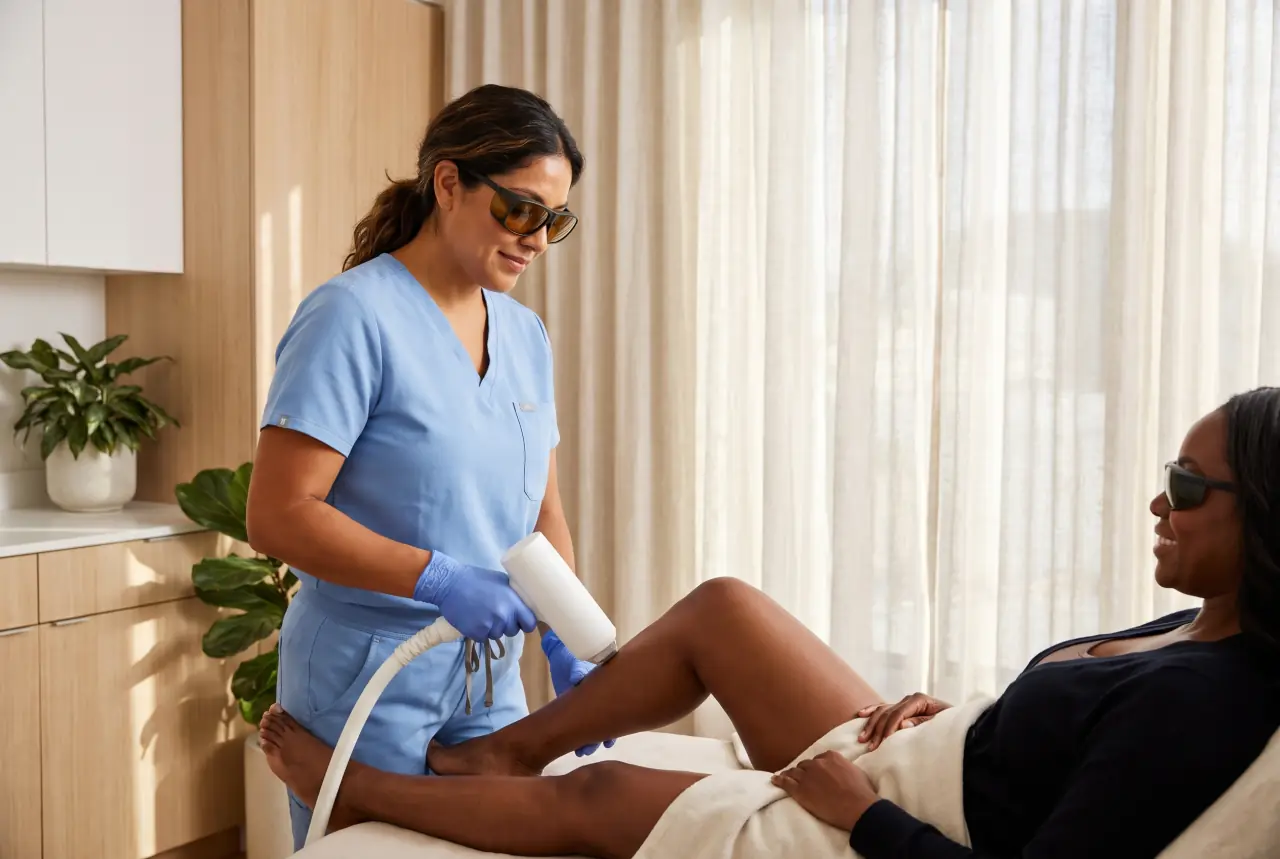
Radiofrequency (RF) microneedling devices have tiny electrodes, called microneedles, that penetrate the skin and deliver radiofrequency energy, a type of electrical energy that creates heat, into and under it; each one heats a small area at its tip, which changes the tissue there (FDA safety communication).
The heat is the reason for adding radiofrequency to microneedling: heating the dermis, the layer under the skin’s surface, is meant to strengthen its wound-healing response, and the remodeling that this can lead to adds tightening compared with microneedling alone (Shauly et al., 2023). Radiofrequency also helps the skin make collagen and elastin, which makes acne scars less noticeable (AAD). Morpheus8 delivers the energy through an array of pins (510(k) summary), at set depths of 1, 2, 3 and 4 mm with the facial device and up to 8 mm with the body device (Shauly et al., 2023).
| Use | What the sources say |
|---|---|
| Facial wrinkles | Some radiofrequency microneedling devices have been cleared to treat them, among other uses (FDA consumer update) |
| Acne scars | Combining radiofrequency with microneedling can make them less noticeable than either one alone (AAD) |
| Skin rejuvenation | The most-studied use: 14 of 42 higher-quality studies in a 2021 review (Tan et al., 2021) |
Radiofrequency microneedling was judged effective in that review (Tan et al., 2021); the evidence in darker skin, and its limits, are under darker skin.
Like any microneedling, it may not always give the look you want (FDA consumer update). Lasers, other energy-based devices, chemical peels and dermal fillers are alternatives the FDA asks providers to discuss with patients (FDA); if loose skin is your main concern, ask a plastic surgeon as well how the options compare for your face.
What the FDA has cleared, and its 2025 safety notice
Why it matters: what a device was cleared for, and which injuries have been reported with these devices, shape the checks in the rest of this guide.
Radiofrequency microneedling devices reach the U.S. market through the FDA’s 510(k) process (FDA safety communication): the agency finds a device substantially equivalent to ones already legally marketed, without the separate premarket approval some devices need (510(k) letter). That makes Morpheus8 FDA-cleared, not FDA-approved.
Its July 2023 clearance covers the InMode System with the Morpheus8 Applicators “for use in dermatologic procedures where coagulation/contraction of soft tissue or hemostasis is needed” (hemostasis is the stopping of bleeding), and above 62 mJ (millijoules) per pin it limits the Morpheus8 applicator to skin types I to IV. Wrinkles and scars aren’t named in that wording, and the summary’s entry for clinical performance data reads “Not Applicable”: the clearance rested on equivalence to an earlier Morpheus8 clearance and on that clearance’s bench tests, including a laboratory study on harvested pig tissue (510(k) summary). No skin-type scale is named in the clearance. The Fitzpatrick scale, long the favored way to classify skin by its reaction to the sun, runs from type I to type VI: lower types burn more easily than they tan, and types V and VI were added for darker skin (StatPearls).
On October 15, 2025, the FDA issued a safety communication on radiofrequency microneedling for skin procedures such as treating wrinkles, resurfacing, “tightening” or “rejuvenation.” Reported serious complications include burns, scarring, fat loss, disfigurement and nerve damage, and some injuries needed surgical repair or other medical treatment; the agency’s evaluation is ongoing (FDA safety communication). No number of reports or rate is given, so the notice tells you which injuries to ask about rather than how likely they are.
Patients are advised to discuss the benefits and risks of all available skin procedures with a provider, choose a licensed provider trained and experienced on these devices, ask which device they plan to use, and get care from a licensed provider for any problem afterward. “RF microneedling is a medical procedure, not a cosmetic treatment, and these devices should not be used at home,” in the agency’s words (FDA safety communication).
How to check:
- Ask which device and model the clinic will use, and what it’s cleared or registered for.
- Ask for the patient labeling, which the FDA says is available with authorized microneedling devices (FDA).
- Ask which skin type the provider assigns you, and on which scale; if it’s above type IV, ask how the settings will stay within that limit.
- To see a U.S. clearance, search the FDA’s 510(k) database, linked from the safety communication, by device name or maker.
Is the device genuine and registered in Mexico?
Why it matters: in Mexico a medical device needs a health registration before it can be sold or distributed, and you can check that registration yourself.
The registration (registro sanitario) comes from COFEPRIS, Mexico’s Federal Commission for Protection against Health Risks, and it’s the authorization under which a Mexican or imported medical device can be distributed and sold there. Medical equipment needs one for its production, sale and distribution; since 2005, registrations have been valid for 5 years, after which they must be extended; and the application includes the label text in Spanish and, where they apply, the instructions or operating manual in Spanish (COFEPRIS guide, in Spanish).
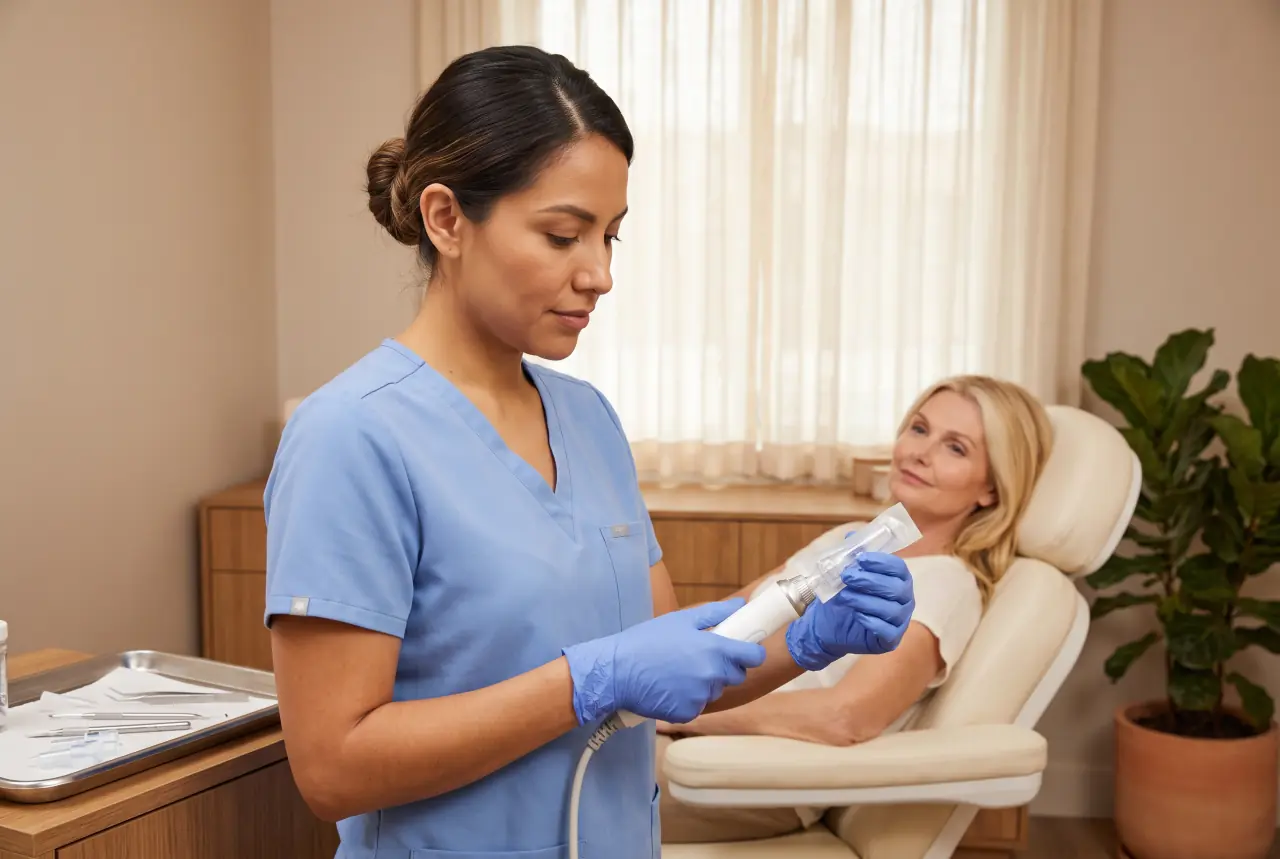
Not every clinic may meet these rules. Operating manuals and a maintenance program for the clinic’s equipment are among the checkpoints in a COFEPRIS self-check guide that helps non-surgical aesthetic clinics identify areas to improve (COFEPRIS self-check guide, June 2026, in Spanish).
A public viewer of current device registrations opened on August 20, 2026; it lists only registrations that meet the applicable rules, is rolling out in two stages and is updated continuously (COFEPRIS, in Spanish). The tips matter too: Morpheus8’s are sterilized, disposable and single-use (510(k) summary), and reusing a microneedling cartridge is unsafe even if it’s been cleaned (FDA).
How to check: do these before your first session.
- Ask for the device’s brand, model and registro sanitario number.
- Look it up in COFEPRIS’s viewer of device registrations (in Spanish) and check that it’s current (vigente); if it isn’t listed or the viewer won’t load, ask the clinic why, and to see the registration paperwork.
- Ask to see the operating manual in Spanish, and when the device was last serviced.
- Ask to see a new, sealed tip opened for your session, and how the handpiece is cleaned between patients.
- For toxin or filler on the same trip, see checking Botox and fillers in Mexico.
Who does the treatment, and how to check them
Why it matters: the FDA calls radiofrequency microneedling a medical procedure, and one review names user error as the highest risk for complications, so who holds the device matters (FDA; Shauly et al., 2023).
Mexico’s official advice on who may give aesthetic treatments, and how to look up a professional license number (cédula profesional), is in who may inject Botox and fillers in Mexico. We found no Mexican rule naming which professions may operate a radiofrequency microneedling device, so the checks below are the practical route.
Skill shows in the settings. In one 2023 review, energy should be tailored to the area treated; the authors recommend adjusting needle depth to the skin’s thickness, and note that overtreatment can lead to poorer outcomes (Shauly et al., 2023). A checked license and hands-on training with the device are a good place to start, alongside a registered device, settings suited to your skin and a plan for the days after treatment.
How to check:
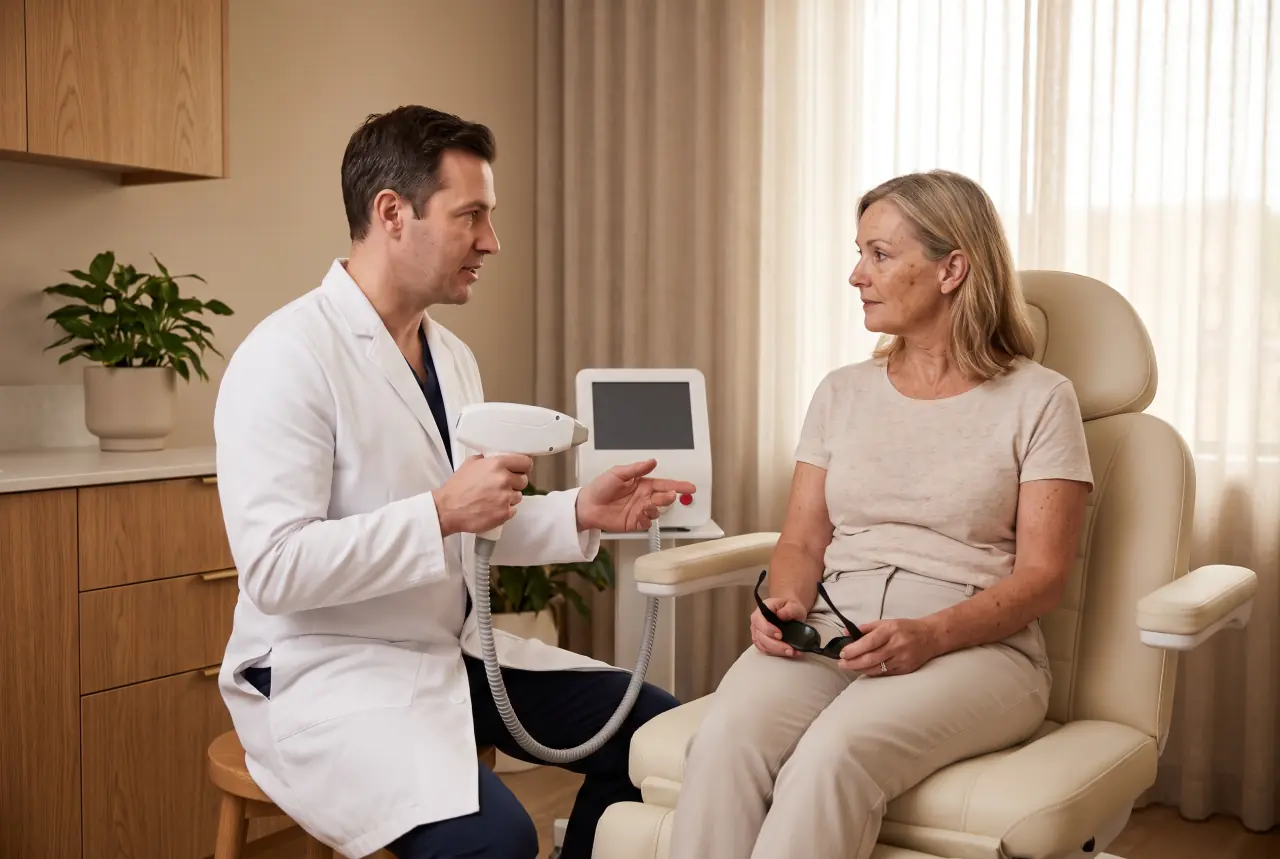
- Ask who will hold the device, their profession, and whether a doctor will treat or supervise.
- Look up their cédula profesional, using the steps linked above.
- Ask about their training and experience with radiofrequency microneedling and this device, and how often they treat skin like yours.
- Ask how they choose the depth and energy for each area, and what they would do if a burn appeared.
- See the clinic’s notice of operation or health license; checking a clinic’s health license shows how.
Your skin type, the sun and your medicines
Why it matters: your skin type, recent sun and some medicines and conditions can make microneedling unsuitable or change the settings, so they belong in your first conversation with the provider.
Darker skin
Sources differ here, so ask how your provider will plan for your skin. For microneedling devices in general, the FDA lists a darker skin type among reasons the procedure may not suit you, because the skin can darken or lighten afterward, and notes that some authorized devices weren’t studied in darker skin (FDA); radiofrequency devices carry different risks because they work differently, it adds (FDA consumer update). The American Academy of Dermatology (AAD), a U.S. professional society, says on its acne scar treatment page that radiofrequency and radiofrequency microneedling are “safe for all skin tones” (AAD). Of 35 studies of radiofrequency treatments, with or without microneedling, in Fitzpatrick skin types III to VI, 7 noted temporary darkening, 1 mild longer-lasting darkening and 1 permanent scarring, according to the abstract of a 2023 systematic review; its authors concluded that the risk of scarring or darkening seemed low, though a large share of the studies lacked strong-quality evidence (Syder et al., 2023).
In one 2023 review, pigment changes are a rare side effect, mainly a concern in darker skin, that can come from heat placed too close to the skin’s surface or from sun afterward (Shauly et al., 2023). The Fitzpatrick type is meant to reflect how your skin reacts to the sun, not your race or ethnicity (StatPearls).
The sun on a border trip
Being tan, or planning to be in the sun in the 2 weeks after the procedure, is also on the FDA’s list for microneedling in general (FDA), and avoiding sun for 2 weeks was advised across the studies in one 2023 review (Shauly et al., 2023). For acne scar treatments in general, sun advice runs longer: daily broad-spectrum, water-resistant sunscreen with a sun protection factor (SPF) of 30 or higher, because sun can darken treated skin, and limited time outdoors during the day for 6 to 8 weeks while the skin heals (AAD). Treated skin may also be more sensitive to products, sunscreen and makeup included, so ask which to use (FDA consumer update). On a Tijuana trip, that includes the border line; timing an appointment around the border helps you aim for a shorter wait.
Medicines and conditions
Each item below is on the FDA’s list of reasons microneedling in general may not suit you (FDA); radiofrequency devices work differently, so ask how each one applies to your treatment (FDA consumer update).
| If this applies to you | What to do |
|---|---|
| You take isotretinoin for acne, or did in the past 6 months | Tell the provider, with any acne treatment from the past 2 years; starting some scar treatments on, or soon after, certain acne medicines can cause side effects (AAD) |
| You take a blood thinner such as warfarin, heparin or low-dose aspirin, or have a bleeding or clotting disorder | List every medicine and supplement; patients like this have often been left out of studies (Shauly et al., 2023) |
| You have a cold sore outbreak now | Tell the provider; if you get cold sores, ask whether you need antiviral medicine first, which the FDA suggests providers consider (FDA); for medicine bought in Mexico, see medicine bought at a Mexican pharmacy |
| Keloid scars, eczema, psoriasis, vitiligo or an autoimmune disease, now or before; an active skin infection or a rash on your face; or moles, warts or birthmarks in the area to be treated | Mention it, with any treatment you use |
| A weakened immune system, uncontrolled diabetes, hepatitis or HIV (human immunodeficiency virus), a known cancer, or chemotherapy, radiotherapy or steroids now or soon | Talk it over with your doctor at home before you book |
| You’re pregnant or breastfeeding | Tell the provider before you plan sessions |
| You’re allergic to numbing medicines or stainless steel | Say so before any numbing medicine, which is typically used, goes on (FDA consumer update) |
If you’re also having toxin or filler, the list in what to tell the injector applies too.
How to check: before your consultation, write down your skin type if you know it, any recent tan, every medicine and acne treatment from the past 2 years, and each row above that applies. Ask which skin type the provider assigns you and how it changes the settings.
Sessions, downtime and when results show
Why it matters: results build over months and can take more than one session, so the number of sessions and the time between them decide how many trips you plan.
More than one procedure may be needed, any improvement may be temporary, and keeping it may take more procedures over time (FDA consumer update); for acne scars, 3 or more treatments may be needed (AAD). None of the official or professional sources we read sets a standard number of sessions or a fixed gap between them, so ask your provider for both. Results take time: in the 2021 review, the skin’s remodeling was still improving 6 months after treatment (Tan et al., 2021).
| When | What the sources describe |
|---|---|
| First 24 to 48 hours | Small bumps where the needles went in are common, and patients are told to avoid makeup (Shauly et al., 2023) |
| First 48 to 72 hours, after facial treatment | Keeping the head of the bed raised to reduce swelling (Shauly et al., 2023) |
| 1 to 7 days | Short-lived redness is expected (Shauly et al., 2023); for other common effects, see warning signs |
| 1 to 2 weeks | Grid marks after higher-energy treatment usually fade (Shauly et al., 2023) |
Timings come from a 2023 review of radiofrequency microneedling; ask your provider for your own.
Each session brings its own redness and time out of the sun, so a series spread over weeks means several trips or a long stay. If you’re combining sessions with toxin or filler, ask how the provider would order them; how touch-ups fit a short trip covers the toxin and filler side. For the line and the walk on the way home, see crossing back into the U.S. after a procedure.
How to check: before you book, ask for a written plan with the number of sessions, the weeks between them, the areas and depths, what to avoid afterward and for how long, and when you’ll judge the result together. Then book trips you can move.
Risks of radiofrequency microneedling, and what you can do about each
Why it matters: most effects of microneedling settle within days or weeks, but the FDA has reports of serious injuries with radiofrequency devices, and each risk has steps that lower it or catch it early.
| Risk | What the sources say | What you can do |
|---|---|---|
| Burns and scarring | Among the serious complications reported to the FDA (FDA safety communication) | Choose a licensed provider trained on the device, mention any keloids, and ask how the settings suit your skin |
| Fat loss and disfigurement | Also reported (FDA safety communication); deeper settings can be used, with care, to reduce some fat under the chin (Shauly et al., 2023) | Ask which depths and areas are planned, and why |
| Nerve damage | Also reported; some reported injuries needed surgical repair or other treatment (FDA safety communication) | Ask about the provider’s experience with the areas you want treated |
| Darker or lighter patches | A less common risk (FDA); see darker skin | Agree on settings for your skin type, and stay out of the sun afterward |
| Infection | A less common risk; reused cartridges can cause or spread it (FDA consumer update) | Ask for a new, sealed tip, and wash the treated skin as you’re told, which helps reduce the risk (AAD) |
| Cold sores flaring | A less common risk (FDA) | Tell the provider; see medicines and conditions |
| Numbing products | Over-the-counter products high in lidocaine, a numbing medicine, may cause serious injury when applied in ways that increase absorption (FDA) | Use what your provider applies or prescribes; for products you buy, the FDA advises no more than 4% lidocaine, no heavy use over large areas or broken skin, and no wrapping |
| A result you didn’t want | Possible with any microneedling; see its limits | Agree on realistic goals and the number of sessions first |
How to check: ask which of these the provider sees most, how they’d treat each, and whom you’d contact from home. Keeping an up-to-date plan for treating complications, on site or by referral, is one of the FDA’s recommendations to providers, so ask to hear it (FDA).
How much does Morpheus8 cost in Mexico?
Why it matters: the ranges below are per session, so your total depends on how many sessions you need and what each one covers.
| Treatment | Tijuana (USD) | United States (USD) |
|---|---|---|
| RF microneedling or Morpheus8, per session | $400 – $1,200 | $1,200 – $2,500 |
Uriym’s indicative ranges from its treatment costs page, reviewed September 7, 2026. They are not quotes and cover the listed treatment only, without taxes, travel or third-party charges.
How to check: ask each clinic to quote the same way, then compare these lines.
| Line | What to ask |
|---|---|
| Sessions | How many are in the plan, and is the price per session or for the series? |
| Areas | Which areas does a session cover, and what does adding the neck or body cost? |
| Numbing and tips | Are numbing medicine and a new, sealed tip for each session included? |
| Aftercare products | Which creams or sunscreen will I need, and are they included? |
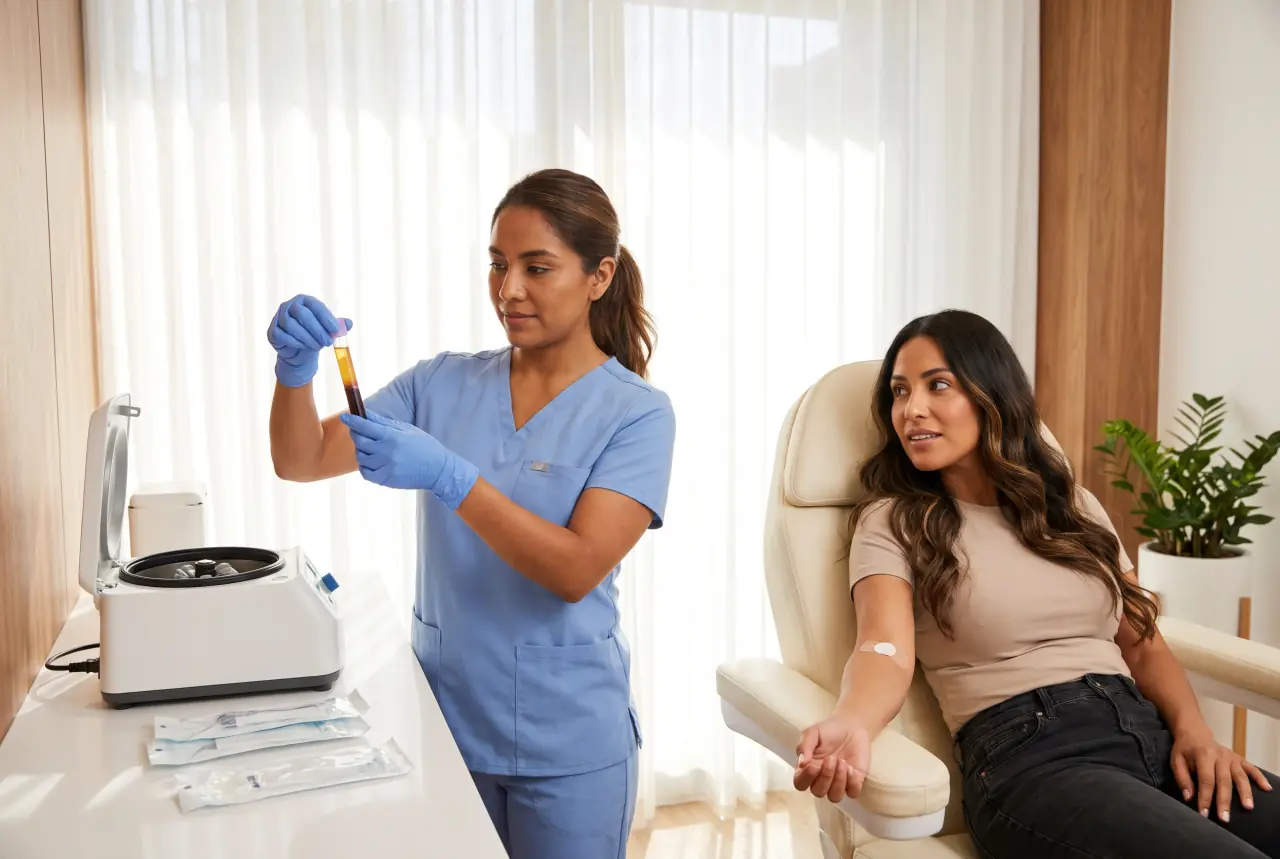
| Add-ons | What is each add-on, such as platelet-rich plasma (PRP), exosomes or serums, and can I leave it out? |
| Touch-ups | If I need more sessions later, what will each one cost? |
On add-ons: no microneedling device has been cleared for use with another product, such as creams, drugs or platelet-rich plasma, so the combinations haven’t been reviewed by the FDA (FDA consumer update), and a 2023 review noted that no exosome products on the market were FDA-approved (Shauly et al., 2023). For the rest of the trip budget, see what a medical tourism quote should include.
Questions to ask before your first session
- Which device and model will you use, and what is its Mexican registration number?
- Who will treat me, what is their license, and what training do they have on this device?
- Which skin type do you assign me, and how will you set the depth and energy?
- How many sessions do you recommend, how many weeks apart, and what does each include?
- Are the areas I want, numbing, tips and aftercare products all in the price?
- How long should I stay out of the sun, and when can I wear makeup?
- What would you do about a burn or a change in shape, and whom do I contact once I’m home?
Before you go: checklist
- Device brand, model and registration number noted, and the registration looked up
- Provider’s license looked up, and their training on the device asked about
- Clinic’s notice of operation or health license seen
- Skin type, recent sun, medicines and acne treatments, cold sores and pregnancy discussed
- Written plan with the sessions, the weeks between them, the areas and what’s included
- Sunscreen, a hat and shade planned for the trip home, including the border line
- Return trips booked with room to move
- Clinic contact details saved, and the warning signs below read
Warning signs after radiofrequency microneedling
In an emergency, call 911 (it works in the U.S. and Mexico), then tell the clinic that treated you.
| Sign | What to do |
|---|---|
| Irregular heartbeat, seizures or trouble breathing after using a numbing product | Call 911; these are among the serious injuries the FDA links to high-strength lidocaine products (FDA) |
| Redness, increased pain, yellow or green pus, or a lot of clear fluid where you were treated | Contact your provider right away: these are signs of infection (MedlinePlus) |
| A fever of 100°F (37.7°C) or higher for more than 4 hours, black edges around a treated area, bleeding that won’t stop after 10 minutes of direct pressure, or pain that won’t go away even after pain medicine | Contact your provider right away (MedlinePlus) |
| A burn, scarring, a hollow or loss of fullness, a change in shape, or any other problem or worry after treatment | Get care from a licensed health care provider (FDA safety communication), and tell the clinic that treated you |
| Redness, swelling, bruising, tightness, itching or peeling | Common; swelling can last hours to days (Shauly et al., 2023), and the others typically go away without treatment within days or weeks (FDA consumer update). Tell the clinic if they get worse |
The infection and wound rows come from MedlinePlus’s general guide to how wounds heal; ask your provider which signs to report after your treatment.
Tell any doctor who sees you afterward about the treatment, the device and where and when it was done. Problems with a device can be reported to the FDA through its MedWatch program (FDA safety communication).
Frequently asked questions
How much does Morpheus8 cost in Mexico?
Uriym’s indicative range for one radiofrequency microneedling or Morpheus8 session in Tijuana is $400 to $1,200, compared with $1,200 to $2,500 in the U.S. These ranges are indicative, not quotes. Your total depends on how many sessions you need and which areas are treated, so ask each clinic whether numbing, a new tip and aftercare products are in the price; the lines to compare are in what Morpheus8 costs.
Is Morpheus8 FDA approved?
It’s cleared rather than approved. Radiofrequency microneedling devices reach the U.S. market through the 510(k) process of the U.S. Food and Drug Administration (FDA), and Morpheus8’s July 2023 clearance covers certain skin procedures, with a skin type limit at higher energy levels (FDA; 510(k) summary); the wording is in what the FDA has cleared. In Mexico, a device needs its own health registration from COFEPRIS, the federal health regulator; checking the device shows how to look it up.
Is Morpheus8 safe for dark skin?
Sources differ, so ask how your provider will plan for your skin type. For microneedling devices in general, a darker skin type is among the reasons the U.S. Food and Drug Administration gives that the procedure may not suit you, because the skin can darken or lighten afterward; the agency adds that radiofrequency devices work differently (FDA; FDA consumer update). In its advice on acne scars, the American Academy of Dermatology calls radiofrequency microneedling “safe for all skin tones” (AAD). In a 2023 review of studies in darker skin, the risk of scarring or darkening seemed low, though many of the studies lacked strong evidence (Syder et al., 2023). See darker skin for what to ask, and the clearance for the Morpheus8 limit at higher energy levels.
How many Morpheus8 sessions will I need?
Your provider decides, and none of the official or professional sources we read sets a standard number. More than one microneedling procedure may be needed, and results may be temporary, with maintenance over time (FDA); for acne scars, 3 or more treatments may be needed (AAD). Ask for the number of sessions and the weeks between them in writing, since each one can mean another trip; see sessions, downtime and results.
What is the downtime after Morpheus8?
Expect some redness in the first week; marks and the time out of the sun can last longer. In one 2023 review, short-lived redness was expected 1 to 7 days after treatment, grid marks from higher-energy treatment usually lasted 1 to 2 weeks, patients were told to avoid makeup for 24 to 48 hours, and avoiding sun for 2 weeks was advised (Shauly et al., 2023). Ask your provider for your own timeline; see sessions, downtime and results.
Can I go in the sun after Morpheus8?
Plan not to, for at least the first 2 weeks after each session. Being tan, or planning to be in the sun in the 2 weeks after the procedure, is on the U.S. Food and Drug Administration’s list of reasons microneedling in general may not suit you (FDA), and the studies one 2023 review summarized advised 2 weeks without sun (Shauly et al., 2023); after acne scar treatments in general, the American Academy of Dermatology advises limiting time outdoors during the day for 6 to 8 weeks (AAD). On a Tijuana trip, count the border line too; see timing an appointment around the border.
Can Morpheus8 cause fat loss?
Fat loss has been reported: it’s among the serious complications the U.S. Food and Drug Administration lists for radiofrequency microneedling, with burns, scarring, disfigurement and nerve damage (FDA). Settings matter: deeper settings can be used, with care, to reduce some fat under the chin, a 2023 review notes (Shauly et al., 2023). Ask which depths and areas are planned and why, and choose a licensed provider trained on the device; see risks and what you can do.
Is it safe to get Morpheus8 in Tijuana?
It depends on things you can check before your first session: a registered device used with a new, sealed tip, a licensed provider trained on it, settings planned for your skin type, and time out of the sun afterward. Reported complications with radiofrequency microneedling include burns, scarring, fat loss, disfigurement and nerve damage (FDA), and risks and what you can do pairs each with a step. For the current travel advisory and a plan in case something goes wrong, see whether surgery in Mexico is safe.
Sources
- Potential Risks with Certain Uses of Radiofrequency (RF) Microneedling: FDA Safety Communication (October 15, 2025) U.S. Food and Drug Administration
- Microneedling Devices U.S. Food and Drug Administration
- Microneedling Devices: Getting to the Point on Benefits, Risks and Safety U.S. Food and Drug Administration
- 510(k) K231790: The InMode System with the Morpheus8 Applicators (clearance letter and summary, July 20, 2023) U.S. Food and Drug Administration
- FDA Warns Consumers to Avoid Certain Topical Pain Relief Products Due to Potential for Dangerous Health Effects (March 26, 2024) U.S. Food and Drug Administration
- Acne scars: Consultation and treatment American Academy of Dermatology
- Acne scars: How to care for your skin after treatment American Academy of Dermatology
- Radiofrequency Microneedling: A Comprehensive and Critical Review (Tan et al., 2021; abstract on PubMed) Dermatologic Surgery (peer-reviewed journal)
- Radiofrequency and Radiofrequency Microneedling in Skin of Color: A Review of Usage, Safety, and Efficacy (Syder et al., 2023; abstract on PubMed) Dermatologic Surgery (peer-reviewed journal)
- Radiofrequency Microneedling: Technology, Devices, and Indications in the Modern Plastic Surgery Practice (Shauly et al., 2023) Aesthetic Surgery Journal Open Forum (peer-reviewed journal), via PubMed Central
- Laser Fitzpatrick Skin Type Recommendations (StatPearls) StatPearls Publishing, on NCBI Bookshelf, U.S. National Library of Medicine
- How wounds heal (MedlinePlus Medical Encyclopedia) MedlinePlus, U.S. National Library of Medicine
- Guía para la obtención del Registro Sanitario de Dispositivos Médicos (in Spanish) COFEPRIS, Gobierno de México
- COFEPRIS publica Visor de Registros Sanitarios de Dispositivos Médicos, 20 de agosto de 2026 (in Spanish) COFEPRIS, Gobierno de México
- Guía de autoverificación en materia de establecimientos de atención médica con fines estéticos sin procedimientos quirúrgicos, junio de 2026 (in Spanish) COFEPRIS, Secretaría de Salud
About this guide
The Uriym editorial team researched this guide from the 15 sources above, drafted it with AI assistance, and checked it claim by claim against those sources before publishing, last on . Our editorial standards explain how we choose sources, handle prices and make corrections.
Uriym is a healthcare navigation platform, not a medical provider. Its founder, Adriana Mendez, grew up in a family that traveled to Mexico for care and has done it herself for the past ten years. How Uriym works
This is general information, not medical, legal or financial advice: your treating provider decides what care is right for you. Rules, prices and advisories change, so check the official page before you act. Found something wrong or out of date? Email support@uriym.com.