Crossing the border to Tijuana for a medical or dental appointment starts with one document. For U.S. citizens, a passport book or passport card works in both directions, on foot or by car, and the two main crossings, San Ysidro and Otay Mesa, are listed as open 24 hours a day.
The rest of the plan is about the trip back: the card you carry decides which lanes you can use, the wait depends on the hour, and after treatment you’ll want to be sure you can manage the line and the walk. Official pages differ on one point, whether a short stay needs Mexico’s visitor permit, and the permit section shows how to check it.
At a glance
- Going into Mexico by land
- U.S. citizens: a passport book or passport card
- Coming back by land
- U.S. citizens: a passport book or card, an enhanced driver’s license or a trusted traveler card; under 16, a birth certificate or other proof of citizenship
- Mexico’s visitor permit
- Official pages disagree on whether a short stay in Tijuana needs one; see how to check
- Faster lanes coming back
- Ready Lanes need a card with a radio-frequency chip, such as a passport card, for everyone 16 and older in your group
- Crossing hours
- San Ysidro and Otay Mesa are listed as open 24 hours; PedWest, weekdays from 6 a.m. to 2 p.m.
- Wait times
- Live estimates for each crossing and lane on Border Wait Times
Key takeaways
- For every U.S. citizen in your group, carry a passport book or passport card. A standard driver’s license isn’t accepted at the border, even one marked with a star.
- Ask Mexico’s immigration authority whether your stay needs a visitor permit. If you’re still unsure, apply online and carry the printout.
- If you’ll cross more than once, consider a passport card for everyone 16 and older, so your group can use the faster Ready Lanes coming back.
- Book your appointment so you can head back while your crossing is open, and check the live wait before you leave the clinic.
- Before a procedure, ask your provider whether you can manage the line and the walk back, and arrange a ride and a companion for the return.
In this guide
- What happens at the border, going in and coming back
- What documents do you need for crossing the border to Tijuana?
- Do you need an FMM for a short stay in Tijuana?
- Which border crossing should you use to get to Tijuana?
- SENTRI, Global Entry and Ready Lanes: which faster lanes can you use?
- How to check border wait times at San Ysidro and Otay Mesa
- How to time a medical appointment around the border
- What to carry, leave behind and declare
- Crossing back into the U.S. after a procedure
- Getting around Tijuana: rides and the travel advisory
- Driving to Tijuana: Mexican auto insurance and permits
- Questions to ask your clinic about the crossing
- Before you go: border checklist
- Frequently asked questions
- Sources
What happens at the border, going in and coming back
Each direction has its own rules and officers. Going into Mexico, you show your passport book or card, and the visitor permit if you have one, to a Mexican immigration officer (INM). Mexico’s immigration authority is the INM (Instituto Nacional de Migración, the National Migration Institute).
Coming back, an officer from U.S. Customs and Border Protection (CBP) inspects you, and you present a passport or another accepted document that shows your identity and citizenship (CBP). The lanes come in three kinds: general lanes; Ready Lanes, for travelers whose cards carry a radio-frequency identification (RFID) chip; and SENTRI lanes, for members of the Secure Electronic Network for Travelers Rapid Inspection program (Border Wait Times).
What documents do you need for crossing the border to Tijuana?
Why it matters: Mexico and the United States accept different documents, and only some work in both directions.
To enter Mexico by land, U.S. citizens need a passport book or passport card; to enter by air, a passport book. A passport card can’t be used to board a plane (State Department).
Coming back by land, U.S. citizens can present a valid U.S. passport, passport card, enhanced driver’s license (EDL) or trusted traveler program card (NEXUS, SENTRI or FAST), plus a few documents for specific groups, such as a military ID when traveling on official orders (CBP). A regular driver’s license isn’t on that list. Neither is a REAL ID, the star-marked state license or ID card that meets federal security standards for uses such as boarding a domestic flight: REAL ID cards can’t be used for border crossings into Mexico (TSA).
| Document | Going into Mexico by land | Coming back into the U.S. by land |
|---|---|---|
| U.S. passport book | Accepted | Accepted |
| U.S. passport card | Accepted, for the border crossing and border zone | Accepted; also works in Ready Lanes |
| Enhanced driver’s license | Not on the State Department’s list | Accepted; also works in Ready Lanes |
| SENTRI, NEXUS or FAST card | Not on the State Department’s list | Accepted; also works in Ready Lanes |
| Global Entry card | Not on the State Department’s list | Accepted; also works in SENTRI lanes, under SENTRI rules, and in Ready Lanes |
| REAL ID or regular driver’s license | Not accepted | Not accepted |
| U.S. citizen child under 16 | Passport book or card | Birth certificate or other proof of citizenship |
| U.S. green card holder | The rules for your citizenship apply; check with the INM | Permanent resident card (Form I-551) or other valid evidence of permanent residence; an enhanced permanent resident card also works in Ready Lanes |
Sources: State Department, INM, CBP (travel documents, Ready Lanes, Global Entry), TSA.
Enhanced driver’s licenses: check your state
An EDL is not the same as a REAL ID. EDLs are issued in Michigan, Minnesota, New York, Vermont and Washington, and the receipt or temporary notice for a pending one isn’t a Ready Lane card (CBP). A license from California or any other state not on that list is not an EDL. Even with an EDL, bring a passport book or card for the trip into Mexico.
Children
U.S. citizen children under 16 need only a birth certificate or other proof of citizenship to come back by land, and the birth certificate can be an original, a photocopy or a certified copy (CBP). Going into Mexico is stricter: all travelers entering by land need a passport book or card, and travelers under 18 may need a notarized consent letter from a parent who isn’t on the trip (State Department).
How to check: go through each traveler’s documents against both columns of the table before the trip. Without an accepted document, you’re likely to be delayed at the U.S. booth while officers verify your identity and citizenship (CBP).
- Check expiry dates.
- If you have an EDL, look for the image of the U.S. flag and the word “Enhanced” at the top of the card (TSA).
- For a child under 18 traveling without both parents, bring a notarized consent letter from any parent who isn’t on the trip.
Do you need an FMM for a short stay in Tijuana?
Why it matters: the FMM (Forma Migratoria Múltiple, or multiple immigration form) is Mexico’s permit for visitors, and official pages give different answers on whether a short stay in Tijuana needs one.
The FMM gives you a stay as a visitor without permission to work. It’s valid for up to 180 calendar days from the day it’s stamped at entry, for one entry only, and paying for it doesn’t guarantee entry (INM). For land travelers, the official pages say:
- The State Department says all travelers entering Mexico by land must apply for an FMM online or at an INM office, including those staying only within 12 miles (20 kilometers) of the border (Mexico page).
- The U.S. Embassy in Mexico says most travelers entering by land must have an FMM, available online or from a Mexican immigration officer at the port of entry, and that travelers staying in a border city for less than 7 days may not be required to present one (driving to Mexico).
- The INM lets land travelers apply online, pay through its services portal, then print the form and bring it to the crossing (FMM page).
Neither U.S. page exempts a stay of 7 days or more, or travel beyond the border area. For a day trip or a few nights in Tijuana, they don’t agree, and the INM’s own form page doesn’t settle it.
How to check: ask the INM before you go, and if you’re still unsure, apply online, print the form and carry it with your passport. When you apply:
- Enter your details exactly as they appear in your passport. The INM can’t change them after you submit, and forms with inaccurate data are refused (INM).
- To pay, you’ll need an active account on the INM’s services portal and the passport you entered in the application.
- Go by the official pages, not a clinic page or forum post saying the permit is never needed.
Which border crossing should you use to get to Tijuana?
Why it matters: each crossing keeps its own hours and lanes, and the one you choose is where your ride has to meet you.
Between San Diego and Tijuana you can cross at San Ysidro’s main port, at its PedWest pedestrian facility or at Otay Mesa. Airline passengers have a fourth option, the Cross Border Xpress (CBX) bridge.
| Crossing | Who it suits | Hours CBP lists | Lanes back into the U.S. |
|---|---|---|---|
| San Ysidro (main port) | Walking or driving, at any hour | Open 24 hours, 7 days; SENTRI lanes 24 hours | Vehicles: general, Ready Lane, SENTRI. Pedestrians: general, Ready Lane |
| San Ysidro PedWest | Walking back into the U.S. on a weekday morning or early afternoon | 6:00 a.m. to 2:00 p.m. Pacific, Monday to Friday | Pedestrians: general, Ready Lane |
| Otay Mesa | Walking or driving, as an alternative to San Ysidro | Open 24 hours, 7 days; SENTRI lanes 6:00 a.m. to 10:00 p.m. Pacific, Monday to Friday | Vehicles: general, Ready Lane, SENTRI. Pedestrians: general |
| Cross Border Xpress (CBX) | Passengers flying from or into Tijuana’s airport | Listed as 24 hours on Border Wait Times | Pedestrians: general, Ready Lane |
Hours from CBP’s San Ysidro port page, which also covers Otay Mesa and was last updated September 23, 2025, and from Border Wait Times; we checked both on October 7, 2026.
PedWest has one set of hours on the port page, with no direction given, and Border Wait Times, which tracks the trip into the U.S., lists the same 6 a.m. to 2 p.m.
Flying from Tijuana’s airport through CBX
Cross Border Xpress is a privately run pedestrian bridge between a terminal in San Diego and Tijuana’s international airport, for that airport’s passengers only. To use it, you need a boarding pass for a flight arriving at or leaving from Tijuana, a CBX ticket and valid travel documents (CBX). Flying out, you can cross up to 24 hours before departure. Arriving in Tijuana, you have 2 hours after landing to cross from the baggage claim area; once you leave it for the airport’s public area, you can’t go back in to use the bridge.
If your care continues further into Mexico, such as in Guadalajara, and you’ll fly from Tijuana, bring your passport book. A passport card works only at land border crossings and for visiting the border zone, not for travel into the interior or for international flights (INM).
How to check: before you choose a crossing:
- Look at both CBP pages the week you travel, since hours change.
- Walking back through PedWest? Finish before 2:00 p.m. on a weekday, or use the main pedestrian crossing.
- Going into Mexico, plan on the main crossing unless you’ve confirmed PedWest is open southbound that day.
- Agree on the crossing with whoever is picking you up; a driver waiting at one port can’t easily meet you at another.
SENTRI, Global Entry and Ready Lanes: which faster lanes can you use?
Why it matters: the card you carry decides which lane you can join on the way back, and Ready Lanes and SENTRI lanes are set up to move faster than general lanes.
| Lane | Who can use it | What you need |
|---|---|---|
| General | Anyone | A document from the documents table |
| Ready Lane | People in vehicles and on foot with RFID cards | An eligible card for everyone 16 and older in the car or walking group |
| SENTRI | Enrolled SENTRI members, and Global Entry members under SENTRI rules | A SENTRI or Global Entry card |
Infrastructure permitting, CBP’s processing goals are 15 minutes in SENTRI lanes and half the general-lane wait in Ready Lanes (Border Wait Times). They’re goals rather than promises.
SENTRI. Members are pre-approved, low-risk travelers who get expedited clearance through dedicated lanes at southern land border ports. Every applicant goes through a rigorous background check and an in-person interview before enrollment (CBP).
Global Entry. Global Entry cards are accepted for entry at land ports, and their RFID chip lets you use SENTRI lanes when entering the United States at land borders. At southern border ports, all SENTRI program rules apply (CBP).
Ready Lanes. The eligible RFID cards are U.S. passport cards, EDLs, enhanced tribal cards, enhanced border crossing cards, enhanced permanent resident cards, and NEXUS, SENTRI, Global Entry or FAST cards, and everyone 16 and older in the vehicle or walking group must carry one (CBP). A passport book isn’t on the list, so if anyone 16 or older in your group carries only a passport book, the group can’t use the Ready Lane.
If you can’t yet use Ready Lanes, an eligible card or a trusted traveler program gives you access to lanes with shorter waits (CBP). If you’ll cross more than once for treatment, as with dental implants placed in stages, full-arch implants whose final bridge comes after months of healing, or porcelain veneers fitted at a second visit, it’s worth considering one. For U.S. citizens, a passport card is the one Ready Lane card that’s also on the State Department’s list for going into Mexico by land.
How to check: before you join a faster lane:
- Make sure everyone 16 or older has an eligible card in hand.
- Look for the Ready Lane signs at the port, and hold the cards up to the readers in the lane before you reach the officer; CBP says that can save time.
- Compare the live wait for each lane on Border Wait Times before you choose.
- Planning to use SENTRI? Apply well before the first trip you want to use it for.
How to check border wait times at San Ysidro and Otay Mesa
Why it matters: the wait coming back changes by hour, day, crossing and lane, and the live estimate lets you choose when and where to cross.
The wait times CBP publishes are for the trip north, into the United States. For each crossing and lane type, Border Wait Times shows the current estimated wait, how many lanes are open and the time of the last update. Open a crossing’s own page and it adds an average wait and a chart that compares today’s waits, hour by hour, with the average. The free CBP Link app shows estimated wait times and open lane status at land ports of entry at any hour.
This guide doesn’t quote typical waits: figures on other sites aren’t CBP’s, and the live number is the one to plan with.
How to check: set up both tools before your trip.
- On Border Wait Times, choose your lane type, then the crossing, and note when the estimate was last updated.
- Install CBP Link from the Apple App Store or Google Play to check from your phone.
How to time a medical appointment around the border
Why it matters: the hour you head back decides which crossings and lanes are open and how long the line is likely to be.
How to check: work through these when you book, and again on the day.
- Look before you book. Open the Border Wait Times page for the crossing and lane you’ll use, and read the hourly chart at the time you expect to come back.
- Match the crossing to its hours. PedWest and Otay Mesa’s SENTRI lanes keep weekday hours; the crossings table has them.
- Count the border as part of the appointment. Leave slack going in, and more coming back.
- Plan where you’ll stay if you can’t cross the same day. Identifying where you will stay immediately after a procedure is part of the medical tourism guidance from the Centers for Disease Control and Prevention (CDC).
- Check again on the day. Before you leave the clinic, look at Border Wait Times or CBP Link and choose the crossing and lane.
What to carry, leave behind and declare
Why it matters: your records and medicines travel with you, and each side of the border has its own rules about what you bring across.
Mexican law applies however you cross, and some things you may carry at home are illegal there (U.S. Embassy in Mexico):
- Weapons and ammunition. Bringing them into Mexico is a serious crime that can mean years in prison, and U.S. permits to own or carry a gun aren’t valid there.
- Marijuana in any form. Drug possession is illegal in Mexico and can lead to long jail sentences or fines, even with a medical permit and even if marijuana use is allowed where you live in the U.S.
- E-cigarettes and vaping liquids. Bringing them in is illegal and can mean entry delays and possible criminal charges.
Coming back, declare all foods, plants and agricultural items; alcohol beyond 1 liter (or three beers) per traveler each month; tobacco beyond one carton (200 cigarettes or 100 cigars) per traveler each month; and medications up to a 90-day supply, which should be in their original package with a prescription in your name (CBP). That last line is about declaring, not an allowance: medicine prescribed in Mexico has its own rules at the U.S. border, set out in bringing prescription drugs from Mexico.
Currency over $10,000 must be reported when you enter or leave the United States, on a currency report called FinCEN Form 105. For families or groups, the threshold applies to the total they carry together, not per person. If you don’t report it, you risk having the money seized and, in some cases, civil or criminal penalties (CBP). For what a treatment quote should include and how people pay, see medical tourism costs.
How to check: go through these as you pack.
- Copies of your medical records, including lab and other test results related to your condition. Tell the clinic’s staff about any allergies you have (CDC).
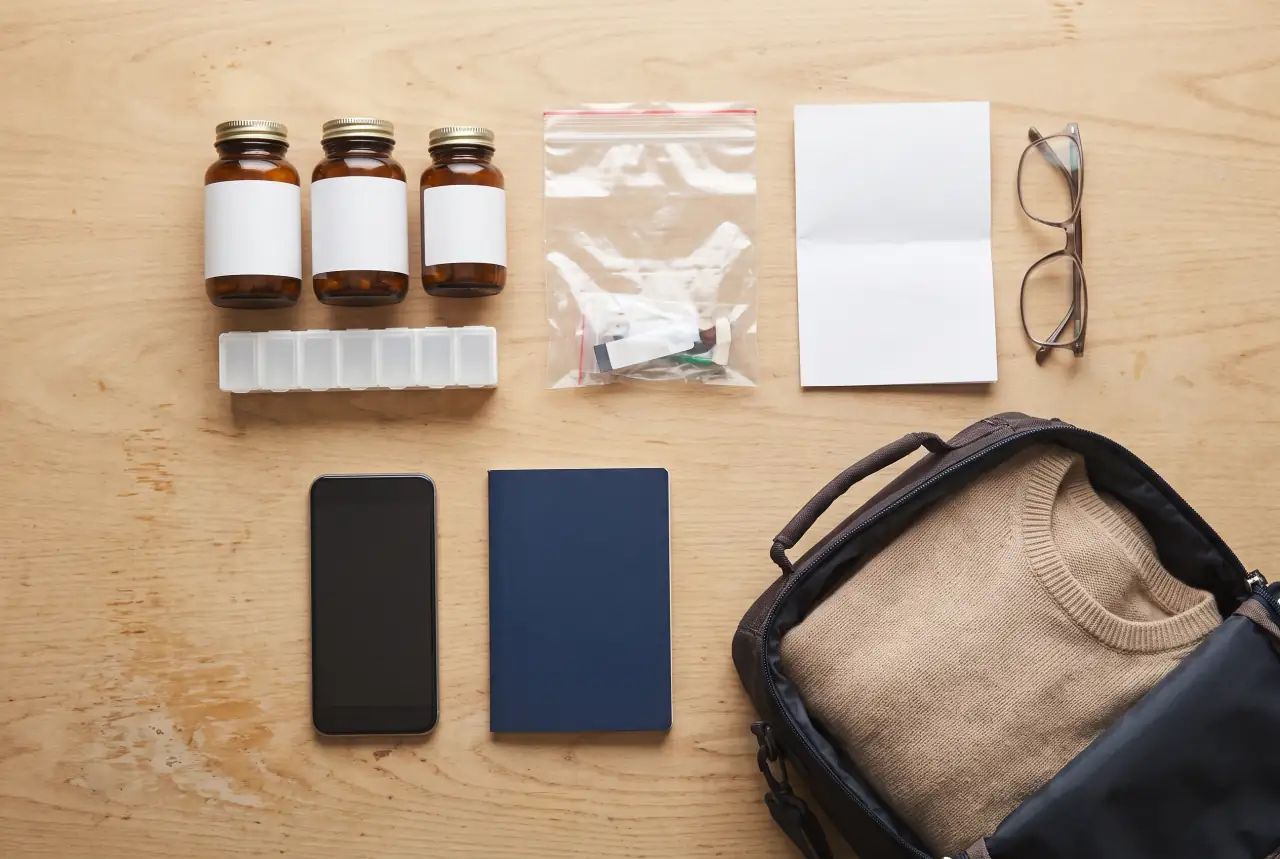
- Your prescription and over-the-counter medicines in their original packaging, enough for the whole trip plus a little extra in case of delays (CDC).
- Copies of all your prescriptions, and a list of your medicines with brand names, generic names, manufacturers and doses (CDC).
- Before you head home, ask the clinic for copies of all your records; you may need them translated into English (CDC).
- If you regularly use any of the banned items above, search your bags and pockets before you travel. Bringing one in can lead to serious penalties even by accident (U.S. Embassy in Mexico).
- Over the cash threshold? File the report; filing electronically is CBP’s recommended and quickest option.
Crossing back into the U.S. after a procedure
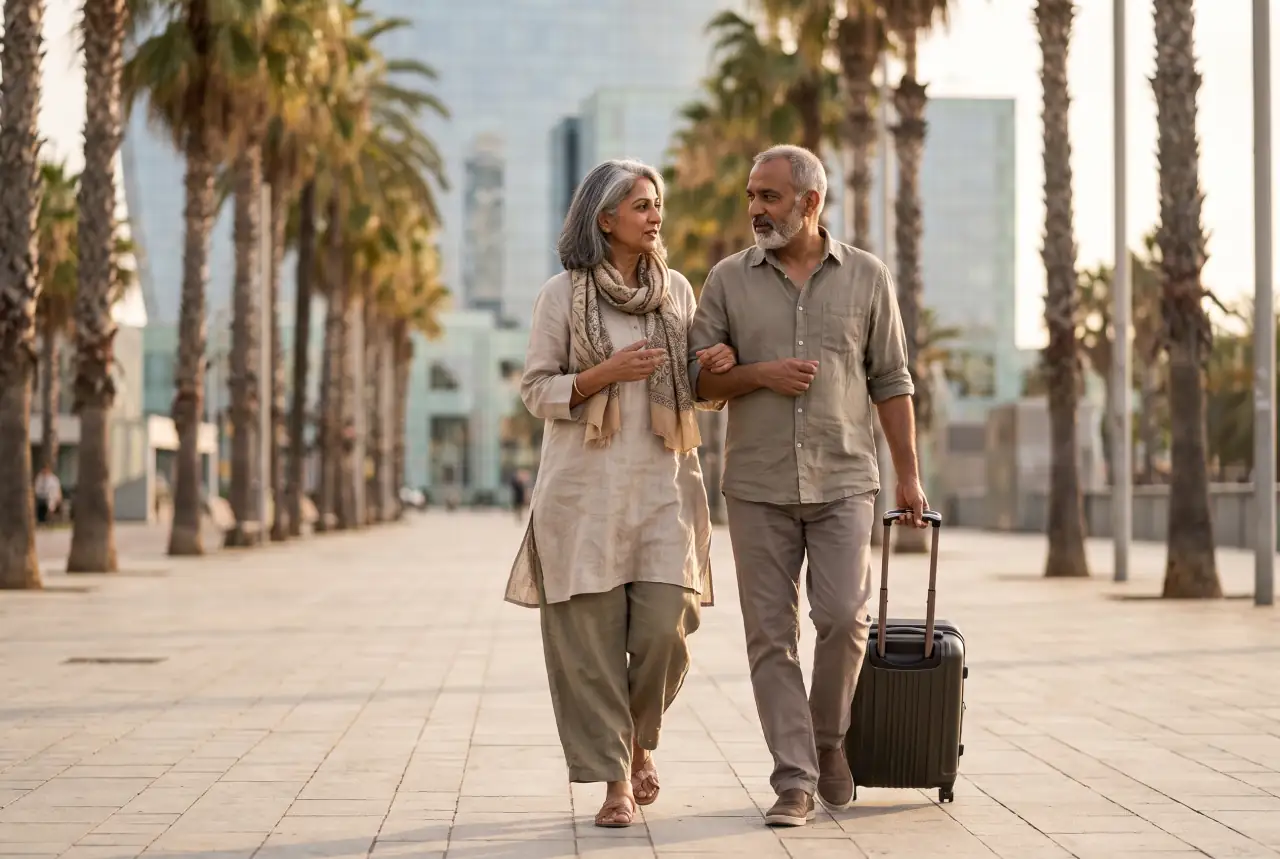
Why it matters: on foot, the trip back can mean standing in line and then walking through the port to your ride, which is easier to plan for before treatment than after.
Your treating provider decides when you’re ready to travel, and can tell you whether you’re up to the line, the walk and the ride. If you’ll use a wheelchair, a walker or crutches, CBP provides reasonable modifications for people with disabilities on a case-by-case basis, and its CBP Information Center explains how to ask for one at inspection.
For the trip home after specific treatments:
- Surgery and flying. Flying after surgery can increase the risk of blood clots (CDC); how soon you can fly after surgery covers the timing, symptoms and airport screening.
- Cosmetic surgery. Plastic surgery in Tijuana covers how long to stay before the trip home, and notes that time in a border line adds to the journey.
- Botox or fillers. Botox and fillers in Tijuana lists the signs that mean someone else should drive you back across the border.
In an emergency, call 911; it works on both sides of the border. In Mexico, not all operators speak English, so the State Department suggests asking a Spanish speaker to help place the call (State Department). For symptoms that aren’t an emergency, contact the doctor or clinic that treated you.
How to check: settle these before treatment day.
- Put the questions below to your provider before you book, and plan the return around the answers.
- Arrange your companion and your ride back.
- If you’ll need a modification at inspection, contact the CBP Information Center before your trip rather than waiting until you reach the booth.
Getting around Tijuana: rides and the travel advisory
Why it matters: the advisory sets a level for each Mexican state, and its advice on taxis and ride-share apps covers the rides you’ll take between the border, the clinic and where you’re staying.
The State Department’s Mexico travel advisory, issued May 29, 2026, puts Mexico as a whole at Level 2, “Exercise increased caution,” due to terrorism, crime and kidnapping. It puts the state of Baja California, which includes Tijuana, at Level 3: “Reconsider travel due to terrorism, crime, and kidnapping.” The advisory notes high homicide numbers in Tijuana’s non-tourist areas; most appear to be targeted, but violence between criminal groups can injure or kill bystanders. Its only travel restrictions for U.S. government employees in Baja California are in the Mexicali Valley, none in Tijuana. If your care continues in Guadalajara, the advisory puts Jalisco at Level 3 too, with no restrictions on travel in the Guadalajara metropolitan area.
How to check: read the current advisory before you travel, and follow its advice on rides:
- Don’t hail taxis on the street. Use a trusted ride-share app, or book a taxi through your hotel or an authorized taxi stand, called a sitio.
- Confirm the driver’s license plate number and the type of vehicle before you get in.
- If a ride-share driver gets into a confrontation, leave the car and move somewhere safe.
- Don’t accept rides from strangers, and carry a charged phone that works in Mexico.
- Don’t travel between cities after dark, and avoid traveling alone, especially in remote areas.
For the full safety picture, including how to check a doctor’s and a clinic’s credentials, read is it safe to get surgery in Mexico?
Driving to Tijuana: Mexican auto insurance and permits
Why it matters: if you or a companion drive, Mexico requires its own car insurance, and your plates and registration have to meet its rules.
- Insurance. Mexican car insurance is required for all vehicles, and uninsured drivers involved in any accident, major or minor, may be arrested regardless of who is at fault (State Department). Your U.S. insurance isn’t sufficient, and many companies offer short-term tourist policies (U.S. Embassy in Mexico).
- License and plates. U.S. driver’s licenses are valid in Mexico. The vehicle needs a valid license plate and a current registration sticker; Mexican authorities won’t let you in with a temporary or paper plate (State Department).
- Vehicle permit. You don’t need a temporary vehicle import permit for the Baja California peninsula or the border zone, generally within about 12 miles of the border (U.S. Embassy in Mexico).
- Beyond the border zone. U.S. citizens are strongly advised not to drive between Mexican border cities and the interior of Mexico, with limited exceptions; it’s one of the advisory’s nationwide restrictions (State Department).
How to check: before you drive across:
- Buy a short-term Mexican policy before you cross.
- Fill your tank on the U.S. side, since there is often a long wait at the border crossing (U.S. Embassy in Mexico).
- Plan the safest route rather than the fastest: navigation apps generally choose the most direct route and don’t take the State Department’s advice on unsafe roads and areas into account (U.S. Embassy in Mexico).
- After sedation or surgery, have someone else drive until your treating provider says you can.
Questions to ask your clinic about the crossing
- What time will my appointment end, and how much extra time should I allow?
- Can I stand and walk for as long as the line may take at the hour I’ll cross back?
- Should I cross back in a vehicle instead of on foot?
- When can I drive, and should someone else drive me?
- Do I need a companion for the crossing and the first days of recovery?
- If I can’t cross back the same day, where should I stay, and when will I be ready to travel?
- Can I leave with copies of my records, prescriptions and discharge instructions, in English if needed?
- Whom do I contact once I’m home, and how?
Before you go: border checklist
- A passport book or passport card for everyone going into Mexico, children included
- A Ready Lane card for everyone 16 and older, if you’ll use that lane
- The FMM, printed, if you applied for one
- Your appointment details and the clinic’s address and phone number, written down as well as on your phone
- Copies of your medical records and prescriptions, and a list of your medicines
- Your medicines in their original packaging, plus a little extra
- A charged phone that works in Mexico
- A plan for the ride: who is picking you up, at which crossing, and how you’ll get back
- Mexican auto insurance, if you’re driving
- Your boarding pass and CBX ticket, if you’re crossing through CBX
- Border Wait Times or CBP Link checked before you set out and before you head back
- After a procedure: your companion, your discharge paperwork and your provider’s instructions for the trip home
Frequently asked questions
Can I cross the border to Tijuana with a REAL ID?
No. REAL ID cards can’t be used for border crossings into Mexico (TSA), and a regular driver’s license isn’t among the documents accepted on the way back. A U.S. passport book or passport card works in both directions by land. An enhanced driver’s license gets you back into the U.S., but for going into Mexico only the passport book or card is listed; see the documents table.
Do I need a passport to walk across the border to Tijuana?
Yes: a passport book or a passport card, and either one works walking or driving (State Department). The card has an extra use on the way back: it qualifies you for Ready Lanes, which a passport book doesn’t. If you’ll fly anywhere from Tijuana’s airport, carry the book, because a passport card can’t be used to board a plane.
Do I need an FMM for a day trip to Tijuana?
Possibly; official pages disagree. Every land traveler must apply for one, even when staying within 12 miles of the border, according to the State Department; travelers staying in a border city for less than 7 days may not be required to present one, according to the U.S. Embassy in Mexico. Confirm with Mexico’s National Migration Institute before you go, and if in doubt, apply online and bring the printout. The permit section has the details.
Can I use the Ready Lane with a regular passport?
No. Ready Lanes take cards with an RFID (radio-frequency identification) chip, such as a U.S. passport card, an enhanced driver’s license or a SENTRI, NEXUS, Global Entry or FAST card, and a passport book isn’t on the list (CBP). Everyone 16 or older in the car or walking group needs an eligible card; otherwise, the group uses the general lane.
What does my child need to cross back from Tijuana?
A birth certificate or other proof of citizenship is enough for a U.S. citizen child under 16 coming back by land, and a photocopy of the birth certificate is acceptable (CBP). Going into Mexico is different: all land travelers need a passport book or card, and travelers under 18 may need a notarized consent letter from a parent who isn’t traveling with them. See children’s documents.
How long is the wait to cross back from Tijuana?
It varies by hour, day, crossing and lane, so this guide doesn’t give a typical figure. Border Wait Times shows the current estimated wait for each crossing and lane, and each crossing’s page charts average waits by hour against today’s. Check the chart for your likely return hour before the trip, then the live number before you leave the clinic; see timing your appointment.
Can I use Global Entry at the San Ysidro border?
Yes. Global Entry cards are accepted for entry at land ports, and the card’s chip lets you use SENTRI lanes when entering the United States at land borders, following SENTRI program rules at southern border ports (CBP). The card also works in Ready Lanes; see faster lanes.
Is PedWest open on weekends?
Not according to CBP’s current listing: its San Ysidro port page, last updated September 23, 2025, gives PedWest’s hours as 6:00 a.m. to 2:00 p.m. Pacific, Monday through Friday, and Border Wait Times lists the same hours for the trip back into the U.S. The main San Ysidro port is open all day, every day. Hours change, so check both the week you travel.
Sources
- Western Hemisphere Travel Initiative U.S. Customs and Border Protection
- REAL ID Frequently Asked Questions Transportation Security Administration
- Mexico Travel Advisory U.S. Department of State
- Driving to Mexico U.S. Embassy & Consulates in Mexico
- Forma Migratoria Múltiple (FMM) Instituto Nacional de Migración (Mexico)
- San Ysidro - Class A, California - 2504 U.S. Customs and Border Protection
- Frequently Asked Questions Cross Border Xpress (Otay-Tijuana Venture, LLC)
- Border Wait Times U.S. Customs and Border Protection
- CBP Link Mobile Application U.S. Customs and Border Protection
- Ready Lanes U.S. Customs and Border Protection
- Secure Electronic Network for Travelers Rapid Inspection (SENTRI) U.S. Customs and Border Protection
- Global Entry Card U.S. Customs and Border Protection
- Medical Tourism: Travel to Another Country for Medical Care Centers for Disease Control and Prevention
- Money and Other Monetary Instruments U.S. Customs and Border Protection
- Disability Access U.S. Customs and Border Protection
About this guide
The Uriym editorial team researched this guide from the 15 sources above, drafted it with AI assistance, and checked it claim by claim against those sources before publishing, last on . Our editorial standards explain how we choose sources, handle prices and make corrections.
Uriym is a healthcare navigation platform, not a medical provider. Its founder, Adriana Mendez, grew up in a family that traveled to Mexico for care and has done it herself for the past ten years. How Uriym works
This is general information, not medical, legal or financial advice: your treating provider decides what care is right for you. Rules, prices and advisories change, so check the official page before you act. Found something wrong or out of date? Email support@uriym.com.