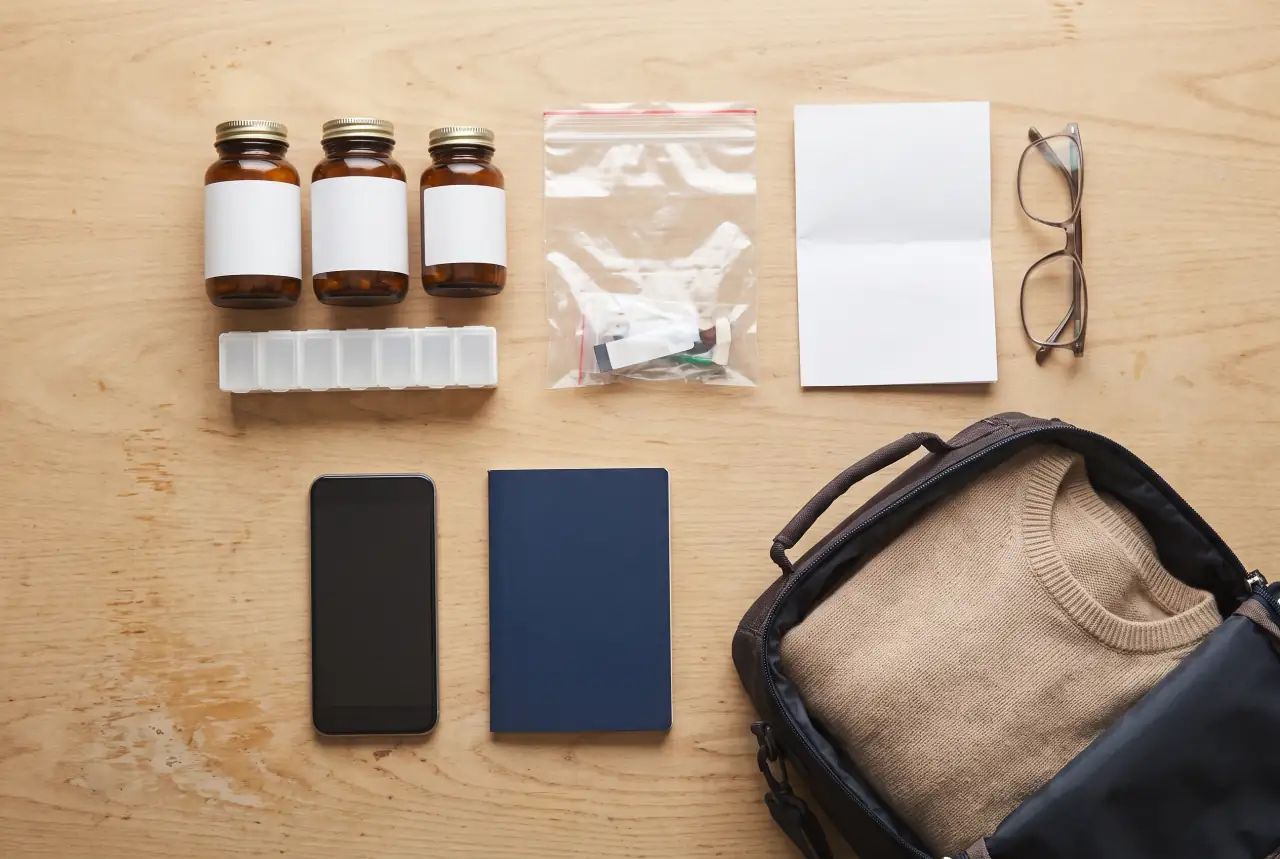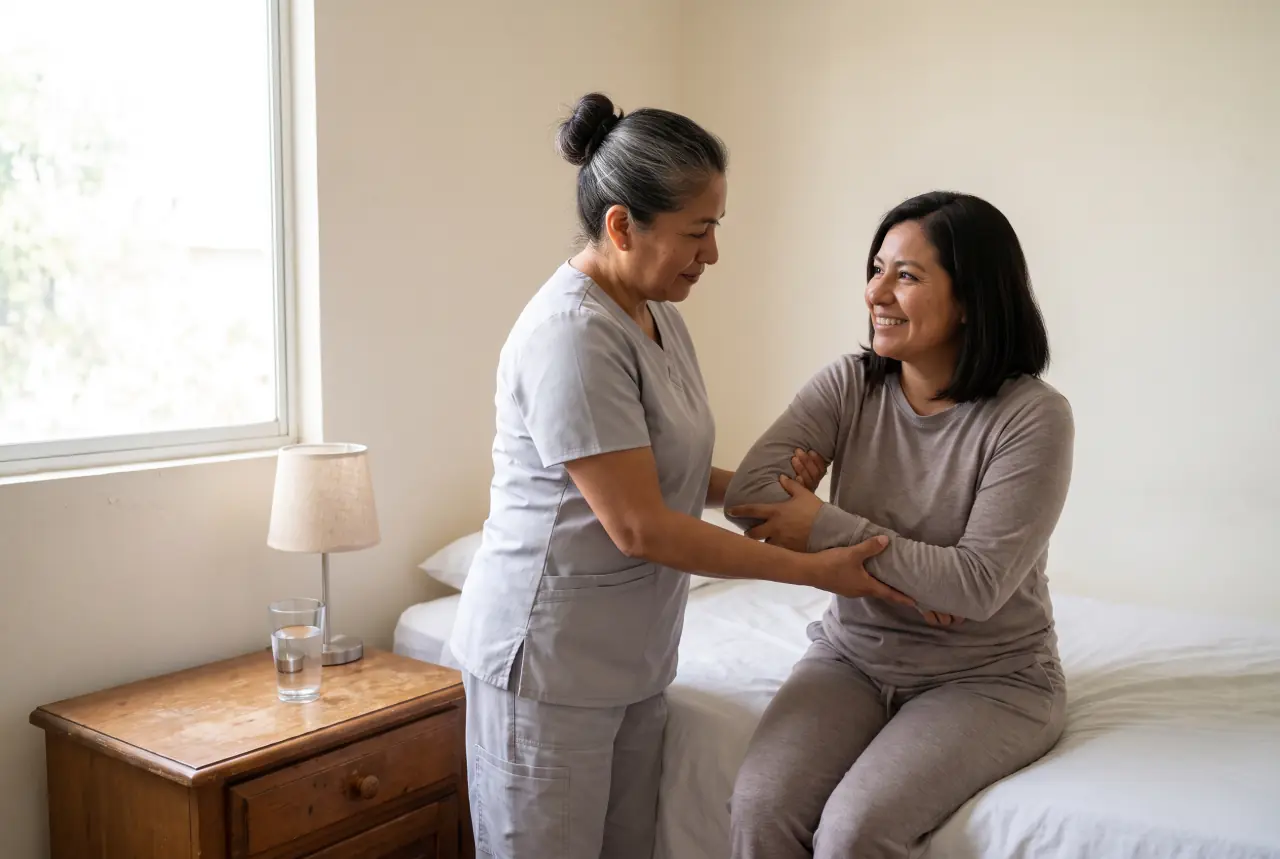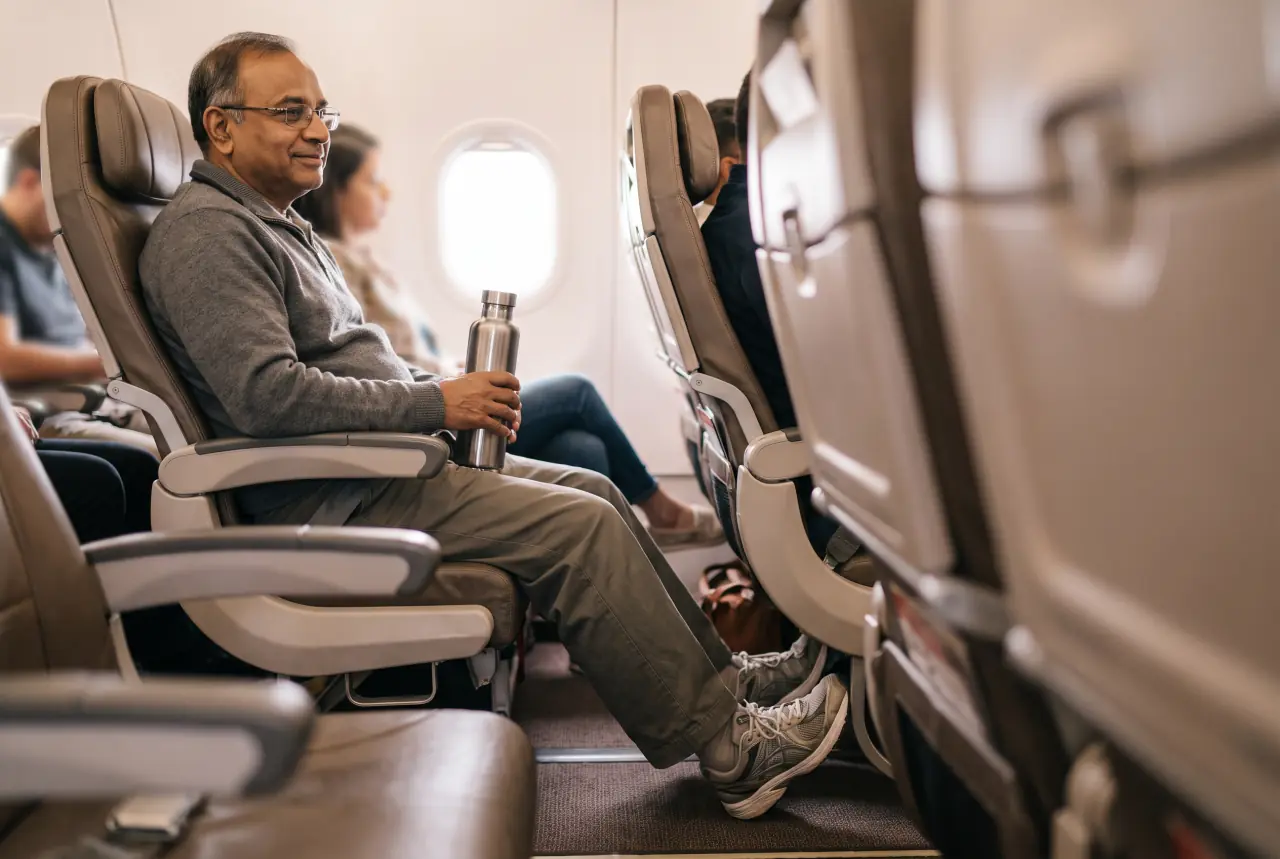
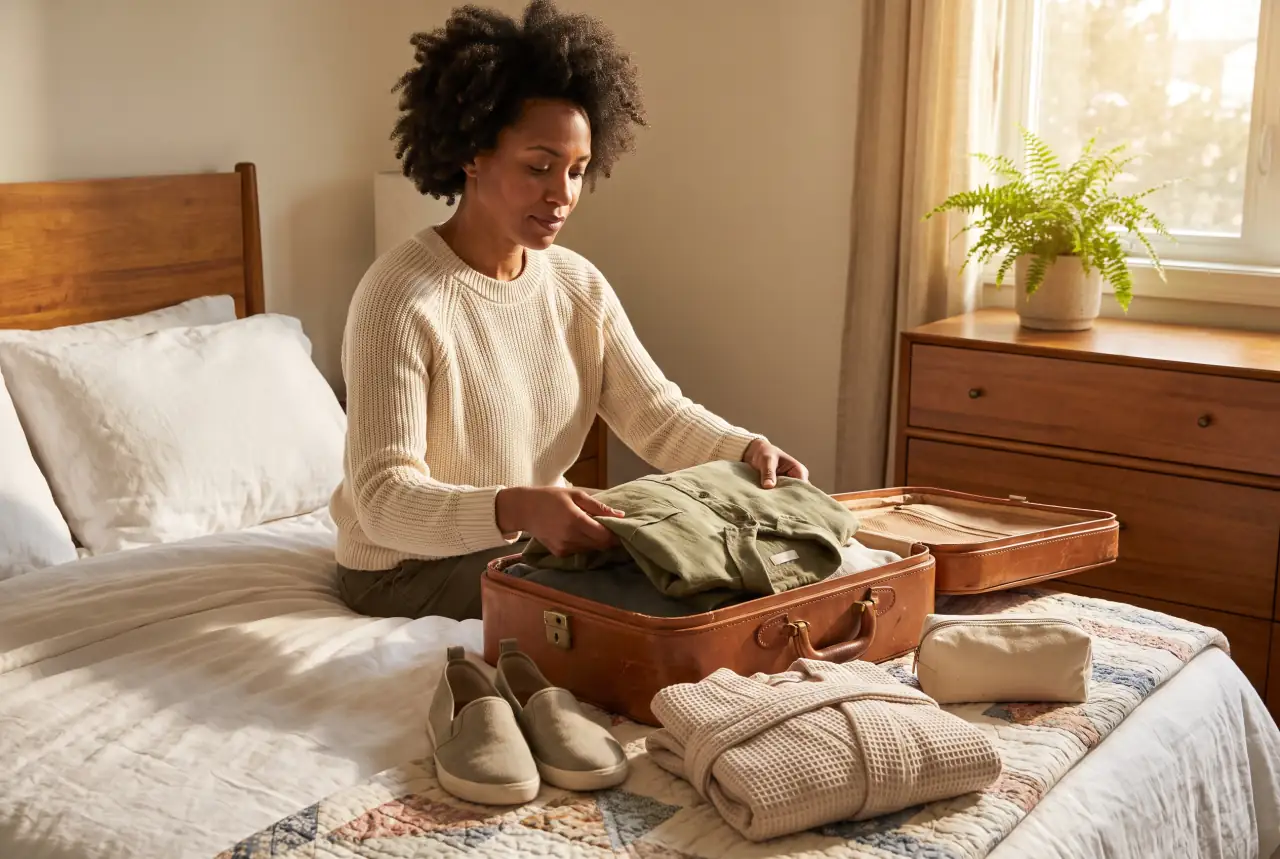
What to pack for surgery in Mexico comes down to five groups: your passport and copies of your documents; your medicines in their original packaging, with copies of the prescriptions and a little extra in case of delays; loose clothes that open in front and shoes you can slip on; a carry-on that keeps medicines and records with you; and the cards, phone and papers for the trip home. What goes in each group depends on how you travel and what you’re having done, and your surgeon’s or dentist’s own list comes first.
The sections below take each group in turn, link to the guides that cover its rules in depth, and end with a checklist you can print.
At a glance
- Travel document
- A passport book or card to cross by land; a passport book to fly, since the card can’t be used to board a plane
- Medicines
- In their original packaging, enough for the whole trip plus a little extra, with copies of your prescriptions
- Recovery clothes
- Loose, easy-to-remove clothes that button or close in front, pants with an elastic waistband, and slip-on shoes
- Garments and dressings
- The garment or surgical bra your surgeon prescribes, and the dressing supplies your instructions list
- Liquid medicines on a plane
- Allowed in larger amounts than other liquids, in reasonable quantities, if you declare them at a U.S. airport checkpoint
- Coming home
- Copies of your records, in English if needed, and each new medicine in its original package with a prescription in your name
Key takeaways
- Ask your surgeon or dentist for their packing list before you buy anything, including which garments, dressings and medicines the clinic will supply.
- Pack every medicine in its original container in the bag you carry, with copies of your prescriptions, and check first that none is restricted in Mexico.
- Copy your passport, insurance cards and prescriptions; leave one set with someone at home and keep the other apart from the originals.
- Choose clothes you can put on while sore, with fronts that open and waistbands that don’t press on an incision, plus shoes you can slip on.
- Before the trip home, gather your records, keep new medicines in their labeled packages, and line up a driver and help with your bags.
In this guide
- How your trip shapes the packing list
- Documents, insurance cards and copies
- Medicines and medical supplies
- Clothes, shoes and garments for recovery
- What to leave at home
- Carry-on or checked: what stays with you
- Money, cards and your phone
- For the trip home: records, medicines and the ride
- Dental trips: records, X-rays and the plan
- Questions to ask your surgeon or dentist before you pack
- Before you go: checklist
- Warning signs on the trip and after you’re home
- Frequently asked questions
- Sources
How your trip shapes the packing list
What changes from trip to trip is how you travel and how long you stay.
| Your trip | What it changes in your bag |
|---|---|
| Walking or driving into Tijuana from San Diego | A passport book or card, and bags you or a companion can manage in the line back; see crossing back after a procedure |
| Flying to Tijuana or Guadalajara from a U.S. airport | A passport book, and the security rules for medicines and liquids in a carry-on |
| Several nights near your provider | Clothes, garments and supplies for the longest stay your provider expects, and medicines to match |
| Dental work over more than one visit | The same records and plan on every trip; see dental trips |
Sources: State Department for documents; TSA for airport screening.
Before you shop, ask your surgeon whether you’ll need any additional or specialty items, as a packing article from the American Society of Plastic Surgeons (ASPS) advises (ASPS article); for dental work, ask your dentist. Ask what the clinic provides too: the price of a surgery such as breast augmentation may include post-surgery garments and prescriptions (what goes into the price), so read your quote before you buy your own.
Documents, insurance cards and copies
Why it matters: you’ll show a passport at the border, insurance details if you need care, and your records at the clinic, and a copy makes any of them easier to replace.
U.S. citizens need a passport book or card to enter Mexico by land, and a passport book to fly: the card can’t be used to board a plane (State Department). Check the expiration date as soon as you start planning (State Department), and for the trip back and what children need, see the documents table.
Then make copies: one set for a trusted friend or family member, one to keep with you but apart from the originals, and photos on your phone, so a lost or stolen original is easier to replace (State Department). Where you can, carry each document in print and in digital form (CDC).
| Bring | Why it helps |
|---|---|
| A copy of your passport | Your passport number is one of the details the U.S. embassy asks for, when possible, if you call for help (U.S. Embassy) |
| Your health insurance card and any travel insurance documents | On travel-health lists of documents to carry, as copies or in digital form (CDC; CDC Yellow Book); see what a travel policy may leave out |
| Copies of your medical records and test results | Advised for anyone traveling for care, along with telling the staff about any allergies (CDC) |
| A medical summary of your diagnoses, regular medicines by generic name, and allergies | In case you need medical care while traveling (CDC Yellow Book) |
| Contact details on paper | For someone at home, your doctors at home, where you’re staying, local hospitals or clinics and the U.S. embassy or consulate (CDC) |
| The clinic’s forms, read and signed, the name and number of whoever is collecting you, and any advance directive | Essentials to bring on the day of surgery (ASPS article) |
| Your written quote and treatment plan | What you agreed to; see what a quote should include |
How to check: start as soon as you plan the trip:
- Check every traveler’s passport expiration date right away, and renew early if you need to.
- A week or two before you go, copy the passport page, insurance cards, prescriptions and quote, and pack the copies apart from the originals.
- If you don’t speak Spanish, add the card in Spanish that getting around, language and your records describes.
Medicines and medical supplies
Why it matters: your everyday medicines have to last the whole trip and cross two borders, and the supplies for your incision should match your surgeon’s instructions, not a general list.
Pack prescription and over-the-counter medicines in their original packaging, with enough for the whole trip and a little extra in case of delays. Add copies of all your prescriptions and a list of what you take, with each medicine’s brand name, generic name, manufacturer and dose (CDC). Keep them in a durable, water-resistant container you can reach during the journey (CDC Yellow Book).
Mexico has rules of its own: some medicines sold over the counter in some U.S. states are controlled substances there, and pseudoephedrine (found in Sudafed) is illegal (State Department). Carrying a medicine that’s illegal in Mexico could lead to arrest even with a U.S. prescription or doctor’s letter (State Department), so check each one before you pack it: taking your own medicines into Mexico shows how, and which papers to carry with it.
For your incision, pack what your instructions list and nothing extra: your surgeon tells you how often to change the dressing, no antibiotic cream or other product goes on the wound unless your surgeon says so, and lotions, powders, cosmetics and other skin care products stay off it (MedlinePlus). A drain adds a measuring cup, a pen and paper to log the amount, date and time of each emptying and, if there’s a dressing around the drain, supplies such as gloves, cotton swabs, gauze and surgical tape (MedlinePlus). Ask which of these the clinic provides; tummy tuck recovery shows drain care day to day.
A digital thermometer is among the items suggested for a personal travel health kit (CDC Yellow Book). A temperature above 100°F (37.7°C) for more than 4 hours is one of the changes to report to your surgeon (MedlinePlus), and with a drain, so is 100.5°F (38.0°C) or higher (MedlinePlus). General travel-kit lists also include pain and fever medicine and a mild sleep aid (CDC); around surgery, ask your surgeon which, if any, you may take.
How to check: before you pack a single pill:
- List every medicine you take, with generic names and doses, check each against Mexico’s rules, and give your companion a copy.
- Count the doses you’ll need for the longest stay your provider expects, then add a few days.
- Ask your surgeon for a written list of wound and drain supplies, and which ones the clinic provides.
Clothes, shoes and garments for recovery
Why it matters: after surgery you may be sore and moving carefully, so clothes that open in front and shoes you can step into make dressing easier, and loose fits keep tight fabric off a healing incision.
| Pack | Why |
|---|---|
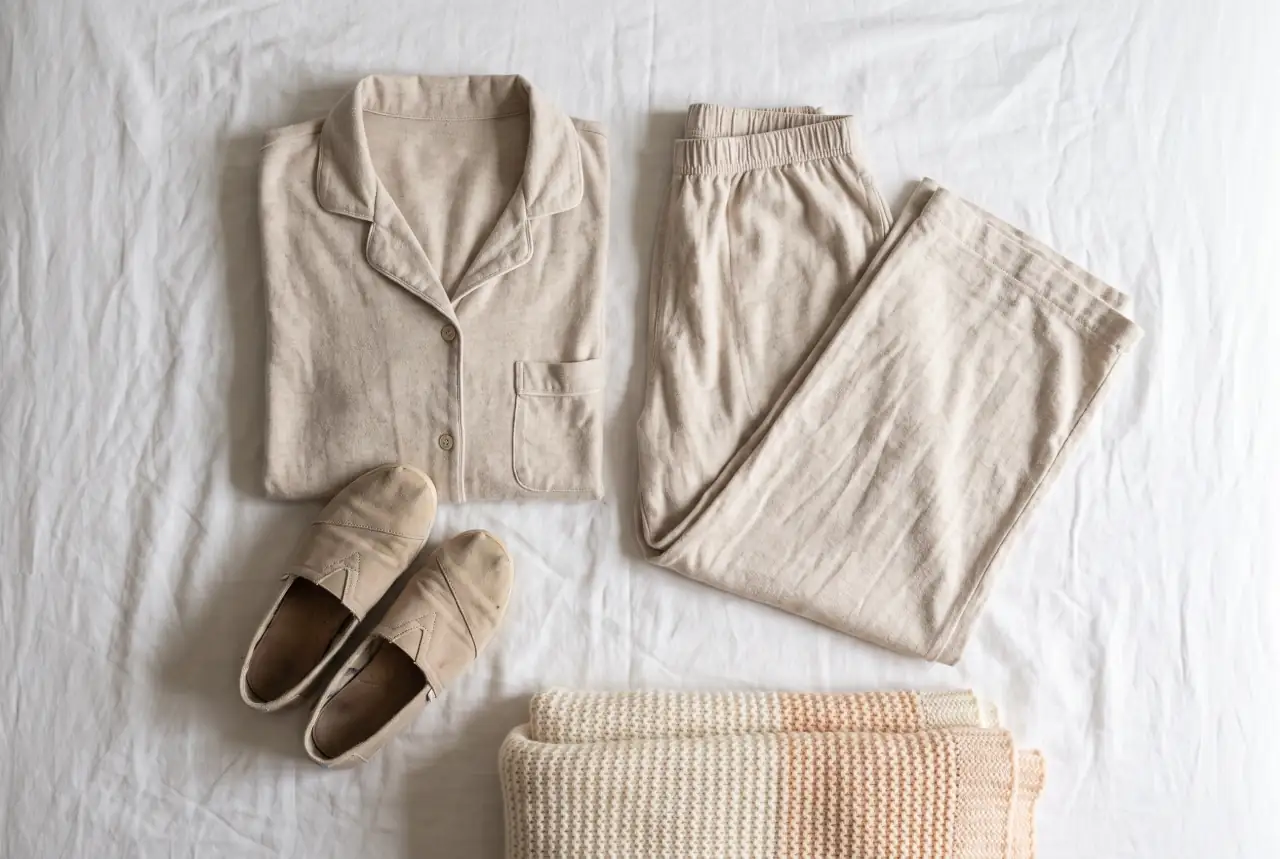
| Tops and pajamas that button or close in front | Easier to put on for patients who may be sore and lack mobility (surgeons quoted by ASPS) |
| Loose pants with an elastic waistband | Loose, easy-to-remove clothes are on a surgery-day checklist from ASPS (ASPS checklist), and tight clothing shouldn’t rub on a healing incision (MedlinePlus) |
| Slip-on shoes, and socks with grips on the soles or slippers | Slip-on shoes are on the same checklist (ASPS checklist), and slip-resistant socks or slippers on a packing list for a stay at the facility (ASPS article) |
| A warm blanket or robe | For the facility or the car ride home (surgeons quoted by ASPS) |
| Baby wipes and tissues | To help you feel clean and refreshed after surgery (surgeons quoted by ASPS); with a drain, you may be asked to take sponge baths until it’s out (MedlinePlus) |
| Sun protection, such as a hat, scarf or sunscreen | Among the items that may help after surgery when you travel abroad for it, along with easy-on clothing and compression garments or a surgical bra (International Society of Aesthetic Plastic Surgery, ISAPS) |
The ASPS article quotes surgeons’ tips for an overnight stay at a hospital or surgical center, and the ASPS checklist is a one-page handout from a 2024 holiday campaign: practical suggestions rather than clinical guidelines, so your surgeon’s own list comes first.
Garments are a conversation with your surgeon, not a shopping trip. Patients may need to wear postoperative bras or compression garments after surgery (a surgeon quoted by ASPS), and which one, for how long and whether the clinic provides it are your surgeon’s answers to give; tummy tuck recovery and recovery after a Brazilian butt lift show how a garment fits into the first weeks. With a drain, the bulb has a plastic loop for pinning it to your clothes, and some camisoles, belts and shorts have pockets for the bulb and openings for the tube; ask your surgeon or nurse what suits you (MedlinePlus).
How to check: settle these before you buy or pack clothes:
- Ask your surgeon which garment or surgical bra you’ll wear, for how long, and whether the clinic provides it.
- Try each outfit on at home, and keep the ones you could manage with little bending or reaching.
- If you’ll have a drain, ask where it will sit, and pack clothes with room for it.
What to leave at home
Why it matters: a few everyday things get in the way of an operation, and some are illegal to bring into Mexico, so they’re best taken out of your bag before you leave.
| Leave at home | Why |
|---|---|
| Jewelry, including rings and studs you rarely take off | You may be asked to remove it before surgery (ASPS article) |
| Nail polish and makeup on surgery day | Remove them, or skip them, on the day of your procedure (ASPS checklist) |
| Cigarettes, vapes and alcohol | They can interfere with anesthesia and recovery (ASPS article), and bringing e-cigarettes or vaping devices into Mexico is illegal (State Department) |
| Marijuana in any form, other drugs and weapons | Importing drugs, medical marijuana included, is illegal in Mexico, and bringing in weapons without Mexican permits is a serious crime (State Department); see what to carry, leave behind and declare |
| Medicines that are illegal in Mexico, such as pseudoephedrine | See medicines and medical supplies above |
| Swimwear and hiking gear | Ask which activities to avoid around your procedure; swimming and hiking are two examples (CDC) |
How to check: empty every bag and pocket you’ll travel with and go through it against the table. Ask your surgeon how long before the operation to stop smoking or vaping, and which of your regular medicines to pause.
Carry-on or checked: what stays with you
Why it matters: anything you’d need before your luggage reaches you, from medicines to records, belongs in the bag that stays with you, and airport security has its own rules for medicines and liquids.
Keep the surgery-day essentials in the bag you carry: identification and an insurance card, copies of medical paperwork or forms, a list of your medicines, your caregiver’s contact details, a phone charger and a change of clothes for after the operation (ASPS checklist). For an overnight stay at the clinic or hospital, start with a small bag, airplane carry-on size or smaller (ASPS article). Medicines belong in it too; taking your own medicines into Mexico explains why.
At U.S. airports, every passenger and bag goes through Transportation Security Administration (TSA) screening, and clearly labeled pills are easier to screen (TSA). Liquids in a carry-on are normally limited to travel-size containers of 3.4 ounces (100 milliliters) or less, in one quart-size bag, and medicines are exempt from that limit (TSA). Medically necessary liquids, gels and aerosols can go through in larger amounts, in reasonable quantities for your flight, if you declare them to the officers at the checkpoint and place them in a bin apart from your other things (TSA).
Dressings, drains and compression garments are screened too; airport security with dressings, drains and compression garments covers what to tell the officer. Flying home from Tijuana or Guadalajara, you’re screened at a Mexican airport, so ask your airline ahead what to expect at security with liquid medicines, dressings and drains.
How to check: the night before each flight:
- Put medicines, prescriptions, records, documents, phone, charger and a change of clothes in the bag you’ll carry.
- Pack liquid medicines where you can lift them out quickly, and keep toiletries in travel sizes or in the checked suitcase.
- Pack the heavy suitcase so someone else can carry it home, and ask your surgeon when you can lift again.
Money, cards and your phone
Why it matters: you’ll pay the provider directly and lean on your phone to reach the clinic, your companion and help, so both need to work in Mexico before you leave.
Plan to pay the provider yourself: Mexican health providers usually want payment before treatment or before you leave the hospital, and most care providers abroad accept cash or major credit cards (State Department). Ask which payment methods your provider takes (ISAPS), and ask your bank how to freeze or cancel a card quickly (State Department). How to pay for care in Mexico covers card fees, holds, cash machines and the rule for carrying large sums of cash across the U.S. border.
Many U.S. phone plans don’t include international service by default, so ask your carrier whether your phone will work in Mexico and about roaming plans, or consider a local SIM (subscriber identity module) card or an international eSIM (embedded SIM) for your phone (State Department). A translation app, downloaded and practiced with before the trip, can help you talk with people locally (State Department); if you don’t speak Spanish, decide before you go how you’ll communicate with your clinician and the others caring for you (CDC).
Save your important numbers in your phone and in your email, and carry a printed list in case the phone is lost or stolen (State Department):
- Your surgeon’s direct number, and the clinic’s number and address
- Your companion, your driver, your doctor at home and a close contact in the U.S.
- The U.S. consulate in Tijuana or Guadalajara, whose numbers are in those guides, and the ones in warning signs below
Then enroll the trip in the Smart Traveler Enrollment Program (STEP), which sends you alerts and updates from the U.S. embassy or consulate and helps it reach you, or your emergency contact, in an emergency (State Department).
How to check: a week or so before you go, call your carrier and set up international service or an eSIM if your plan lacks it; save and print the numbers, with a copy for your companion; and ask the clinic when payment is due and how.
For the trip home: records, medicines and the ride
Why it matters: you’ll travel home still healing and carrying things you didn’t have on the way out, from new records to new medicines, so the bag for the return needs its own plan.
Ask the facility for copies of all your medical records before you go home, translated into English if you need them (CDC). What to bring home lists each record and why your doctor at home needs it, and lining up a doctor at home explains who should see them.
Medicines you’re given in Mexico come home under U.S. rules. Medications up to a 90-day supply are among the items you must declare when you enter the United States, and they should be in their original package with a prescription in your name (CBP). The 90 days marks what to declare, not an amount you’re allowed to bring home: medicine obtained in Mexico faces its own rules, so keep each one in the labeled package it came in, and read medicine prescribed after a procedure and declaring medicine before you pack them.
After the operation, make sure someone is available to drive you and help you afterward (ASPS checklist); for the trip home, ask them to handle the bags too. Pillows for the neck, body or back, to support specific areas after surgery, may also help (ISAPS); after a Brazilian butt lift, ask your surgeon which cushion to use when you must sit, as recovery after a Brazilian butt lift explains.
For the journey itself, see lowering your risk of blood clots on the way, and if you’ll walk back into San Diego, crossing back after a procedure.
How to check: the day before you leave, put your records, discharge instructions and the clinic’s medicines in the bag you’ll carry; confirm your driver and who will lift the bags; ask your surgeon whether to wear your garment for the journey; and book a visit with your doctor at home for soon after you’re back.
Dental trips: records, X-rays and the plan
Why it matters: a dentist plans from your history and images, and dental work often takes more than one visit, so the same papers travel with you every time (day trip or longer stay).
Everything above applies to dental trips too. These are the additions, each explained in our guide to choosing a dentist in Tijuana:
| Bring | When | Where it’s covered |
|---|---|---|
| Recent X-rays from your dentist at home, and a list of your medicines, supplements and health conditions | The first exam | What your first exam should include |
| Your written plan and estimate | Every visit | Your written plan and estimate |
| A driver | Any visit with prescription sedation | Crossing the border for dental appointments |
| Copies of what was done, from X-rays to the materials used | Before you leave each visit | Follow-up at home |
| A passport card, if you’ll cross often | Treatment in stages | Faster lanes |
Each row points to the section that explains it and cites its sources.
How to check: have your dentist at home send recent X-rays to the clinic, or give you copies; keep your plan with your passport for every visit; and before a sedation appointment, confirm who is driving.
Questions to ask your surgeon or dentist before you pack
- Which garment or surgical bra will I wear, for how long, and does the clinic provide it?
- Which wound-care and drain supplies will I need, and which will the clinic give me?
- Which of my regular medicines should I keep taking, and may I bring any over-the-counter ones?
- Which medicines will I leave with, and will each come in a labeled package with a prescription in my name?
- When should I check my temperature, and which reading should make me call you?
- Do I need a pillow or cushion for the trip home, and should I wear my garment for it?
- Which forms and records do you need before I arrive, and will my records come home in English?
Before you go: checklist
Documents and copies
- Passport book or card for each traveler, checked for expiry, and a book for anyone flying
- Copies of passports, insurance cards, prescriptions and your quote, packed apart from the originals, and a set with someone at home
- Health insurance card and any travel insurance documents
- Medical records, test results and a medical summary of diagnoses, medicines and allergies
- Contact details on paper, clinic forms read and signed, and any advance directive
Medicines and supplies
- Every medicine in its original packaging, with a little extra for delays
- Prescription copies and a full medicine list
- Each medicine checked against Mexico’s rules
- The wound-care and drain supplies your surgeon listed, and a digital thermometer
Clothes and comfort
- Loose clothes that open in front, pants with an elastic waistband, slip-on shoes, grip socks or slippers
- The garment or surgical bra your surgeon specifies
- A blanket or robe, wipes and tissues, and sun protection
- Jewelry, vapes and cigarettes left at home
Carry-on, money and phone
- Medicines, documents, records, phone, charger and a change of clothes in the bag you carry
- Payment method confirmed with the clinic, and your bank’s steps to freeze a card noted
- Phone plan checked for Mexico, numbers saved and printed, and STEP enrollment done
For the trip home
- Records and discharge instructions, in English if needed
- New medicines in their labeled packages, ready to declare
- A driver, help with the bags, and the pillow or cushion your surgeon suggests
- A visit with your doctor at home booked
Warning signs on the trip and after you’re home
In an emergency, call 911, which works in Mexico as it does at home; not every operator speaks English, so ask a Spanish speaker to help place the call if you can (State Department). Then let the provider who treated you know.
| What happens | What to do |
|---|---|
| A medical emergency in Mexico | Call 911 for an ambulance |
| A U.S. citizen is seriously hurt or in immediate distress, at any hour | Call the U.S. Embassy: 55 2579 2000 from Mexico, or 011 52 55 2579 2000 or +1 301 985 8843 from the U.S., with the passport number ready if you can |
| More redness, pain, swelling or bleeding at the incision; a wound that looks larger, deeper, dried out or dark; drainage that’s increasing, or thick, tan, green or yellow, or smells bad | Contact your surgeon |
| A temperature above 100°F (37.7°C) that lasts more than 4 hours | Contact your surgeon |
| With a drain: the tube comes out, its stitches loosen, the bulb won’t stay squeezed flat, or your temperature reaches 100.5°F (38.0°C) | Contact your surgeon |
| Leg pain or swelling, or sudden trouble breathing, on the way home or later | Warning signs of a blood clot says which signs need 911 |
| Pain, bleeding or swelling after dental work | Warning signs after dental work |
| A problem once you’re home | Warning signs after you get home covers whom to contact |
Sources: U.S. Embassy for 911 and the embassy’s line; MedlinePlus on closed surgical wounds and bulb drains for the wound, temperature and drain rows; the linked guides cite their own sources for the rest.
Keep what helpers would need within reach: your surgeon’s direct number, a passport copy, your medicine list and your records in the bag you carry, and the clinic’s address on paper for whoever drives you.
Frequently asked questions
What should I bring to Mexico for surgery?
Bring your passport book or card with copies, your health insurance card, copies of your medical records, and your medicines in their original packaging with copies of the prescriptions and a little extra (CDC; CDC). Add loose clothes that button or close in front, pants with an elastic waistband and slip-on shoes (ASPS checklist), the garment your surgeon prescribes, a phone that works in Mexico with its charger, and a way to pay the provider. Your surgeon’s or dentist’s list comes first. The checklist groups every item, and the trip home covers the return.
Can I bring my medications to Mexico?
Usually, for your own use, as long as each one is legal in Mexico; for some, you must also show the prescription. Pack them in their original packaging, with copies of your prescriptions and enough for the whole trip plus a little extra (CDC). Check each one first: pseudoephedrine, found in Sudafed, is illegal in Mexico, and you could be arrested over a medicine that’s illegal there even with a U.S. prescription or doctor’s letter (State Department). Taking your own medicines into Mexico explains how to check and what to carry.
What clothes should I pack for recovery after plastic surgery?
Loose, easy-to-remove clothes: tops or pajamas that button or close in front, pants with an elastic waistband, and slip-on shoes, as surgeons quoted by the American Society of Plastic Surgeons and its surgery-day checklist suggest (ASPS article; ASPS checklist). Add socks with grips or slippers, and a warm blanket or robe for the facility or the ride home (ASPS article), and leave out anything tight that would rub on an incision (MedlinePlus). Garments are a separate question: wear the compression garment or surgical bra your surgeon prescribes, and ask whether the clinic provides it before you buy one. Clothes, shoes and garments has the full list.
Do I need a passport to go to Tijuana for surgery?
Yes. Crossing into Mexico by land takes a passport book or passport card for a U.S. citizen, and flying takes the book, since the card can’t be used to board a plane (State Department). For the trip back across the border, and for children, check each traveler against the documents table. Keep the passport in the bag you carry, with a copy packed separately from it (State Department).
Should I bring my own compression garment to Mexico?
Ask your surgeon before you buy one. Patients may need to wear postoperative bras or compression garments after surgery (a surgeon quoted by ASPS), but the type, the fit and how long you wear it come from your surgeon’s instructions, and the price of a surgery such as breast augmentation may include post-surgery garments (what goes into the price). Ask how many the clinic provides and whether to wear one for the journey home; tummy tuck recovery shows how a garment is used in the first weeks.
Can I take liquid medicine on the plane to Mexico?
Yes, through a U.S. airport. Medicines are exempt from the usual limit of 3.4 ounces (100 milliliters) per container for liquids in a carry-on (TSA), and medically necessary liquids, gels and aerosols are allowed in reasonable quantities for your flight if you declare them to the officers at the checkpoint and take them out of your bag for screening (TSA). For the flight home from a Mexican airport, ask your airline ahead what to expect at security.
What should I bring for dental work in Tijuana?
The same documents and medicines as any medical trip, plus recent X-rays from your dentist at home, a list of your medicines and health conditions, and your written treatment plan and estimate; what your first exam should include explains how the dentist uses them. If you’ll have prescription sedation, bring a driver too (crossing the border for dental appointments). Before you leave each visit, collect copies of your X-rays and a record of what was done.
Should I bring cash or cards to Mexico for surgery?
Either can work: most care providers abroad accept cash or major credit cards, and Mexican health providers usually require payment before treatment or before you leave the hospital (State Department). Ask your provider which methods it takes and when payment is due, limit the cash you carry in public, and know how to freeze a card quickly (State Department). Currency over $10,000 must be declared when you enter the United States (CBP); how to pay for care in Mexico covers card fees and holds.
Sources
- Medical Tourism: Travel to Another Country for Medical Care CDC Travelers’ Health
- Pack Smart CDC Travelers’ Health
- Travel Health Kits (CDC Yellow Book 2026) U.S. Centers for Disease Control and Prevention (CDC)
- Mexico Travel Advisory and Travel Guidance U.S. Department of State
- International Travel Checklist U.S. Department of State
- Communicating While Abroad U.S. Department of State
- Contact Us U.S. Embassy & Consulates in Mexico
- Disabilities and Medical Conditions Transportation Security Administration (TSA)
- Liquids, Aerosols, and Gels Rule Transportation Security Administration (TSA)
- When entering the United States, what items must I declare? (Info Center article 1909) U.S. Customs and Border Protection
- The art of packing for a plastic surgery procedure (news article quoting ASPS member surgeons, April 8, 2025) American Society of Plastic Surgeons
- Surgery Day Checklist (one-page patient handout from the 2024 Holiday Countdown) American Society of Plastic Surgeons
- Make a Plan (Considering Your Procedure Abroad) International Society of Aesthetic Plastic Surgery (ISAPS)
- Surgical wound care - closed MedlinePlus, U.S. National Library of Medicine
- Closed suction drain with bulb MedlinePlus, U.S. National Library of Medicine
About this guide
The Uriym editorial team researched this guide from the 15 sources above, drafted it with AI assistance, and checked it claim by claim against those sources before publishing, last on . Our editorial standards explain how we choose sources, handle prices and make corrections.
Uriym is a healthcare navigation platform, not a medical provider. Its founder, Adriana Mendez, grew up in a family that traveled to Mexico for care and has done it herself for the past ten years. How Uriym works
This is general information, not medical, legal or financial advice: your treating provider decides what care is right for you. Rules, prices and advisories change, so check the official page before you act. Found something wrong or out of date? Email support@uriym.com.