All on 4 in Mexico can be a sound choice for replacing a full arch of teeth when your gums, bone and health suit implants, the quote itemizes the whole plan, the dentist is trained and experienced in full-arch work, and a dentist near home is ready to look after the bridge. All-on-4 is a name you’ll see in ads for a complete set of upper or lower teeth, made as one bridge and fixed to a few implants in the jaw.
In Tijuana, indicative prices for full-mouth restoration sit well below U.S. ranges, and what a quote includes decides what you’ll actually pay. The work takes months, because the implants need time to bond with the bone before the final bridge goes on, so your trips follow the healing. Afterward, the bridge needs daily cleaning and regular checkups for as long as you have it.
At a glance
- Price
- Below U.S. ranges for full-mouth restoration; see the price table
- What you get
- A full arch of teeth made as one bridge and fixed to implants; only a dentist can take it off
- Healing before final teeth
- 2 to 6 months for the implants and bone to bond
- Trips
- At least 2, months apart, unless your dentist says otherwise
- Upkeep
- Brushing twice a day with cleaning aids, and a dental exam at least every 6 months for life
- Check first
- Each dentist’s professional license number (cédula profesional) in Mexico’s free registry
Key takeaways
- Ask for a written quote priced per arch that lists the implants, extractions, grafts, scans, temporary teeth, the final bridge and follow-up visits.
- Get the dentist’s schedule in writing before you book travel: how many trips, how far apart and how long each stay is.
- Bring a written list of your health conditions and medicines to the consultation; your dentist decides whether implants suit you.
- Look up each dentist’s professional license number in Mexico’s free online registry, and ask about their training in full-arch work.
- Line up a dentist near home for lifelong checkups before you go, and bring them your implant brand and model, X-rays and a summary of the work.
In this guide
- What is All-on-4? A fixed full-arch bridge on a few implants
- All-on-4 vs. dentures vs. implant overdentures
- Are you a candidate for full-arch implants?
- How many trips and months does All-on-4 take?
- How much does All-on-4 cost in Mexico?
- Who should do full-arch work, and how to check a dentist in Mexico
- Living with a fixed bridge: cleaning, checkups and peri-implant disease
- Questions to ask before you agree to a full-arch plan
- Before you go: checklist
- Warning signs after full-arch surgery
- Frequently asked questions
- Sources
What is All-on-4? A fixed full-arch bridge on a few implants
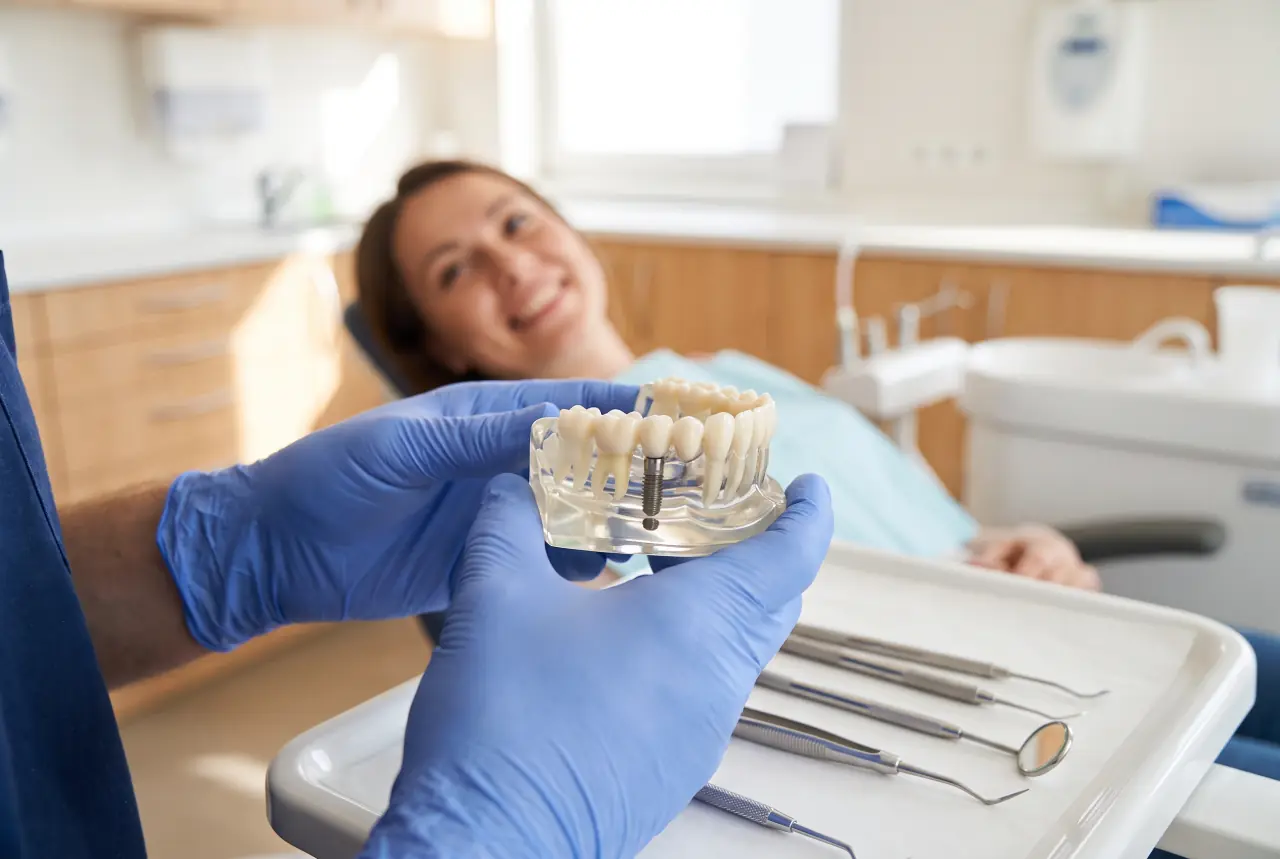
An implant is a small titanium post set into the jawbone to anchor and support artificial teeth. Once it has joined the bone, a connector called the abutment is attached and the artificial teeth go on top (American College of Prosthodontists, ACP). For people who wear full dentures, implants can hold the teeth in two ways:
- A removable implant overdenture snaps onto the implants, so the denture stays put and you rely less on denture adhesive.
- A fixed denture is bolted to the implants through titanium components, and only the dentist can take it out.
This guide is about the fixed kind, the teeth that ads for All-on-4 describe, which dental guidelines call an implant-supported complete arch fixed prosthesis (ACP guidelines, 2016). All-on-4 itself is a trademarked procedure that replaces all the missing teeth in one jaw using only 4 implants, and it is especially beneficial for people who have lost a lot of bone in the back of the mouth (ACP). A fixed full-arch bridge on implants is well accepted as a successful treatment option, though plans can differ in how many implants are placed, at what angle and where (ACP full-arch statement). Ads may also say All-on-6.
Fixed, but not permanent
You may see these teeth sold as “permanent dentures”, a term that the American College of Prosthodontists (ACP), the professional society for prosthodontists, dentists with specialty training in replacing teeth, calls deceptive and misleading (ACP). The teeth are held on by screws or dental cement, so you can’t take them out yourself, but they can still wear, break, stain or discolor, and will need replacing in time. Budget for repairs and, one day, a new bridge.
For how a single implant works and what a per-tooth price can leave out, see our guide to dental implants in Mexico.
All-on-4 vs. dentures vs. implant overdentures
Why it matters: the three options differ in who takes them out, how you clean them and what upkeep they need, so your choice shapes your daily routine for years.
| Complete denture | Implant overdenture | Fixed full-arch bridge (All-on-4 style) | |
|---|---|---|---|
| How it stays in | Rests on the gums over the jawbone; a little adhesive may help | Snaps onto implants | Screwed or cemented to implants |
| Who removes it | You | You | Only a dentist |
| Daily care | Clean it daily with a soft brush and a non-abrasive soap or denture paste, not regular toothpaste | Clean the overdenture and the implant parts in your mouth at least twice a day | Brush twice a day and use aids such as floss, water flossers or interdental cleaners |
| At night | Take it out so your gums and bone get a rest from the pressure | Take it out and store it in a cleaning solution | Stays in |
| Professional upkeep | A check every year; often remade after 5 to 10 years, once it loses its fit | An exam at least every 6 months; attachment parts wear and need replacing | An exam at least every 6 months for life; parts repaired or replaced as needed |
Sources: ACP answers on dentures and implants; ACP guidelines, 2016, from a panel that included experts appointed by the American Dental Association.
What else separates them:
- Bone. Once teeth are removed, the jawbone shrinks and changes shape (ACP). Under conventional dentures, the bone that held the tooth roots begins to deteriorate; implants replace some of those roots and integrate with the jawbone, which helps keep it healthy (American Academy of Periodontology, AAP).
- Stability. Full-mouth implants are more comfortable and stable than conventional dentures, so you can bite and chew more naturally (AAP). A lower denture is usually much less stable than an upper one, because of the shape of the gums on the lower ridge and the way the tongue moves it, and implants can help hold it in place (ACP).
How to check: ask your dentist which option suits your bone and mouth, and what the alternatives are for you (ACP position statement). If you still have some of your own teeth, ask what keeping or treating them would involve. For what UK dental bodies reported about full-mouth makeovers bought abroad, see our guide to veneers in Mexico.
Are you a candidate for full-arch implants?
Why it matters: implants are closely connected with your gums and jawbone, and your overall health affects whether they suit you, how long healing takes and how long they may last (AAP; U.S. Food and Drug Administration, FDA).
General health counts for more than age, and you may be medically evaluated by a physician before surgery is scheduled (American Dental Association, ADA). The points the sources raise:
- Gum disease. The ideal candidate is in good general and oral health, with healthy gums free of periodontal (gum) disease (AAP); untreated periodontal disease is among the listed risks of implant systems (FDA). Significant gum disease may call for referral to a periodontist, a gum specialist, to treat it along with the implants (ACP position statement).
- Too little bone. The ideal candidate also has enough jawbone to support the implants, and the quantity and quality of that bone are a key to implant success. Bone can be built up: sinus augmentation raises the sinus floor in the upper back jaw to develop bone for implants, and ridge modification fills a gap in the jaw ridge with bone or bone substitute (AAP).
- Smoking. It may affect healing and lower an implant’s long-term success (FDA); one UK hospital recommends that its implant patients try to stop before treatment and in the long term (Guy’s and St Thomas’).
- Diabetes and other conditions. Chronic illnesses such as diabetes or leukemia may interfere with healing after surgery, and people with them may not be good candidates (ADA); implant failure from a body-wide infection may be more likely with uncontrolled diabetes (FDA). Osteoporosis, bisphosphonate medicines, chemotherapy, radiation to the head and neck, and habits such as clenching or grinding also call for caution (StatPearls); our guide to dental implants in Mexico covers the medical ones in more detail.
- Keeping it clean. Difficulty cleaning the gums around an implant is also a listed risk (FDA); see living with a fixed bridge.
A past diagnosis of periodontal disease is a risk factor for disease around implants later (AAP), so if gum disease cost you your teeth, raise it early.
How to check: your treating dentist decides whether you’re a candidate, so bring a written list of every health condition and medicine, including any bisphosphonates, past or present, and ask:
- Do I have enough bone, or might I need grafting, and how would that change the cost and the schedule?
- Should a physician evaluate me before surgery?
- Will any gum disease be treated before or alongside the implants?
How many trips and months does All-on-4 take?
Why it matters: the implants need months to bond with the bone before the final bridge goes on, so healing decides how many trips you make and how long each stay is.
This is the sequence described for full-mouth implants; your dentist’s plan may differ.
| Stage | What happens and why | Time frame in the sources |
|---|---|---|
| Planning | Exam, medical history, X-rays and scans; the teeth should be designed first and the implants planned to support them | Before surgery |
| Extractions | Any teeth left in that arch may be removed; ask whether that happens on surgery day | When teeth are pulled as new dentures go in, the sites can be sore for up to several weeks |
| Implant surgery | The gum is opened and the implants are placed. Temporary teeth may go over them; if not, a healing cap screwed into each implant seals its inside off from the rest of the mouth | Stitches out in 7 to 10 days, or 7 to 14 days at one UK hospital |
| Healing | The implants and bone bond to form anchors for the new teeth, as the bone grows around each implant and holds it in place | 2 to 6 months; healing may take several months or longer |
| Uncovering and abutments | The implants are uncovered, healing caps or temporary teeth come off, and abutments are attached so the new teeth can connect to the implants | The gums then heal for a couple of weeks |
| Final teeth | The full bridge, made to replicate natural teeth, is attached to the abutments | Replacement teeth usually take some time to make |
Sources: AAP, StatPearls, ACP, ADA, FDA, Guy’s and St Thomas’.
Temporary teeth and the final bridge
Some patients can have implants and replacement teeth placed in one visit, while others may need to wait up to several months for the implants to integrate (ADA). In the meantime, your dentist may give you a temporary bridge or denture to help you eat and speak normally until the final teeth are ready. Teeth attached at the time of implant surgery are mostly transitional (StatPearls), so an offer of teeth in a day may mean temporary teeth in a day. Ask when the final bridge is made and whether it’s in the price.
If you wear dentures now, ask what you’ll wear while you heal and whether you’ll be without teeth at any point (ACP position statement); at one UK hospital, implant patients might not be able to wear their dentures for up to 2 weeks (Guy’s and St Thomas’). Teeth can be removed and immediate dentures put in on the same day, with follow-up visits to keep them fitting as you heal (ACP).
What the stages can mean for your trips
Plan for at least two trips, months apart, unless your dentist says otherwise:
- Trip 1: assessment and surgery. Exam and imaging, any extractions, the implants and, if your dentist judges it suitable, temporary teeth.
- Home to heal while the implants and bone bond, with soft foods, cold foods and warm soup if your dentist recommends them (ADA).
- Trip 2: abutments and the final bridge. Ask whether the final bridge is fitted on this trip or a third one, since the gums heal after the abutments go on.
- For life: checkups near home; see living with a fixed bridge.
We found no official source that sets a number of days for each trip, or an interval for flying after implant surgery. Our guide to flying after surgery covers planning the trip back, and each visit to Tijuana means a border crossing; see crossing the border to Tijuana.
How to check: get the dentist’s schedule in writing before you book: how many trips, how far apart, how long each stay is, and whether to stay until the stitches come out or have them removed at home.
How much does All-on-4 cost in Mexico?
Why it matters: the cost depends on whether one arch or both are treated and how much work each arch needs, so compare what each quote includes.
| Treatment | Tijuana (USD) | United States (USD) |
|---|---|---|
| Full-mouth restoration | $18,000 – $28,000 | $40,000 – $80,000 |
Uriym’s indicative ranges from its dental price catalog, reviewed September 7, 2026. They are not quotes and cover the listed treatment only, without taxes, travel or third-party charges.
Implant costs vary with each patient’s needs, the amount of bone and the region, and grafting, if you need it, can increase the cost (ACP).
How to check: ask the clinic what the entire treatment will cost from start to completion, and what follow-up maintenance will cost (ACP position statement). Get both in writing, priced per arch, then confirm each line:
| Line | What it covers | What to ask |
|---|---|---|
| One arch or both | All-on-4 replaces the teeth in one jaw (ACP) | Is this price for the upper arch, the lower arch or both? |
| Implants | The posts that anchor the bridge; keep a record of their brand and model (FDA) | How many implants in each arch, and which brand and model? |
| Exam, X-rays and scans | Imaging to plan the implants before surgery (StatPearls) | Which are included, and will I get copies? |
| Extractions | Removing any teeth left in the arch | How many, and is each one in this price? |
| Bone grafting or sinus work | Building up bone where there isn’t enough (AAP) | Might I need it, and what would it cost? |
| Anesthesia or sedation | Implants can be placed under local anesthetic or with sedation (Guy’s and St Thomas’) | Which will I have, and is it included? |
| Temporary teeth | A bridge or denture to wear until the final teeth are ready (ADA) | What will I wear while I heal, and is it included? |
| Abutments and screws | The connectors between the implants and the bridge (ACP) | Are they in this price? |
| Screwed or cemented | Screw retention is desirable whenever possible, to manage complications after fitting and at maintenance visits (ACP full-arch statement) | Will my bridge be screwed in, so a dentist can take it off? |
| Final bridge | Materials range from acrylic over a metal frame to zirconia, each with advantages and disadvantages (ACP full-arch statement) | What is it made of, when is it fitted, and is it in this price? |
| Follow-up visits | Stitch removal, healing checks and try-ins | Which visits are included, and on which trip? |
| If an implant fails | A failed implant can need another surgery to fix or replace it (FDA) | What happens to my bridge, what does the clinic cover and for how long, and who pays for extra trips? |
For flights, time off, insurance and what complications can cost, use our checklist of what a medical tourism quote should include.
Who should do full-arch work, and how to check a dentist in Mexico
Why it matters: the more complex or extensive the care, the more the dentist’s knowledge and experience matter to the result, and a full-arch bridge is a complex restoration (ACP position statement; ACP full-arch statement).
In the U.S., placing implants is a procedure that requires dental education and clinical training, not a recognized dental specialty, and a dentist should refer implant work they aren’t trained and experienced to do to a specialist (ACP position statement):
- Prosthodontists restore and replace teeth, after an additional 3 years of training beyond dental school (ACP).
- Periodontists focus on the gums and supporting bone, with 3 years of specialized training beyond dental school (AAP).
- Oral and maxillofacial surgeons may take referrals for complicated surgery or for patients with serious medical conditions (ACP position statement).
Teamwork among the restorative dentist, periodontist, dental technician and implant surgeon is essential (StatPearls). Careful diagnosis and planning come first, because the position and angle of the implants, and the room left for the bridge, affect how it works, lasts and looks (ACP position statement). Badly placed implants can be expensive and burdensome to restore and may even need to be removed, so check the dentist’s training before you commit. A license you’ve looked up and training that matches full-arch work are a strong starting point; they’re one part of a safe plan, alongside a written treatment plan and a dentist near home to look after the bridge.
For crowns, root canals and other dental work, see dentist in Tijuana.
How to check: ask each dentist how often they do the procedure, what training they had in it (a weekend course, 14 to 20 weeks of continuing education, or specialty training at an accredited dental school), and what the success rate is for you and how long it can last (ACP position statement). Then check their license:
- Get every name. Ask for the full name and cédula profesional (professional license number) of each dentist who will treat you, including the one who places the implants and the one who fits the bridge, if they differ.
- Search the registry. On the Ministry of Public Education’s cédula profesional page, select Consulta de Cédulas Profesionales. The lookup is free, open to anyone and lets you confirm that a cédula and any certifications are authentic (bulletin on cosmetic procedures, May 2026, in Spanish).
- Check a specialty claim. Ask a dentist who presents as a specialist where they trained in that specialty and for any specialty cédula (cédula de especialidad), and look that up too.
- Check the clinic. For the clinic’s health license, the State Department’s travel advisory and where to complain, follow our step-by-step guide to checking a doctor and clinic in Mexico.
Living with a fixed bridge: cleaning, checkups and peri-implant disease
Why it matters: care at home and lifelong professional checkups help keep the gums and bone around the implants healthy and the bridge and implants lasting longer (ACP guidelines, 2016).
A fixed bridge is cared for with the same daily brushing and flossing recommended for natural teeth (AAP), but it isn’t maintenance-free. Regularly cleaning the implant and the teeth around it is very important for its long-term success (FDA). Controlling plaque reduces inflammation, limits harmful bacteria and prevents stains and odors, and three things together set a full-arch bridge up for success: a design that can be cleaned, good care at home and regular professional maintenance (ACP full-arch statement).
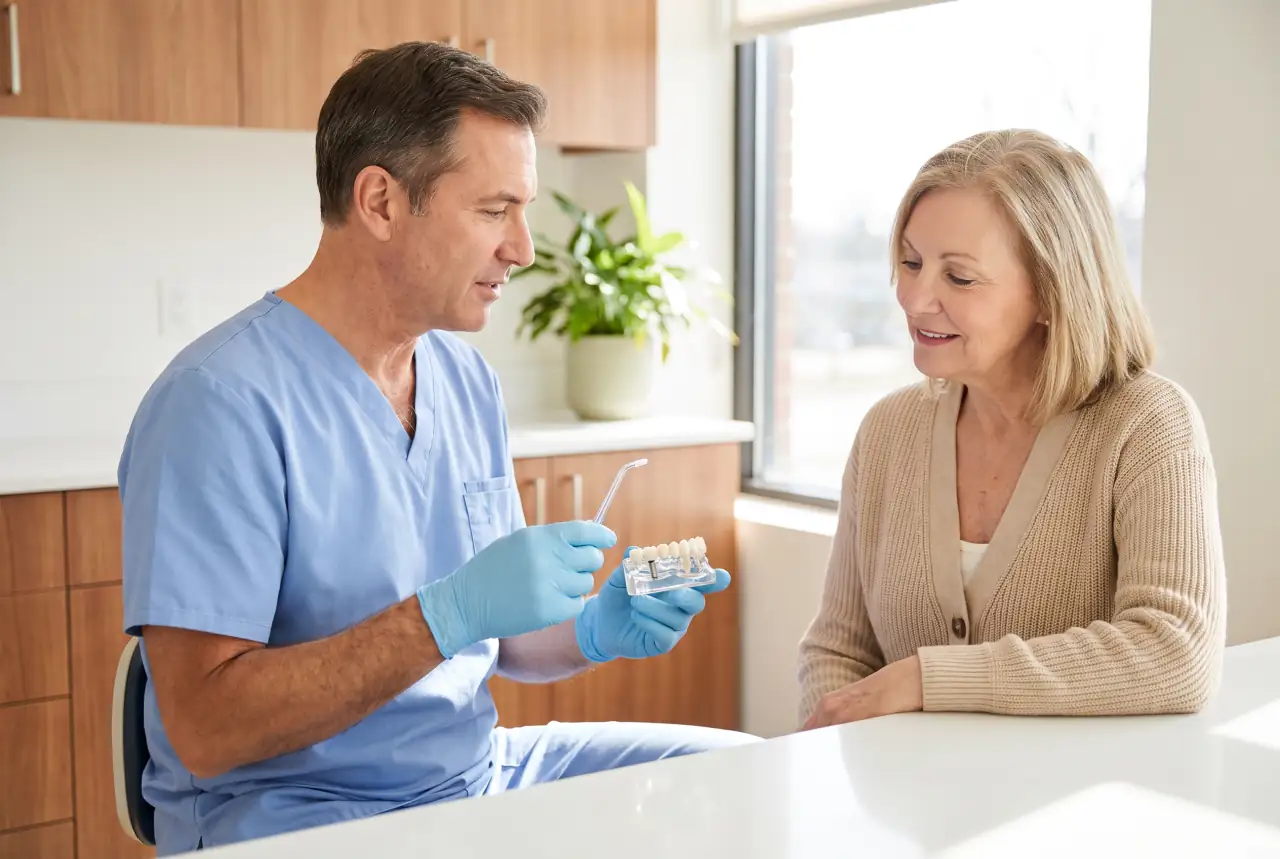
At home (ACP guidelines):
- Brush twice a day.
- Use oral hygiene aids such as floss, water flossers, air flossers, interdental cleaners or an electric toothbrush.
- If your dentist prescribes a night guard, wear it while you sleep.
At the dentist (same guidelines):
- An exam at least every 6 months, for life, and more often if your dentist rates you as higher risk because of your age, your ability to clean your own mouth, or complications with your teeth, restorations or implants.
- Taking the bridge off for cleaning if you haven’t been able to keep it clean yourself, and reassessing its shape so it’s easier to clean at home.
- Adjusting, repairing, replacing or remaking any parts that could affect how it works.
For full-arch bridges, maintenance visits every 2 to 6 months are recommended, based on your risk profile (for example, a history of smoking or gum disease, other health conditions, or limited vision and dexterity), with X-rays every 1 to 2 years, or sooner if there are signs of infection (ACP full-arch statement). Those X-rays are compared with a set taken after the final bridge is fitted, so ask for copies of that first set.
What is peri-implant disease?
Peri-implant disease is inflammation of the soft and hard tissues around implants. Bacteria build up at the base of an implant, below the gumline, and over time irritate the gum; if this isn’t caught early, the bone below the implant can deteriorate (AAP). It comes in two forms:
- Peri-implant mucositis: inflamed gum around the implant with no sign of bone loss. It usually comes before peri-implantitis, and evidence suggests it may be treated successfully and is reversible if caught early.
- Peri-implantitis: inflamed gum plus deterioration of the bone that supports the implant. It usually requires surgery.
The signs look like gum disease: red or tender gums around the implants, or bleeding when you brush. Besides past periodontal disease, the risk factors include poor plaque control, smoking and diabetes, and routinely monitoring implants is essential (AAP). Tell your dentist about any of these signs, since mucositis caught early may be reversible.
How to check: set up care before you travel. Find a dentist near home who will see you for these checks, and bring them the implant brand and model, your X-rays and scans, and a summary of the work. Ask the dentist who fits your bridge how to clean around and under it.
Questions to ask before you agree to a full-arch plan
- Is this quote for one arch or both, and how many implants, of which brand and model, will each arch get?
- What will I wear between surgery and the final bridge, and will I be without teeth at any point?
- How long from the first surgery until my final bridge is fitted, and how many trips does that mean?
- What does the entire treatment cost from start to completion, and what will follow-up maintenance cost?
- Will the bridge be screwed in, what is it made of, and how will it be shaped so I can clean it?
- How often do you do full-arch treatment, what training do you have in it, and what is the success rate for me?
- What happens if an implant fails or the bridge breaks, and who pays for extra trips?
- Can I have copies of my X-rays, scans and a summary of the work for my dentist at home?
Before you go: checklist
- Written treatment plan for each arch: implants, extractions, any grafting, the temporary teeth you’ll leave with and the final bridge
- Itemized quote that says one arch or both, with the cost of maintenance after you get home
- Each dentist’s cédula looked up in the registry
- List of your health conditions and medicines, including smoking, diabetes and any bisphosphonates
- Trip dates that fit the plan, including stitch removal and a possible third trip
- A dentist near home lined up for checkups at least every 6 months
- Implant brand and model, X-rays, scans and a summary of the work to bring home
- Medicines and paperwork for the border; see bringing prescription medicine back from Mexico
- Warning signs read, and the clinic’s contact details saved
Warning signs after full-arch surgery
Some soreness, swelling, bleeding or bruising is possible after implant surgery; at one UK hospital, the discomfort is usually eased with regular painkillers and should only last up to a week (Guy’s and St Thomas’). With fixed “permanent dentures”, soreness should typically resolve within 2 weeks; if it persists, something likely needs adjusting, so see your dentist as soon as possible (ACP).
Contact the dentist who treated you promptly for:
- Bleeding that won’t stop. Press a rolled-up clean handkerchief on the wound and bite down on it for at least 30 minutes; if the bleeding continues, go to the nearest emergency department (Guy’s and St Thomas’).
- An implant or bridge that feels loose, painful or twisted. Tell your dental provider right away if an implant feels loose or painful; a loose or twisting feeling can come from a loosened abutment screw (FDA).
- A bite that feels wrong, or numbness. Both are among the listed risks of implant systems, and numbness after surgery can come from a pinched or damaged nerve (FDA).
- Red, tender or bleeding gums around the implants, the signs of peri-implant disease.
- Signs of infection, such as a swollen face or jaw, redness inside or outside the mouth, a bad taste or a high temperature. A dental abscess needs urgent treatment by a dentist and won’t go away on its own (NHS).
Get emergency help if you find it hard to breathe, speak, swallow or open your mouth, have a lot of swelling in your mouth, or have a swollen or painful eye or sudden problems with your eyesight (NHS). Don’t drive yourself; ask someone to drive you, or call for an ambulance.
Call 911 in an emergency, in the U.S. or in Mexico, then contact the dentist who placed your implants.
Frequently asked questions
How much does All-on-4 cost in Mexico?
Uriym’s indicative range for full-mouth restoration in Tijuana is $18,000 to $28,000, compared with $40,000 to $80,000 in the U.S. These ranges are indicative, not quotes. Your price depends on your exam and plan, so ask the clinic to itemize the quote: one arch or both, the implants, extractions, any grafting, scans, the temporary teeth, the final bridge, follow-up visits and maintenance.
Are All-on-4 teeth permanent?
They’re fixed, not permanent. “Permanent dentures” is a term the American College of Prosthodontists calls deceptive and misleading: the bridge is screwed or cemented to the implants, so only a dentist can take it off, but it can still wear, break or stain and will need replacing in time; see fixed, but not permanent.
Can I get All-on-4 teeth in one day in Mexico?
You may leave with teeth on the day of surgery, but they’re likely to be temporary. Teeth attached at the time of implant surgery are mostly transitional, and the final bridge goes on after the implants have bonded with the bone, so plan for at least one more trip. Your dentist decides whether same-day temporary teeth suit you; see temporary teeth and the final bridge.
What is the difference between All-on-4 and snap-in dentures?
Both rest on implants, but only one comes out. A snap-in implant overdenture clips onto the implants, and you take it out to clean it and while you sleep. An All-on-4 style bridge is fixed to the implants, only a dentist can remove it, and you clean it in place with a brush and aids such as floss or a water flosser. The comparison table sets out the care each one needs.
Can I get full-mouth implants if I smoke or have diabetes?
Possibly; your dentist weighs both at the consultation. Smoking may affect healing and lower an implant’s long-term success, and uncontrolled diabetes may make implant failure from a body-wide infection more likely. Both are also risk factors for disease around implants, so tell the dentist about them and ask about stopping smoking before treatment. The candidate section has the details.
Who should do All-on-4: a prosthodontist or an oral surgeon?
Often a team. In the U.S., placing implants is a procedure rather than a recognized dental specialty, and a dentist should refer work they aren’t trained for to a prosthodontist, a periodontist or an oral and maxillofacial surgeon. Ask each dentist about their training and how often they do full-arch work, and look up their cédula using the steps in our guide to checking a doctor and clinic in Mexico.
How long does an All-on-4 bridge last?
We found no official figure in years for a full-arch bridge. With a proper oral health routine, an implant can last a lifetime (AAP), but the bridge on top can wear, break or stain and will need replacing in time, and your overall health affects how long an implant may stay in place. Budget for upkeep as well as the surgery; see living with a fixed bridge.
Sources
- Frequently Asked Questions about Dental Implants American College of Prosthodontists (GoToAPro)
- Frequently Asked Questions about Dentures American College of Prosthodontists (GoToAPro)
- Position Statement: Dental Implants American College of Prosthodontists
- Maintenance of Full-Arch Implant Restorations (position statement, 2016) American College of Prosthodontists
- Clinical Practice Guidelines for Recall and Maintenance of Patients with Tooth-Borne and Implant-Borne Dental Restorations (2016) American College of Prosthodontists, reprinted in the Journal of Dental Hygiene (American Dental Hygienists’ Association)
- Full Mouth Dental Implants American Academy of Periodontology
- Dental Implant Procedures American Academy of Periodontology
- Peri-Implant Diseases American Academy of Periodontology
- Implants MouthHealthy, American Dental Association
- Dental Implants: What You Should Know U.S. Food and Drug Administration
- Dental Implants (StatPearls) StatPearls Publishing, NCBI Bookshelf, U.S. National Library of Medicine (NIH)
- After having a dental implant Guy's and St Thomas' NHS Foundation Trust
- Dental abscess NHS (UK National Health Service)
- Cédula profesional (in Spanish) Secretaría de Educación Pública, Gobierno de México
- Boletín 179. Verificar cédulas y certificaciones médicas antes de procedimientos estéticos protege la salud (in Spanish) Secretaría de Educación Pública, Gobierno de México
About this guide
The Uriym editorial team researched this guide from the 15 sources above, drafted it with AI assistance, and checked it claim by claim against those sources before publishing, last on . Our editorial standards explain how we choose sources, handle prices and make corrections.
Uriym is a healthcare navigation platform, not a medical provider. Its founder, Adriana Mendez, grew up in a family that traveled to Mexico for care and has done it herself for the past ten years. How Uriym works
This is general information, not medical, legal or financial advice: your treating provider decides what care is right for you. Rules, prices and advisories change, so check the official page before you act. Found something wrong or out of date? Email support@uriym.com.