
Bariatric surgery in Mexico can be a sound choice when five things are settled before you pay a deposit: you meet the criteria for weight-loss surgery; a bariatric (weight-loss) surgeon has explained which option suits your health; you’ve looked up that surgeon and the hospital; a written quote covers follow-up and complications; and a care team near home is ready for the years of checkups that follow.
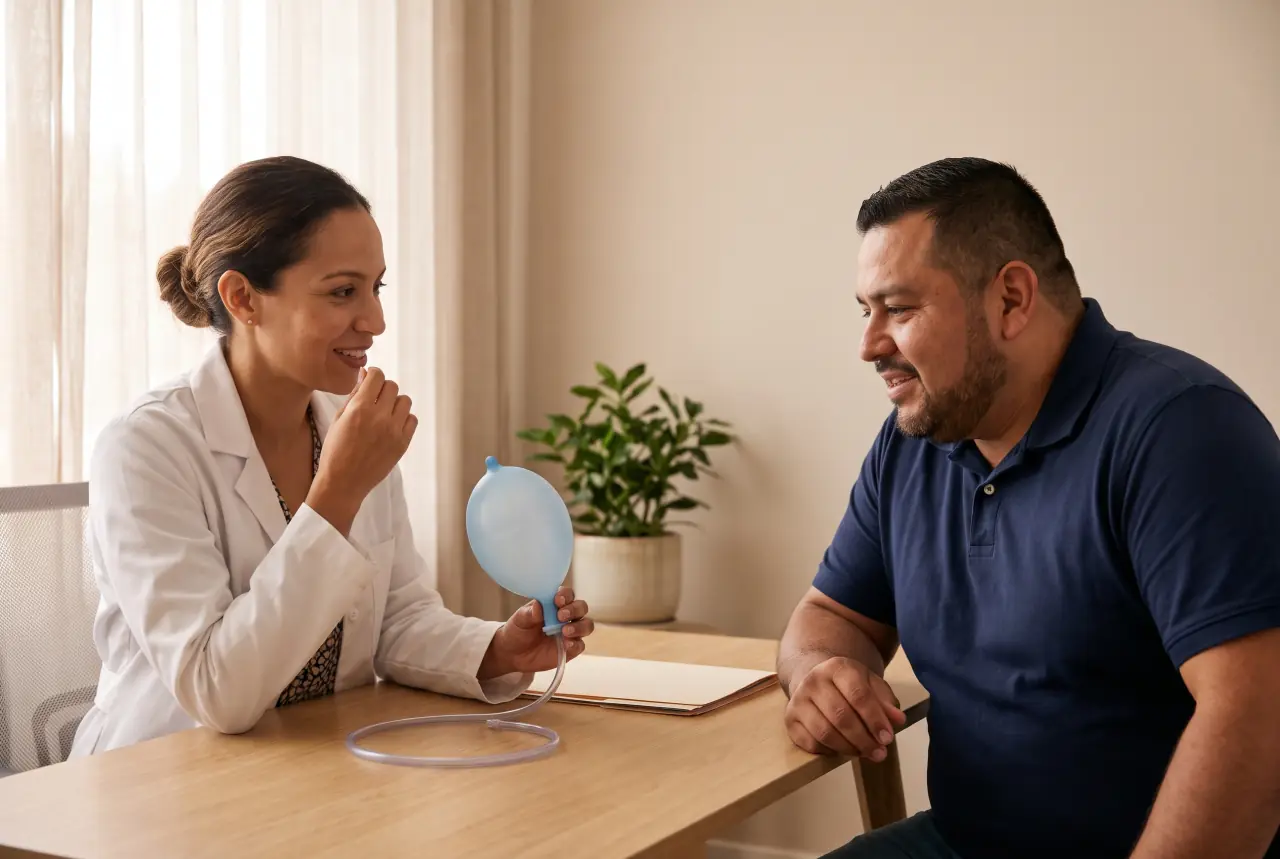
The four main options are two operations, the gastric sleeve and the gastric bypass, and two procedures done through the mouth, a gastric balloon and endoscopic sleeve gastroplasty. This page compares them and links to our guide on each; your surgeon decides which, if any, suits you.
At a glance
- The main options
- Two operations, the gastric sleeve and the gastric bypass, and two procedures done through the mouth, a balloon and endoscopic sleeve gastroplasty
- Who qualifies for surgery
- Under 2022 U.S. and international criteria, a body mass index of 35 or more, or 30 or more with type 2 diabetes; Mexico’s own standard is narrower
- Average weight loss
- In studies, 15% to 30% of starting weight after surgery, depending on the operation; devices such as balloons bring less
- For life
- Vitamin and mineral supplements, regular blood tests and a yearly visit with a bariatric specialist
- Price
- Below U.S. ranges in Tijuana for the sleeve and the bypass; see the price table
- Check first
- The surgeon’s license numbers and bariatric certification, the hospital’s license, and a care team near home
Key takeaways
- Bring your full health history to a bariatric surgeon and ask which option suits you, and why: a sleeve, a bypass, a balloon, an endoscopic sleeve or medicines.
- Before you pay a deposit, look up the surgeon’s license numbers and bariatric certification, and ask which license and accreditation the hospital holds.
- Get a written, itemized quote that says what happens, where and at whose cost if a complication needs treatment after you’re home.
- Ask your health plan in writing what it would pay for surgery at home and for complications after surgery abroad before you compare totals.
- Line up a bariatric program, a dietitian and your first blood tests near home before you travel, and let your surgeon set the day you leave Mexico.
In this guide
- What is bariatric surgery, and how does it help you lose weight?
- Which is the best weight loss surgery? Sleeve vs. bypass vs. balloon
- Who qualifies for bariatric surgery?
- Is bariatric surgery in Mexico safe? Risks and how to plan for them
- How to choose a bariatric surgeon and hospital in Mexico
- How much does bariatric surgery in Mexico cost?
- Does insurance cover bariatric surgery in Mexico?
- Life after bariatric surgery: diet, vitamins and follow-up
- How long to stay in Mexico after bariatric surgery, and flying home
- How to plan bariatric surgery in Mexico, step by step
- Questions to ask a bariatric surgeon before you choose an operation
- Before you go: checklist
- Warning signs after bariatric surgery
- Frequently asked questions
- Sources
What is bariatric surgery, and how does it help you lose weight?
Bariatric surgery, also called metabolic and bariatric surgery, is a group of operations that help you lose weight by changing your digestive system. Some make the stomach smaller, so you feel full sooner; others also change the small intestine so the body absorbs fewer calories. Both can affect hormones and gut bacteria in ways that may reduce hunger (NIDDK).
The sleeve and the bypass together make up about 90% of the operations done worldwide (ASMBS/IFSO). Most weight-loss surgery is laparoscopic, done under general anesthesia through small cuts (NIDDK).
Balloons and other devices approved by the U.S. Food and Drug Administration (FDA) don’t permanently change the stomach or intestine, and they bring less weight loss than surgery (NIDDK). Endoscopic sleeve gastroplasty (ESG) stitches folds inside the stomach so it holds less and empties more slowly (FDA).
Which is the best weight loss surgery? Sleeve vs. bypass vs. balloon
Why it matters: the options differ in average weight loss, whether they can be undone and how long you stay, so the best one is the one that fits your health.
No option is best for everyone; a bariatric surgeon recommends one after reviewing your health. On average, operations bring more weight loss than devices. One study compared the three most common operations, an adjustable band, a sleeve and a bypass: the bypass brought the most weight loss on average, but more complications in the month after surgery (NIDDK).
| Gastric sleeve | Gastric bypass | Gastric balloon | Endoscopic sleeve gastroplasty | |
|---|---|---|---|---|
| What’s done | About 80% of the stomach is removed (NIDDK) | A small stomach pouch is joined to a lower part of the small intestine (NIDDK) | A balloon takes up space in the stomach, placed through the mouth or, for some types, swallowed | Stitched folds narrow the stomach from inside (FDA) |
| Average weight loss | 15% to 30% of starting weight for surgery overall (NIDDK) | The same range; in that one study, more than a sleeve | Less than surgery; about 7% to 15% in U.S. trials, with a diet and activity program (by device) | About 14% at 1 year in the main U.S. trial, of adults with a body mass index of 30 to 40, against under 1% with lifestyle changes alone (FDA) |
| Can it be undone? | No, since part of the stomach is gone for good | Difficult, though a surgeon may if medically necessary (NIDDK) | It’s temporary: in U.S. approvals, endoscopic balloons come out within 6 or 8 months, and one swallowed type passes on its own at around 4 months (removal) | It can be reversed if you can’t tolerate it, retightened or converted to a sleeve (FDA) |
| Nights in hospital | Usually 1 to 3, in UK practice (NHS) | The same | None for the two balloons whose stay our guide describes: home the same day | An optional 23-hour stay in the U.S. trial (FDA) |
| Our guide | Gastric sleeve | Gastric bypass | Gastric balloon | Endoscopic sleeve |
Weight loss is the average share of starting weight, from different studies, so no figure predicts your own result. Balloon cells without a source sum up the linked guide, where each is sourced.
A sleeve carries a risk of acid reflux, and a bypass a higher chance of vitamin and iron shortages (NIDDK); gastric sleeve vs. gastric bypass covers the other differences.
How to check: tell the surgeon about any heartburn, diabetes, earlier stomach surgery and the medicines you take, since each can narrow the choice (who a balloon suits shows how for balloons), and ask which option they recommend for you, and why.
Who qualifies for bariatric surgery?
Why it matters: the criteria were lowered in 2022, but Mexico’s official standard is narrower and insurers may add requirements, so it helps to know which ones a surgeon or a plan applies.
Body mass index (BMI) measures body fat from your weight in relation to your height (NIDDK). Under the 2022 criteria of the American Society for Metabolic and Bariatric Surgery (ASMBS) and the International Federation for the Surgery of Obesity and Metabolic Disorders (IFSO), surgery is recommended at a BMI of 35 or more, with or without related conditions, and at 30 or more with type 2 diabetes. At 30 to 34.9, it should be considered when nonsurgical methods haven’t brought substantial or lasting weight loss or improvement in related conditions (ASMBS). For the Asian population, the thresholds should be adjusted down, with surgery offered from a BMI of 27.5. There is no upper age limit, though older people are assessed carefully for other conditions and frailty first, and the final decision on whether you’re ready should be the surgeon’s (ASMBS/IFSO).
In Mexico. The official standard for treating overweight and obesity, NOM-008-SSA3-2017 (a Norma Oficial Mexicana), binds the professionals and facilities that provide that treatment. It indicates surgery when comprehensive treatment hasn’t worked and the BMI is 40 or more, or 35 or more with related conditions, in adults and in teens of 16 to 18 who have finished developing, with a multidisciplinary team (NOM-008, in Spanish).
When medicines or a nonsurgical option may fit. Weight-management medicines may be prescribed for adults with a BMI of 30 or more, or 27 or more with a weight-related problem such as type 2 diabetes. With a lifestyle program, they bring 3% to 12% more weight loss on average after a year than the program alone, and some weight will probably return if you stop (NIDDK). Mexico’s standard indicates endoscopic procedures at a BMI of 30 to 34.9 with related conditions, or higher in some cases (NOM-008, in Spanish); who ESG may suit compares the U.S. criteria.
How to check: ask the surgeon which criteria they follow, how they’ll judge your readiness, and whether medicines or a device could suit you first. If you hope a plan at home will pay, ask it in writing which criteria it applies; who qualifies for a gastric sleeve covers the older thresholds.
Is bariatric surgery in Mexico safe? Risks and how to plan for them
Why it matters: some risks come with the operation wherever it’s done and travel adds others, but you can plan for most of them before you pay a deposit.
It depends on the surgeon, the hospital, your health and the care arranged for after you return, and you can look into each before you go. Around the time of surgery, the death rate is very low, 0.03% to 0.2% (ASMBS/IFSO), an average across large groups of patients rather than a prediction for you.
The ASMBS discourages long-distance travel for bariatric surgery unless follow-up, continuity of care and the transfer of your records are arranged, while recognizing your right to choose where you’re treated (ASMBS).
| Risk | What you can do |
|---|---|
| A leak, a small chance in the days or weeks after a sleeve or bypass, which can cause a serious infection in the abdomen that needs antibiotics (NHS) | Stay near your surgeon for the first days, learn the warning signs, and ask how a leak would be treated and who pays |
| Blood clots, which often start in the lower leg and can sometimes travel to the lungs (NHS); long travel soon after surgery may raise the risk (ASMBS) | Let your surgeon set the travel date, and on the trip move your legs often and walk around every 1 to 2 hours (CDC) |
| Infections, the most common complications among medical tourists (CDC Yellow Book); drug-resistant Pseudomonas aeruginosa bacteria picked up during bariatric surgery are among recent events tied to medical tourism in Mexico (CDC Yellow Book, Mexico) | Check the hospital’s license. If a U.S. hospital admits you within 6 months, say you stayed overnight in a hospital abroad: patients with such a stay should be screened for certain drug-resistant gut bacteria (CDC Yellow Book) |
| A blocked gut, when the stomach or intestine narrows and food gets stuck (NHS) | Cut food into small chunks, chew it well and don’t drink during meals (NHS) |
| Low vitamins and minerals, since surgery can make them harder to absorb (NHS) | Take your supplements and keep every blood test; see life after surgery |
| Gallstones, which can form when you lose weight quickly (NHS) | Ask which approach your surgeon takes; the risks of a gastric sleeve describes the options |
| Problems after you’re home. A short stay doesn’t ensure none develop later, some U.S. surgeons may be reluctant to care for patients operated on abroad, and treating a complication may be costly (ASMBS) | Line up a bariatric program near home and carry your records; see if something goes wrong after you’re home |
How to check: before you pay a deposit, agree with the surgeon and your doctor at home how a complication would be handled (CDC Yellow Book): where, by whom and who pays. Your plan if something goes wrong lists what else to settle.
How to choose a bariatric surgeon and hospital in Mexico
Why it matters: the surgeon’s training and the hospital’s ability to manage a complication shape the rest of the plan, and you can check both before you pay anything.
Travelers are advised to choose a hospital accredited by Joint Commission International or, preferably, a bariatric center of excellence, and a surgeon board eligible or certified by a national board or credentialing body, whose own results for your operation are shared whenever possible as part of informed consent (ASMBS). Some facilities serving medical tourists may lack a modern intensive care unit, imaging or interventional radiology for major complications (ASMBS).
Accreditation at home and abroad. At home, some insurance companies require surgery at a facility that meets quality standards approved by the ASMBS, a U.S. society, and such facilities are preferable choices (ASMBS). Abroad, accreditation and quality control vary widely by country (ASMBS), so ask a hospital in Mexico which accreditation it holds, if any, and confirm it with the accrediting body.
What Mexico’s standard requires. Under NOM-008 (in Spanish):
- The surgeon needs a specialist’s license in surgery, a current council certificate and certification in bariatric or endoscopic surgery.
- You’re fully assessed first, including heart, anesthesia, nutrition and psychological evaluations, and a multidisciplinary team’s evaluation backs the decision.
- The surgeon explains the risks and gets your written consent.
- The hospital holds a health license and has what major surgery in high-risk patients needs.
Not every hospital offering bariatric surgery may meet the standard, so check for yourself. A license and certificate you’ve checked are a strong starting point, alongside a well-equipped hospital, a written complication plan and a team near home.
How to check: take four steps before any deposit.
- Search the surgeon’s professional license numbers (cédulas) in medicine and the specialty, as in checking a doctor’s license in Mexico.
- Ask about the Mexican Council of General Surgery’s bariatric certification and search its directory, as how to check a bariatric surgeon shows.
- See the hospital’s health license, as in checking a clinic’s health license, and ask about its accreditation, intensive care unit and imaging.
- Ask how many of these operations the surgeon does a year, and who else assesses you before surgery.
How much does bariatric surgery in Mexico cost?
Why it matters: the operation is one line of the total, so compare what each quote covers, then add the trip and the follow-up near home.
In Tijuana, indicative ranges for the two most common operations sit below the U.S. ranges:
| Treatment | Tijuana (USD) | United States (USD) |
|---|---|---|
| Gastric sleeve | $4,500 – $8,000 | $10,000 – $25,000 |
| Gastric bypass | $5,500 – $10,000 | $17,000 – $35,000 |
Uriym’s indicative ranges from its bariatric price catalog, reviewed September 7, 2026. They are not quotes and cover the listed treatment only, without taxes, travel or third-party charges.
Some providers abroad charge substantial fees for follow-up care on top of the base price, so ask whether follow-up happens at the same facility (CDC Yellow Book). For a balloon or ESG, compare quotes using what a balloon quote should list and what an ESG quote should include.
How to check: ask each hospital for a written, itemized quote that shows the tests before surgery; who operates and who gives the anesthesia; the hospital nights included and the price of an extra one; the medicines and supplements you leave with; the follow-up visits; and what happens, where and at whose cost if a complication needs treatment. What a medical tourism quote should include and travel and recovery costs to add cover the rest.
Does insurance cover bariatric surgery in Mexico?
Why it matters: care in Mexico is usually paid up front, so what your plan would pay at home, and for a complication once you’re back, shapes your budget.
Usually not directly. Most providers in Mexico don’t accept U.S. health insurance, Medicare or Medicaid, and payment might be required before any care is given (CDC Yellow Book, Mexico).
At home, Medicare and some Medicaid programs may cover the major weight-loss operations if a health professional recommends one and you meet criteria such as a BMI of 35 or more with obesity-related problems. Some plans may require approved surgeons and facilities, and some insurers require you to show that a nonsurgical weight-loss program didn’t work (NIDDK). For what Medicare and private plans pay abroad, see does Medicare or U.S. health insurance cover care in Mexico.
Before you travel, check that care afterward, including treatment of short- and long-term complications, is covered by your insurer or by a supplemental plan you buy (ASMBS). You might also need coverage that includes a medical evacuation (CDC Yellow Book).
How to check: ask your plan in writing whether it would cover the operation at home, what it requires first, and whether it would pay to treat a complication at home after surgery abroad. Does travel insurance cover complications shows what to read in a travel policy.
Life after bariatric surgery: diet, vitamins and follow-up
Why it matters: eating stages, daily supplements and checkups go on for years after the trip, so who provides them near home is part of choosing where to have surgery.
Eating in stages
Most patients start on liquids for some weeks, then move to soft foods and eventually to solid foods, on a plan their bariatric team explains (ASMBS). A typical plan in UK practice:
| Weeks after surgery | Typical stage in UK practice |
|---|---|
| 1 and 2 | Water and fluids, such as thin soup |
| 3 and 4 | Runny food, such as yogurt or puréed food |
| 5 to 8 | Soft food, such as mashed potato |
| From week 8 | A gradual return to a healthy, balanced diet |
Source: the NHS, England’s National Health Service; your own team’s plan comes first.
Vitamins and checkups for life
You’ll take supplements for the rest of your life, usually a multivitamin, vitamin B12, calcium, vitamin D and iron, in amounts your program sets (ASMBS), with regular blood tests (NHS); see the testing schedule after a sleeve. Checkups come every few months in the first year, then once a year with a bariatric specialist for good, because obesity is a long-term disease that can return; weight-loss medicines and even more surgery can be part of that care (ASMBS).
A team near home
Before surgery, arrange follow-up with a qualified bariatric program near home to watch for nutritional deficiencies and long-term complications. Patients operated on abroad can have trouble finding a program willing to take them on (ASMBS), so ask first; line up your care team at home and line up a doctor at home show how.
Pregnancy and loose skin
If you could become pregnant, plan birth control before surgery and avoid pregnancy for 12 to 18 months afterward (ASMBS). As weight comes off, folds of excess skin may remain (NHS); skin removal surgery in Mexico explains the options.

How to check: before you pay a deposit, get a yes from a program near home, and get the diet stages, supplement list and checkup schedule from your surgeon in writing.
How long to stay in Mexico after bariatric surgery, and flying home
Why it matters: traveling soon after surgery adds to the risk of blood clots, so your recovery, not a package itinerary, should set the day you leave.
Your surgeon decides, starting from the hospital stay in the comparison table. Medical tourists shouldn’t fly for 10 days after chest or abdominal surgery (CDC Yellow Book), and anyone traveling more than 4 hours, by air, car, bus or train, can be at risk of clots (CDC). See how long to stay after a gastric sleeve, flying after surgery and, for the shorter stay after ESG, how long to stay after ESG.
Rest rather than sightsee, since alcohol, strenuous exercise, sunbathing, swimming and long tours can delay healing (CDC Yellow Book); a recovery house, a hospital stay or a hotel with a companion compares where to recover. For the way back, see crossing back into the U.S. after a procedure and medicine prescribed after a procedure. Leave with all your records, including any imaging (ASMBS), in English (CDC Yellow Book).
How to check: ask your surgeon for your nights in the hospital and nearby, your first checkup and the earliest day you can travel; then book changeable tickets, travel home with someone and see what to pack.
How to plan bariatric surgery in Mexico, step by step
Why it matters: each step settles something the next one depends on, so doing them in order puts the big answers in writing before you pay.
To plan bariatric surgery in Mexico, work through these steps in order:
- See your doctor at home at least a month before you’d leave (CDC Yellow Book, Mexico).
- Check that you qualify (who qualifies).
- Choose an option with a bariatric surgeon (the comparison).
- Check the surgeon and the hospital (how to choose).
- Get an itemized quote with the plan for complications (costs).
- Ask your insurer in writing what it would pay (insurance).
- Line up care near home (life after surgery).
- Prepare. If you smoke, you may benefit from stopping at least 6 weeks before surgery (NIDDK).
- Plan the stay and the trip home around your surgeon’s go-ahead (how long to stay), and read the current travel advisory; Tijuana and Guadalajara have guides of their own.
- Come home with your records in English, and keep every checkup.
How to check: finish steps 1 to 6, with the answers in writing, before you pay a deposit; medical tourism in Mexico sets out the same plan for every kind of care.
Questions to ask a bariatric surgeon before you choose an operation
- Which option would you recommend for me, and why that one rather than the others or medicines?
- Which criteria do you follow, and how will you judge whether I’m ready?
- What are your license numbers, do you hold the council’s bariatric certification, and how many of these operations do you do a year?
- What are your own patients’ results and complication rates?
- Does the hospital hold any accreditation, and could it treat a serious complication on site, with an intensive care unit and imaging?
- What happens, where and at whose cost, if I have a complication at home?
- When can I travel, and will you send my operative notes in English to my team at home?
Before you go: checklist
- Your doctor at home told, a month or more before you travel
- The choice of operation talked through with the surgeon
- Surgeon’s licenses and certification looked up, and the hospital’s license seen
- An itemized, written quote with the plan for complications
- Your insurer’s answers in writing
- A bariatric program, a dietitian and first blood tests lined up near home
- Smoking stopped, and birth control planned if you could become pregnant
- Diet stages and supplement list in writing, with a first supply ready
- Changeable travel and a companion for the trip home
- Records in English to collect: operative note, discharge summary, test results and imaging
- Warning signs read, and your surgeon’s contact details saved
Warning signs after bariatric surgery
In an emergency, call 911, which works in the U.S. and Mexico, then tell your surgeon.
| What you notice | What to do |
|---|---|
| Difficulty breathing; a faster than normal or irregular heartbeat; chest pain or discomfort that usually worsens with a deep breath or coughing; a cough or coughing up blood; or very low blood pressure, lightheadedness or fainting | These can be signs of a blood clot in the lungs (pulmonary embolism): seek medical help immediately (CDC) by calling 911 |
| Swelling of a leg or arm, pain or tenderness you can’t explain, skin that’s warm to the touch, or redness or discoloration | These can be signs of a clot in a deep vein: contact your doctor as soon as possible (CDC) |
| Severe belly pain; bleeding from your bottom that won’t stop, or a lot of blood, such as red toilet water or large clots; or vomiting blood or poop, or vomit that looks like coffee grounds or soil | Call 911 or go to the emergency room (NHS, adapted) |
| A high temperature, or feeling hot, cold or shivery; a fast heartbeat; fast breathing; belly pain; difficulty swallowing; or regular vomiting | Get urgent advice from your surgeon or a doctor; these could be signs of a blood clot or a stomach problem (NHS, adapted) |
| Pain around a wound; red, hot and swollen skin; or pus from a wound | See your surgeon or a doctor (NHS, adapted) |
The last three rows adapt the NHS, the UK’s National Health Service: its 999 or A&E appears as 911 and the emergency room, and an urgent or routine GP (family doctor) visit as advice from your surgeon or a doctor.
If you suspect a complication, on the trip or weeks later, don’t delay care: prompt care can mean earlier diagnosis and a better outcome (CDC Yellow Book). After a balloon or ESG, see warning signs while a balloon is in place or after ESG.
Frequently asked questions
How much does bariatric surgery cost in Mexico?
Uriym’s indicative range for a gastric sleeve in Tijuana is $4,500 to $8,000, compared with $10,000 to $25,000 in the U.S., and for a gastric bypass $5,500 to $10,000, compared with $17,000 to $35,000. These ranges are indicative, not quotes. Your own price depends on the operation, the hospital nights and how much follow-up the quote covers, so compare written, itemized quotes; what bariatric surgery costs lists the lines to ask about.
Is it safe to get bariatric surgery in Mexico?
It depends on the surgeon, the hospital, your health and the care arranged for after you’re home, and you can look into each before you go. Travelers are advised to choose an accredited hospital, or preferably a bariatric center of excellence, to check that the surgeon is board eligible or certified, and to set up follow-up with a local bariatric program before the operation (ASMBS). Risks and how to plan for them pairs each risk with a step, and is it safe to get surgery in Mexico? covers license lookups and the travel advisory.
What BMI do you need for weight loss surgery?
A body mass index (BMI) of 35 or more, or 30 or more with type 2 diabetes, under the 2022 criteria; from 30 to 34.9, surgery should be considered when nonsurgical methods haven’t brought substantial or lasting weight loss or improvement in related conditions (ASMBS). For the Asian population, surgery should be offered from a BMI of 27.5 (ASMBS/IFSO), and insurers may set requirements of their own (NIDDK). Weight-management medicines may be prescribed from a BMI of 27 with a weight-related condition (NIDDK); see who qualifies.
How much weight do you lose after bariatric surgery?
In studies, many patients lose 15% to 30% of their starting weight on average, depending on the operation (NIDDK). No method, surgery included, is sure to bring and keep weight loss: some people lose less than they hoped, and some regain part of it over time, depending on factors such as their weight before surgery, the operation and how closely they keep to new eating and exercise habits (NIDDK). These are averages, not a forecast for you; the comparison sets the operations against a balloon and an endoscopic sleeve.
Does insurance cover weight loss surgery in Mexico?
Usually not directly: most providers in Mexico don’t accept U.S. health insurance, so expect to pay them yourself, and payment might be due before treatment (CDC Yellow Book, Mexico). Some plans that cover surgery at home may require approved surgeons and facilities (NIDDK), so ask yours in writing whether it would pay anything toward surgery abroad, and whether it would cover a complication treated at home afterward. Does insurance cover bariatric surgery in Mexico? lists the questions to ask.
How long do you stay in Mexico after bariatric surgery?
Your surgeon decides, based on how you recover. In UK practice, people usually leave the hospital 1 to 3 days after weight-loss surgery (NHS), and medical tourists are advised against flying for 10 days after abdominal surgery (CDC Yellow Book). After endoscopic sleeve gastroplasty, the U.S. trial offered an optional 23-hour observation stay (FDA). Book changeable travel, and see how long to stay.
Do you have to lose weight before bariatric surgery?
It depends on your surgeon and your insurer. Losing weight and bringing your blood sugar closer to normal before surgery may lower your chances of surgery-related problems (NIDDK), and some insurers require you to complete a nonsurgical weight-loss program first (NIDDK). No data support weight loss before surgery when an insurer mandates it, according to the 2022 criteria (ASMBS/IFSO). Ask your surgeon what to do before the operation, and your insurer what it requires.
Sources
- Definition & Facts of Weight-loss Surgery (last reviewed September 2020) National Institute of Diabetes and Digestive and Kidney Diseases (NIDDK)
- Types of Weight-loss Surgery (last reviewed September 2020) National Institute of Diabetes and Digestive and Kidney Diseases (NIDDK)
- Prescription Medications to Treat Overweight & Obesity (last reviewed June 2024) National Institute of Diabetes and Digestive and Kidney Diseases (NIDDK)
- 2022 American Society for Metabolic and Bariatric Surgery (ASMBS) and International Federation for the Surgery of Obesity and Metabolic Disorders (IFSO): Indications for Metabolic and Bariatric Surgery American Society for Metabolic and Bariatric Surgery (Surgery for Obesity and Related Diseases)
- Is Metabolic and Bariatric Surgery Right for You? American Society for Metabolic and Bariatric Surgery (professional society)
- Medical Tourism American Society for Metabolic and Bariatric Surgery (professional society)
- Life After Bariatric Surgery (updated February 2021) American Society for Metabolic and Bariatric Surgery (professional society)
- Medical Tourism (CDC Yellow Book 2026, chapter updated April 23, 2025) U.S. Centers for Disease Control and Prevention (CDC)
- Mexico (CDC Yellow Book 2026, chapter updated April 23, 2025) U.S. Centers for Disease Control and Prevention (CDC)
- About Venous Thromboembolism (Blood Clots) U.S. Centers for Disease Control and Prevention (CDC)
- Understanding Your Risk for Blood Clots with Travel U.S. Centers for Disease Control and Prevention (CDC)
- Recovering from weight loss surgery (reviewed February 5, 2024) NHS
- Complications of weight loss surgery (reviewed February 5, 2024) NHS
- De Novo Classification Request for APOLLO ESG, APOLLO ESG SX, APOLLO REVISE, APOLLO REVISE SX Systems (DEN210045), decision summary U.S. Food and Drug Administration
- NORMA Oficial Mexicana NOM-008-SSA3-2017, Para el tratamiento integral del sobrepeso y la obesidad (Diario Oficial de la Federación, May 18, 2018; in Spanish) Secretaría de Salud, Mexico (copy on the Secretaría de Economía standards platform)
About this guide
The Uriym editorial team researched this guide from the 15 sources above, drafted it with AI assistance, and checked it claim by claim against those sources before publishing, last on . Our editorial standards explain how we choose sources, handle prices and make corrections.
Uriym is a healthcare navigation platform, not a medical provider. Its founder, Adriana Mendez, grew up in a family that traveled to Mexico for care and has done it herself for the past ten years. How Uriym works
This is general information, not medical, legal or financial advice: your treating provider decides what care is right for you. Rules, prices and advisories change, so check the official page before you act. Found something wrong or out of date? Email support@uriym.com.