

Medical tourism in Mexico can be a sound choice when the plan holds up before you pay: the people treating you hold licenses you’ve looked up, the building is licensed for your kind of care, a written quote shows what the price covers, your stay follows your recovery rather than a fixed itinerary, and a doctor or dentist at home is ready for afterward. You can look into all five from home, much of it for free.
Mexico and Canada are where U.S. residents who travel for medical care most commonly go, along with several countries in Central America, South America and the Caribbean (U.S. Centers for Disease Control and Prevention, CDC). In Mexico, they seek mainly cosmetic surgery, dental care and eye care (CDC Yellow Book, Mexico). This guide is the overview: each section sums up one part of the plan and points to the guide that covers it in depth.
At a glance
- Why people go
- Care that may cost less, a clinician who shares their language and culture, or a procedure not available or approved at home
- Most common care
- Cosmetic surgery, dental care and eye care, in northern border cities and growing markets such as Guadalajara and Mexico City
- Checking a doctor
- License numbers in a free national registry, plus a current council certificate for specialists
- Paying
- Usually out of pocket, and payment might be due before care; most providers don’t take U.S. health insurance
- How long to stay
- Set by your treatment and your provider’s go-ahead to travel, not by a fixed itinerary
- Price
- Depends on the treatment and what the quote includes; see the price table
Key takeaways
- Talk to your doctor at home about the treatment and the trip well before you book, and agree with both doctors how a complication would be handled.
- Before you pay a deposit, look up each treating doctor’s or dentist’s license number yourself, and ask for a photo of the facility’s health license.
- Ask for a written, itemized quote that names who treats you and where, and what follow-up, revisions and medicines it covers.
- Find out in writing what your health plan would pay, and buy travel health insurance that covers a medical evacuation home.
- Let your provider’s recovery plan set how long you stay and when you travel, and leave with your records in English.
In this guide
- What is medical tourism, and why do people go to Mexico?
- How to plan medical tourism to Mexico, step by step
- What treatments do people get in Mexico?
- Which cities are best for medical tourism in Mexico?
- Is medical tourism in Mexico safe?
- How to check a doctor and a clinic in Mexico
- Getting there, how long to stay and flying home
- How much does medical tourism in Mexico cost?
- Does insurance cover medical tourism in Mexico?
- Follow-up at home, your records and complaints
- Questions to ask before you book medical care in Mexico
- Before you go: checklist
- Warning signs after treatment in Mexico
- Frequently asked questions
- Sources
What is medical tourism, and why do people go to Mexico?
Medical tourism means traveling to another country for medical care (CDC Yellow Book). People go for a treatment that may cost less, a clinician who shares their culture and language, or a procedure that isn’t available or approved in the United States (CDC), and they usually pay out of pocket (CDC Yellow Book).
Over the past decade, Mexico has become a popular destination for it, with U.S. residents seeing professionals in northern border cities and in growing markets in Cancún, Guadalajara, Mérida, Mexico City and Monterrey (CDC Yellow Book, Mexico).
Many medical tourists find a clinic through a private company or concierge service, social media, or friends and family (CDC Yellow Book). However you find yours, the checks below are worth making yourself, with your own doctor involved from the start.
How to plan medical tourism to Mexico, step by step
Why it matters: each step settles something the next one depends on, from whether the treatment suits you to who looks after you once you’re home.
To plan medical tourism to Mexico, see your doctor at home first, then get a written plan and quote, check the provider’s licenses, settle what insurance will pay, plan the days around your recovery, line up follow-up care, read the travel advisory and come home with your records:
- See your doctor at home or a travel medicine clinician at least 4 to 6 weeks before the trip, to learn about risks tied to your health, the procedure and the travel (CDC).
- Get the plan in writing: who treats you, where, over how many visits, and an itemized quote.
- Check the people and the building before any deposit (how to check).
- Check your coverage, and buy travel health insurance that covers a medical evacuation (insurance).
- Plan the days around treatment, checkups and your provider’s go-ahead to travel (the trip).
- Line up follow-up care at home before you leave (follow-up).
- Read the travel advisory for the state where you’ll stay, and sign up for alerts (what the risk depends on).
- Come home with your records in English, for every clinician who sees you next (CDC Yellow Book).
How to check: before you pay a deposit, make sure steps 1 to 4 are done and their answers are in writing; the rest can follow once you’ve chosen a provider.
What treatments do people get in Mexico?
Why it matters: each kind of care shapes the trip differently, from a single dental visit to nights near your surgeon, so the plan starts from the treatment.
Dental care is the most common form of medical tourism among U.S. residents, and cosmetic surgery is among the procedures they seek abroad most often; fertility treatment, cancer treatment and transplants are others (CDC Yellow Book). Our guides cover five kinds of care:
| Kind of care | Our guides | What shapes the trip |
|---|---|---|
| Dental | A dentist in Tijuana, implants, All-on-4, crowns, root canals, veneers, dentures | Many dental procedures are surgical and may need months of healing, and bigger work needs follow-up (American Dental Association, ADA) |
| Cosmetic surgery | Plastic surgery in Tijuana, breast augmentation, breast lift, breast reduction, implant removal, BBL, liposuction, tummy tuck, mommy makeover, facelift, rhinoplasty, eyelid surgery, hair transplant, skin removal | Checkups in the days after surgery, often with nights nearby, and the surgeon’s go-ahead before you travel |
| Aesthetics | Botox and fillers, laser hair removal, chemical peel, CO2 laser resurfacing, Morpheus8, PRP facial | Often short visits, sometimes a series of sessions weeks apart; deeper peels and laser resurfacing take days to weeks to heal |
| Weight loss | Gastric sleeve, gastric bypass, gastric balloon, endoscopic sleeve gastroplasty | Months of follow-up or more, lined up near home before you travel; for surgery, a qualified local bariatric program (American Society for Metabolic and Bariatric Surgery, ASMBS) |
| Fertility | IVF, egg freezing, IUI | Monitoring visits and the timing of your cycle set the dates, so plans need room to shift |
Rows without a source sum up their linked guides, where the sources are cited.
We don’t cover cancer care or transplants abroad, which carry particular risks of their own (CDC Yellow Book); talk those through with your specialist.
How to check: read the guide for your treatment first, then ask the provider for its plan in writing: which visits happen where, how far apart they are, and the earliest day you could head home.
Which cities are best for medical tourism in Mexico?
Why it matters: the city decides how you get there and back, whether a checkup means a day trip or a flight, and which state’s travel advice applies.
No city is best for everyone, and we don’t rank them. Border cities, including Los Algodones, Matamoros, Reynosa and Tijuana, are popular for day trips and medical tourism (CDC Yellow Book, Mexico). The right city is usually wherever a provider you’ve checked practices, weighed against the trip there and back.
- Tijuana, across the border from San Diego, lets some care fit into a day on foot or by car; medical tourism in Tijuana covers local checks, the crossing and how many nights to plan.
- Guadalajara is a flight away, so the flight home waits on your recovery; medical tourism in Guadalajara covers flying in, checks in Jalisco and the days to plan.
- Other cities. License numbers sit in one national registry, so the lookups below work anywhere. The State Department sets an advisory level for each state; what the advisory says about Tijuana and Guadalajara shows how to read it.
How to check: once you have a shortlist of providers, compare their cities on the trip itself: how you’d get home after treatment, what a follow-up visit would take, and the current advisory for that state.
Is medical tourism in Mexico safe?
Why it matters: the risk depends on things you can check and plan for, which turns a worrying question into a list of tasks.
It depends on the destination, the facility and whether you’re in good health for the procedure (CDC). Good health care is available in most cities in Mexico (CDC Yellow Book, Mexico), and every procedure carries some risk wherever it’s done (CDC Yellow Book). Each risk below comes with what you can do about it.
| Risk | What you can do |
|---|---|
| Infections, the most common complications among medical tourists, from surgical site infections to hepatitis B, hepatitis C and HIV (human immunodeficiency virus) where infection control falls short (CDC Yellow Book) | Check the facility’s license, ask how instruments are sterilized, and be up to date on routine vaccines, especially hepatitis B |
| Infection events linked to medical tourism in Mexico in recent years, including an outbreak of fungal meningitis linked to epidural anesthesia for cosmetic procedures, Legionella infection linked to dental procedures, skin infections linked to stem cell injections, and drug-resistant bacteria picked up during weight-loss surgery (CDC Yellow Book, Mexico) | Let what investigators found guide your questions, and tell any U.S. hospital that admits you within 6 months of an overnight stay in a health facility abroad; the CDC advises hospitals to screen those patients for certain drug-resistant bacteria (CDC Yellow Book) |
| Credentials and products: in some countries, requirements for licensing and accreditation may be lower than in the U.S., and counterfeit medicines and lower-quality devices may be used (CDC) | Look up the licenses, and ask which implants, devices and medicines will be used |
| Misunderstandings about your care in a language you don’t speak fluently (CDC) | Settle before you go how you’ll talk with the people treating you |
| Blood clots: surgery and air travel each raise the risk (CDC Yellow Book) | Let your surgeon set the travel date; see the trip home |
| Complications at home, whose care might be costly, drawn out and not covered by your insurance (CDC) | Line up a doctor at home and bring your records (follow-up) |
| Crime: like other travelers, medical tourists may be targets of violent crimes such as kidnapping (CDC Yellow Book) | Check the State Department’s current information before you decide to go, and enroll in its Smart Traveler Enrollment Program (STEP) for alerts |
Professional societies add advice of their own:
- Cosmetic surgery: the credentials of surgeons outside the U.S. may be hard to assess, and infections are the complication seen most in patients who go abroad, along with unsightly scars, hematomas (pools of blood under the skin) and unsatisfactory results (American Society of Plastic Surgeons, ASPS).
- Weight-loss surgery: long-distance travel for it should be discouraged unless follow-up, continuity of care and the transfer of your records are arranged, in the view of the bariatric surgeons’ society, which also recognizes your right to choose where you’re treated (ASMBS).
- Dental work: similar training may exist abroad, though it can be hard to judge where dental rules differ from those at home (ADA), so look up the dentist’s license.
How to check: agree with your doctor at home and the provider in Mexico, before you book, who would treat a complication, who would pay and how you’d get home; your health and your plan lists what to settle.
How to check a doctor and a clinic in Mexico
Why it matters: licenses and certificates sit in public registries anyone can search for free, so you can check the people and the building before money changes hands.
In Mexico, a professional license is called a cédula profesional, and anyone can check a professional’s license and certifications for free in the official records of the Ministry of Public Education (Secretaría de Educación Pública, SEP), which can confirm that they’re genuine. Before cosmetic procedures, Mexico’s education ministry advises checking for a cédula in medicine, a specialty cédula in plastic, aesthetic and reconstructive surgery, and a current certificate from the specialty’s Mexican council, as well as the facility’s health permits (SEP, May 2026, in Spanish).
For plastic, aesthetic and reconstructive surgery, the specialist must prove their training and skills to CONACEM (Comité Normativo Nacional de Consejos de Especialidades Médicas), the national committee of medical specialty councils, to be certified and recertified (COFEPRIS, in Spanish), and CONACEM’s public search shows whether a specialist’s certificate is current (CONACEM, in Spanish). In a 2023 statement, COFEPRIS, Mexico’s Federal Commission for Protection against Health Risks, said a master’s degree in aesthetic surgery doesn’t authorize specialty surgery, and that a facility doing plastic surgery should hold a current COFEPRIS health license (licencia sanitaria) for surgical procedures, on display to the public (COFEPRIS, in Spanish). Dental clinics have paperwork of their own, covered in the dentist’s license and the clinic’s permits.
Not every facility may meet these rules, and websites that market to medical tourists might not give full details of qualifications (CDC Yellow Book), so the documents themselves are the reliable route. International accreditation can be checked in the accrediting group’s own listing, and it doesn’t guarantee a good outcome (CDC Yellow Book). A license that checks out is a strong starting point, one part of a sound plan along with a licensed building, a written quote and care lined up at home.
How to check:
- Get the full name and cédula numbers of everyone who’ll treat you, including whoever gives anesthesia, and search each one; checking a doctor’s license walks through the registry and CONACEM’s search.
- Ask for a photo of the facility’s health license, and check that it names the building where you’ll be treated (checking a clinic’s license).
- If something doesn’t match, hold your deposit until it’s explained; COFEPRIS takes reports of facilities that fall short through a health complaint (denuncia sanitaria) on its website (COFEPRIS, in Spanish).
Getting there, how long to stay and flying home
Why it matters: your recovery, not the itinerary, decides how long you stay and when you travel, and the way home needs planning before treatment day.
- The border. A border city can be reached on foot or by car; crossing the border to Tijuana covers documents, lanes and the line back after a procedure.
- Flights. Care in a city you fly to means flying home only once your provider clears you; flying home from Guadalajara explains the papers and timing.
- How long to stay. We found no official figure; your provider’s plan decides it. Settle where you’ll stay right after the procedure (CDC), and compare a recovery house, a hospital stay or a hotel with a companion.
- Flying after surgery. Published waits include 5 to 7 days after body procedures such as liposuction and breast augmentation (ASPS) and 10 to 14 days after major surgery, particularly on the chest (CDC). Your surgeon sets your date; how soon you can fly lists the waits by operation.
- Long drives too. Surgery in the past 3 months, combined with a trip of more than 4 hours by air, car, bus or train, may make a blood clot more likely (CDC), so get up and walk around regularly on the way (CDC); lowering your risk on the plane or in the car has the steps.
- Rest, not sightseeing. After surgery, skip sunbathing, alcohol, swimming, exercise and long walking or bus tours, so you heal properly and lower the chance of complications (ASPS).
- Medicines and packing. The FDA (Food and Drug Administration) recommends buying medications only from legal sources in the U.S. (CDC Yellow Book, Mexico). See bringing prescription medicine back from Mexico and what to pack.
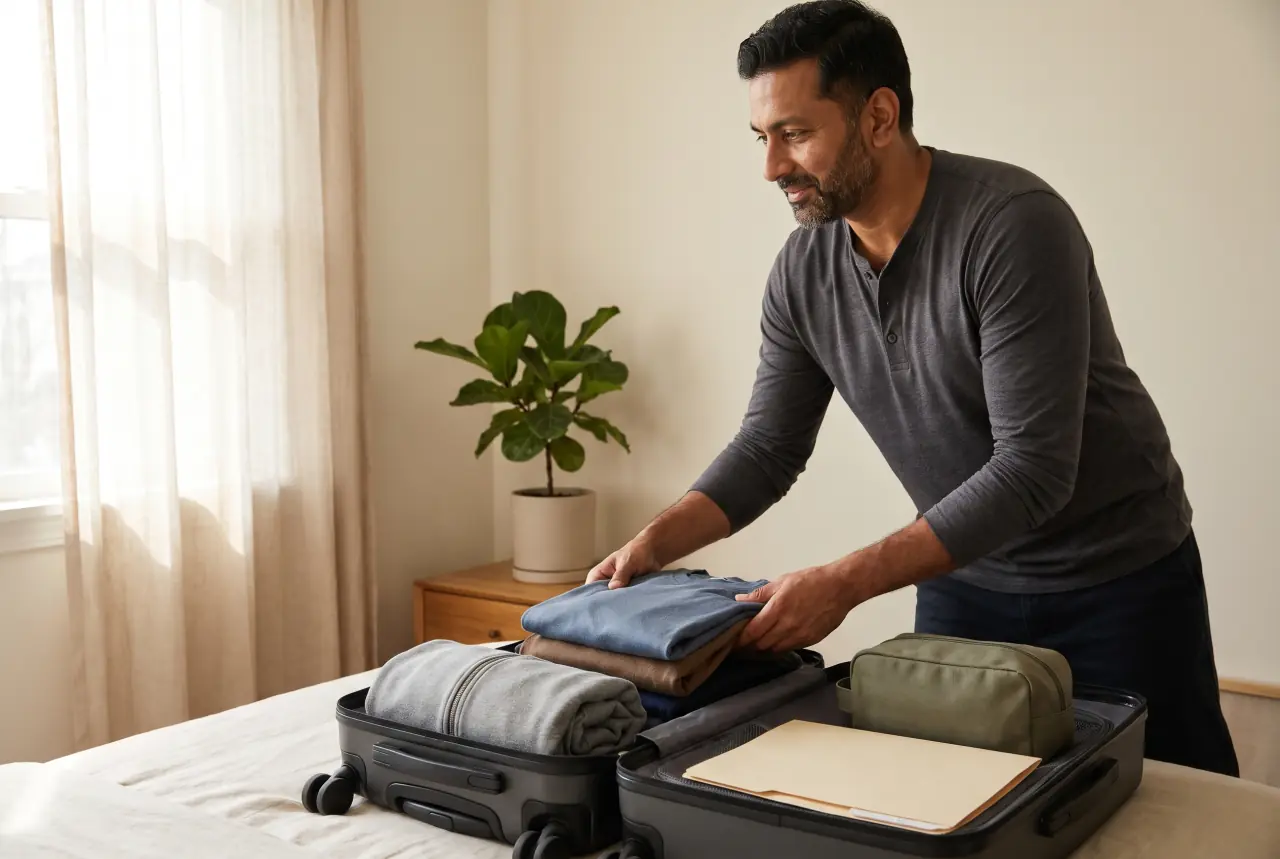
How to check: before you book travel, ask your provider for the date of each visit, the earliest day you could leave and whether you’ll be fit to drive or wait in the border line, then book changeable tickets with a day or two to spare and someone to travel home with you.
How much does medical tourism in Mexico cost?
Why it matters: the treatment price is only part of the total, so a fair comparison adds the trip, follow-up at home and room for the unexpected.
It depends on the treatment, the provider and what the quote includes. For a sense of scale across the five kinds of care:
| Treatment | Tijuana (USD) | United States (USD) |
|---|---|---|
| Dental implant, per tooth | $800 – $1,600 | $3,000 – $6,000 |
| Breast augmentation | $4,000 – $7,000 | $6,000 – $12,000 |
| Dermal fillers, per syringe | $250 – $600 | $800 – $1,800 |
| Gastric sleeve | $4,500 – $8,000 | $10,000 – $25,000 |
| IVF (in vitro fertilization) cycle | $5,000 – $9,500 | $20,000 – $30,000 |
Uriym’s indicative ranges from its treatment costs page, reviewed September 7, 2026. They are not quotes and cover the listed treatment only, without taxes, travel or third-party charges.
Prices also vary with the setting. Among the kinds of hospitals in Mexico, the U.S. Embassy’s 2021 guidance on hospitalization describes modern private facilities that give high-quality care at prices usually higher than in the United States (U.S. Embassy, 2021). That’s a general description of hospitals, not a price for any treatment in the table, so ask which facility a quote is for and compare what each price includes. Some facilities abroad charge substantial fees for follow-up care on top of the base cost (CDC Yellow Book), and for cosmetic surgery, the costs of revisions and complications may total more than the first operation would have cost in the U.S. (ASPS). More treatments are in the cost guide’s table.
How to check:
- Get a written estimate before any procedure, and if you’re admitted to a hospital, ask for an itemized bill each day (U.S. Embassy, 2021).
- Ask which services the price includes and whether follow-up happens at the same facility (CDC Yellow Book); what a quote should include lists every line to ask for, revision terms among them.
- Add flights or rides, nights nearby, a companion, time off, follow-up at home and a reserve before you compare with care at home; travel and recovery costs to add sets them out.
Does insurance cover medical tourism in Mexico?
Why it matters: care in Mexico is mostly paid up front and out of pocket, so what your plan would and wouldn’t pay shapes your budget and your plan for a complication.
Usually not directly. Most providers in Mexico don’t accept U.S. health insurance or Medicare and Medicaid plans, and payment by cash or card might be required before any care is given (CDC Yellow Book, Mexico). Hospitals there usually require payment up front and place holds on credit cards on admission, and some private U.S. insurers pay for care abroad, usually by reimbursement, so you pay first and claim later (U.S. Embassy, 2021).
Medicare usually doesn’t cover health care outside the U.S., with some exceptions, and Medigap (Medicare supplement insurance) policies may cover emergency care abroad (Medicare.gov); the exceptions are in does Medicare or U.S. health insurance cover care in Mexico. Get international travel health insurance that covers a medical evacuation back to the U.S.; supplemental travel health insurance may also be available for follow-up or emergency care after procedures abroad (CDC). A travel policy doesn’t necessarily include health insurance (Medicare.gov), and does travel insurance cover complications explains what to look for.
How to check: ask your health plan, in writing, whether it pays for any planned care in Mexico, whether it pays to treat a complication at home after care abroad, and what receipts and records it needs; then read a travel health policy’s wording on planned treatment and evacuation before you buy.
Follow-up at home, your records and complaints
Why it matters: a problem can show up after you’re back, and a doctor at home who knows what was done, plus terms agreed in writing, shape what happens next.
- A doctor or dentist at home. Make sure you can get follow-up care in the United States (CDC). For dental work, consider arranging it with a U.S. dentist before you travel (ADA); for weight-loss surgery, with a qualified local bariatric program before the operation (ASMBS). Line up a doctor at home shows how.
- Your records. Ask for copies in English, share them with every clinician you see afterward, and tell them about all your travel and treatment (CDC Yellow Book). Some surgeons may be reluctant to take on patients who had surgery abroad, in part because an operative report often isn’t available (ASMBS), so ask for yours before you leave.
- Revisions. A revision can be more complicated than the first operation (ASPS), so agree in writing what counts as one, for how long and at what price; see revisions and complaints.
- Complaints. You might not have the same legal recourse as after care in the United States (CDC Yellow Book), but Mexico has official routes. CONAMED (Comisión Nacional de Arbitraje Médico), the national medical arbitration commission, takes complaints about public or private care for free, through conciliation and then, if needed, arbitration, and points to a directory of state commissions for the rest of the country (CONAMED, in Spanish). PROFECO (Procuraduría Federal del Consumidor), the consumer agency, takes complaints by phone or online from people abroad when a Mexican business didn’t keep to what was agreed, though not over professional services that aren’t commercial in nature (PROFECO, in Spanish).
How to check: before you pay a deposit, book a visit with your doctor or dentist at home for after the trip, ask which records you’ll take home and in what language, and keep the quote, consent forms, receipts and records together, since a CONAMED complaint needs documents showing the care took place and a clear statement of what you’re asking for (CONAMED, in Spanish).
Questions to ask before you book medical care in Mexico
- Who will treat me, and what are their cédula numbers and, for a specialist, which council certified them?
- In which building will I be treated, and can you send me a photo of its health license?
- What does the written quote include, and what would a revision or a complication cost?
- How many visits does my treatment take, and when could I travel home?
- Which implants, devices or medicines will you use, and can I have their names in writing?
- How will we talk before, during and after treatment, and in which language?
- If I needed a hospital, which one would you send me to, and how would I get there?
- Which records will I take home, and who answers my questions once I’m back in the U.S.?
Before you go: checklist
- A visit with your doctor at home, 4 to 6 weeks or more before the trip
- Licenses of everyone treating you looked up, and the facility’s license seen
- An itemized, written quote with follow-up, revision and refund terms
- Your health plan’s answer on coverage, in writing
- Travel health insurance that covers a medical evacuation home
- Days planned around your provider’s recovery plan, with changeable travel
- A place to stay right after treatment, and someone with you
- The advisory read for the state where you’ll stay, and the trip enrolled in STEP
- A doctor or dentist at home booked for after you’re back
- Your records and medicine list packed, and copies of new records requested
- The warning signs below read and shared with whoever travels with you
Warning signs after treatment in Mexico
In an emergency, call 911, which works in the U.S. and Mexico, then tell your provider.
| What you notice | What to do |
|---|---|
| Difficulty breathing, a faster than normal or irregular heartbeat, chest pain or discomfort that usually worsens with a deep breath or coughing, a cough or coughing up blood, or very low blood pressure, lightheadedness or fainting | These can be signs of a pulmonary embolism, part of a blood clot that has traveled to the lungs: seek medical help immediately (CDC) by calling 911 |
| A leg or arm that swells, pain or tenderness you can’t explain, skin there that’s warm to the touch, or redness or discoloration | These can be signs of a clot in a deep vein: contact your doctor as soon as possible (CDC); warning signs of a blood clot covers the trip home |
| Anything you suspect is a complication, during the trip or after you’re home | Don’t put off getting medical care, since immediate care can lead to an earlier diagnosis and treatment and a better outcome, and tell the clinician where you were treated and what was done (CDC Yellow Book) |
| Bleeding, pain, swelling or signs of infection after dental surgery, all known risks after such procedures (ADA) | Contact the dentist who treated you or your dentist at home; warning signs after dental work says which signs are urgent |
Each treatment guide lists its own warning signs, and warning signs after you get home covers wounds and fever.
Frequently asked questions
Is medical tourism in Mexico worth it?
It can be, once the whole picture holds up: a provider whose licenses you’ve checked, an itemized quote, the cost of the trip, follow-up at home and what your insurance would pay. People travel for care that may cost less, for a clinician who shares their culture and language, or for a procedure not available or approved at home (CDC). A complication or revision can add to the bill, so add every cost before you compare; the step-by-step plan puts the checks in order.
Is medical care cheaper in Mexico?
For the treatments in our price table, the ranges for Tijuana are lower than for the U.S. Uriym’s indicative range for a dental implant in Tijuana is $800 to $1,600 per tooth, compared with $3,000 to $6,000 in the U.S. These ranges are indicative, not quotes. Your own total also depends on the facility, the trip, follow-up at home and any revision, so compare written, itemized quotes with those costs added.
Does Medicare cover medical care in Mexico?
Rarely. Medicare usually doesn’t cover health care while you travel outside the U.S., and in most cases you pay all the costs; in rare cases, if you’re eligible, it may pay for inpatient hospital, doctor and ambulance services in a foreign country (Medicare.gov). Medicare drug plans don’t cover prescriptions bought outside the U.S. Ask your plan in writing before you go; insurance covers private plans and travel health insurance.
What do most Americans go to Mexico for medically?
Mainly cosmetic surgery, dental care and eye care (CDC Yellow Book, Mexico). Across all destinations, dental care is the form of medical tourism U.S. residents choose most, partly because of the rising cost of dental care in the U.S., where a substantial share of people have no dental insurance or too little (CDC Yellow Book). The treatments table links our guide for each kind of care.
What are the best cities in Mexico for medical tourism?
There’s no single best city: the right one is where a provider you’ve checked practices, with a trip there and back that suits your recovery. Northern border cities such as Tijuana are popular for day trips and medical tourism, and Guadalajara, Mexico City and Monterrey are among the growing markets for U.S. patients (CDC Yellow Book, Mexico). Which cities compares a border city with one you fly to.
How do I know if a doctor in Mexico is legit?
Ask for the doctor’s full name and professional license number (cédula profesional), then search it yourself in the official records of Mexico’s education ministry, which are free and can confirm the license is genuine (SEP, in Spanish). A specialist should also hold a current council certificate, which CONACEM’s search shows (CONACEM, in Spanish). A master’s degree in aesthetic surgery doesn’t authorize a doctor to perform specialty surgery (COFEPRIS, in Spanish); see checking a doctor and a clinic.
How long do you need to stay in Mexico after a procedure?
As long as your provider’s plan needs; we found no official figure in days. Some care in Tijuana fits into a day trip (how long to plan in Tijuana), while surgery means nights nearby until your surgeon clears you to travel. Published waits before flying include 5 to 7 days after body procedures such as liposuction (ASPS) and 10 to 14 days after major surgery (CDC); the trip gives the sources, and your surgeon sets your date.
What happens if something goes wrong after surgery in Mexico?
Get medical care without delay, wherever you are, and tell the clinician where you were treated and what was done (CDC Yellow Book); in an emergency, call 911, which works in the U.S. and Mexico. For a dispute with the provider afterward, CONAMED, Mexico’s medical arbitration commission, offers free conciliation (CONAMED, in Spanish), and PROFECO, the consumer agency, takes complaints from abroad when a business didn’t keep to an agreement (PROFECO, in Spanish). Follow-up and complaints has the details.
Sources
- Medical Tourism: Travel to Another Country for Medical Care (page last reviewed June 1, 2023) U.S. Centers for Disease Control and Prevention (CDC), Travelers’ Health
- Medical Tourism (CDC Yellow Book 2026, chapter updated April 23, 2025) U.S. Centers for Disease Control and Prevention (CDC)
- Mexico (CDC Yellow Book 2026, chapter updated April 23, 2025) U.S. Centers for Disease Control and Prevention (CDC)
- About Venous Thromboembolism (Blood Clots) U.S. Centers for Disease Control and Prevention (CDC)
- Understanding Your Risk for Blood Clots with Travel U.S. Centers for Disease Control and Prevention (CDC)
- Briefing Paper: Cosmetic Surgery Tourism American Society of Plastic Surgeons (professional society)
- Medical Tourism American Society for Metabolic and Bariatric Surgery (professional society)
- Travel: Dentistry Abroad MouthHealthy, American Dental Association
- Boletín 179: Verificar cédulas y certificaciones médicas antes de procedimientos estéticos protege la salud (May 24, 2026; in Spanish) Secretaría de Educación Pública (SEP)
- Buscador de médicos especialistas certificados (in Spanish) Comité Normativo Nacional de Consejos de Especialidades Médicas (CONACEM)
- “Maestrías en cirugía estética” representan un falso ejercicio de esta profesión y un riesgo a la salud (June 28, 2023; in Spanish) COFEPRIS
- Atención de quejas médicas (in Spanish) Comisión Nacional de Arbitraje Médico (CONAMED)
- Proceso y requisitos de Quejas y Denuncias (in Spanish) Procuraduría Federal del Consumidor (PROFECO)
- Medical Information (April 6, 2021) U.S. Embassy & Consulates in Mexico
- Travel outside the U.S. Medicare.gov
About this guide
The Uriym editorial team researched this guide from the 15 sources above, drafted it with AI assistance, and checked it claim by claim against those sources before publishing, last on . Our editorial standards explain how we choose sources, handle prices and make corrections.
Uriym is a healthcare navigation platform, not a medical provider. Its founder, Adriana Mendez, grew up in a family that traveled to Mexico for care and has done it herself for the past ten years. How Uriym works
This is general information, not medical, legal or financial advice: your treating provider decides what care is right for you. Rules, prices and advisories change, so check the official page before you act. Found something wrong or out of date? Email support@uriym.com.